Broken systems demand radical change
As law enforcement wields more power, people must call for more accountability.
By EMMA IBRAHIM
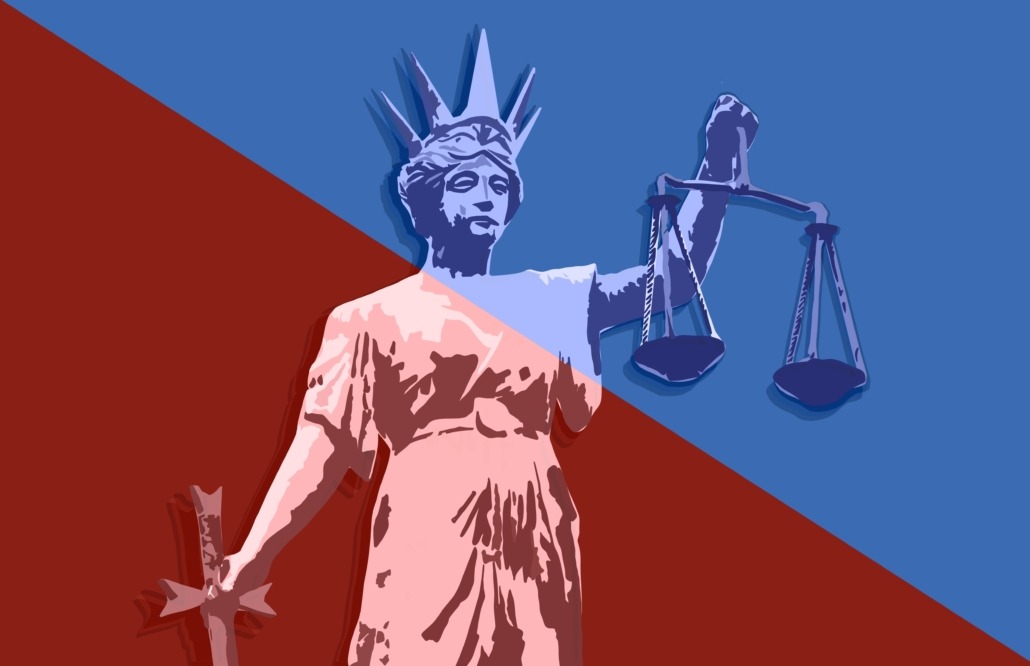

As law enforcement wields more power, people must call for more accountability.
“Hands up, don’t shoot!” “No justice, no peace, no racist police!” “I can’t breathe!”
In 2020, at the height of the Black Lives Matter movement, Black Americans shined a haunting spotlight on Minneapolis’s finest — former police officer Derek Chauvin, after he knelt on George Floyd’s neck for nine minutes and 29 seconds, ignoring Floyd’s pleas for his life.
Floyd’s tragic death broadcast police brutality into every corner of the country, forcing many Americans to face a stark reality: The fundamental faults in our unjust justice system can no longer be ignored.
Six years later, Minneapolis became the site of state-sanctioned violence once again when Immigration and Customs Enforcement agents killed American citizens Renée Nicole Good and Alex Pretti in January.
Now, after four months of superficial attempts to rein in ICE’s virtually unchecked tactics, their blatant persecution of people of color will only be exacerbated by their fresh slew of funding: a nearly $70 billion investment that will fund ICE through the end of President Donald Trump’s term.
When the officials we trust to “protect and serve” us hide behind a badge to abuse their power, the system becomes a tool to enforce injustice.
With a history entrenched in racism and oppression, is it possible to reform a justice system that was born broken?
The United States holds more than 20% of the world’s prison population, despite only constituting around 5% of the global population. In the 1970s, then-President Richard Nixon declared a war on drugs and forged a tough-on-crime legacy that the Reagan administration amplified through harsh sentencing, mandatory minimums and an emphasis on punishment rather than rehabilitation — policies that disproportionately impacted people of color.
In Los Angeles, the police officers tasked with enforcing law and order wielded the power of a uniform, a weapon and a system they could count on to exonerate them, becoming one of the most notorious police departments in the country.
In August 1988, the Los Angeles Police Department conducted a raid on the corner of 39th Street and Dalton Avenue, destroying homes and beating residents, none of whom were charged with a crime. One of the officers involved in the raid, Todd Parrick, said in a Los Angeles Times interview, “If I was out of control and doing something wrong, how come nobody told me to stop?”
After a high-speed chase ended in the brutal beating of Rodney King on camera, the four police officers responsible were acquitted in April 1992. Not long after, anger and unrest erupted through the streets of South Central, culminating in the infamous L.A. riots.
There is no room for ambiguity when police brutality is captured on video. But when cops are acquitted, it gives them the license to act as if they are untouchable because the system will shield them from responsibility. It also sends a loud message to those victimized by law enforcement: The system was not built to protect them.
In 2021, Chauvin was convicted of the murder and manslaughter of Floyd, an exceedingly rare delivery of justice. But most victims will never receive justice, including Michael Brown, Philando Castile, Tamir Rice and countless others whose killers slipped through the cracks of the justice system without ever being charged with a crime.
Following the death of Breonna Taylor — who was fatally shot in March 2020 — the Louisville, Kentucky Metro Council passed Breonna’s Law in her honor, outlawing “no-knock” warrants and imposing stricter body camera requirements. It took more than two years for any officers involved to face charges. But, in late March, a federal judge dismissed the charges against the two police officers accused of falsifying the search warrant that led to the unjust raid on Taylor’s apartment.
Five years after Floyd’s murder, 72% of Americans say they do not believe that the increased focus on racial inequality led to changes that improved the lives of Black people, according to the Pew Research Center.
As the years drag on, our country is becoming increasingly militarized. But what exactly is the great threat that necessitates ripping families apart and turning lives inside out?
Is it college students who protest against their universities’ investments in Israel? Is it immigrant parents celebrating their child’s preschool graduation, only to be detained in front of them?
Maybe the system is working exactly how it was designed to — simply another power hierarchy. But the damage is not irreversible. When footage of Floyd’s murder spread like wildfire through social media, it irrevocably shook the American conscience. Police violence is no longer an issue people can deny. And activism is no longer confined to the communities affected.
After the deaths of Good and Pretti in Minneapolis, protesters nationwide spilled out into the streets in outrage. Our shared grief over tragic, unjustified deaths has coalesced into a shared hunger for justice.
Know your rights and record injustice wherever you see it. Get involved with organizations like the American Civil Liberties Union and the Coalition for Humane Immigrant Rights of Los Angeles. Accountability is the only way to force those in power to face their actions and change the system.