Don’t lose your revolutionary spirit while celebrating the US’s 250th anniversary
Politics and cynicism aside, there are reasons why we ought not to give up.
By JACOB STRAND
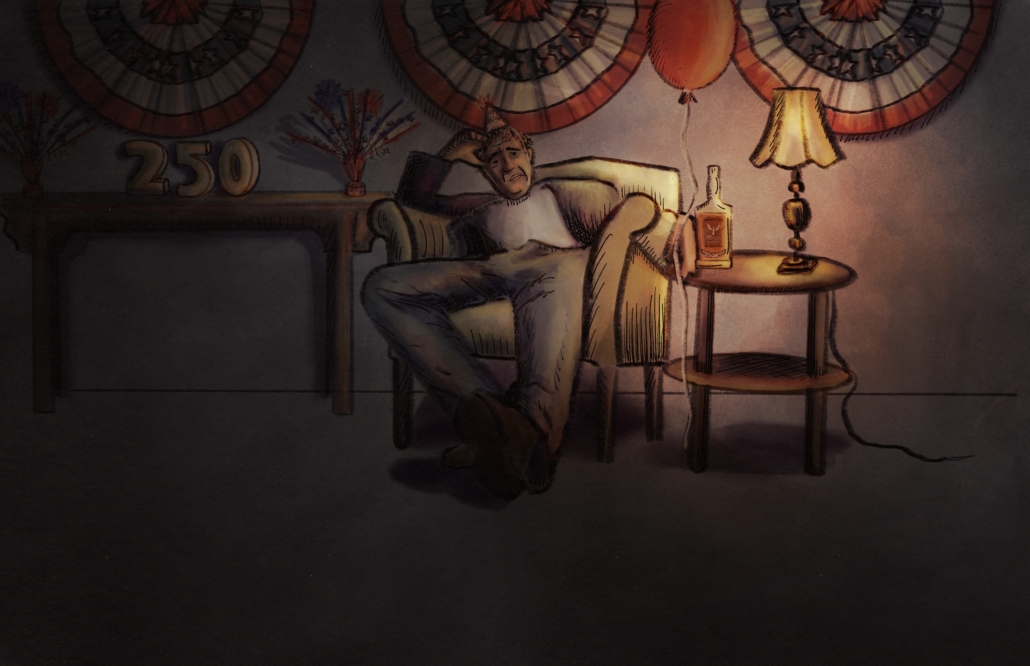

Politics and cynicism aside, there are reasons why we ought not to give up.
This July 4, Americans will be commemorating 250 years since the signing of the Declaration of Independence.
Its founding principles, based on the “self-evident” and “unalienable” rights, life, liberty and the pursuit of happiness, have shaped foundational American culture and identity. They are at the heart of our nation’s legal systems, our political models, and our governmental and economic frameworks.
Across our 250 years of history, generations of Americans have fought to uphold these values in all sectors of our society. Today, however, the average American is losing faith in the systems that make up our government and, in record numbers, is turning to cynicism or extremism.
Surveys from the Pew Research National Election Study in 2025 reported that about 17% of Americans trust the federal government to do what is right, a historic low. To compare, public trust in the federal government hovered around 60-70% during the 1960s. This trend crosses regional, ethnic and generational lines, with confidence having been eroding across the country for decades now.
Young people in particular have displayed strong pessimism about the American government. The Youth Poll, a Harvard Public Opinion Project at the Institute of Politics, found that respondents between the ages of 18-29 reported feeling ignored by the government, unhopeful about the U.S.’s future, and “invisible” and “voiceless” to the people in power.
Studies indicate that the growing distrust in government comes from a myriad of factors: Congress is generally seen as incompetent, corruption scandals and government waste has plagued perceptions of both local and national institutions, and the increase of the importance of money in politics and partisanship has exhausted optimism in the nation.
The trust lost is a reflection of a government that is increasingly straying from the ideals that made the U.S. so great in the first place. The downward spiral of trust has only been exacerbated by sinking public opinion of the current administration.
Under the second Trump administration, approval ratings have plummeted and stayed low since President Donald Trump’s inauguration. The current administration has seen negative net approval ratings in part due to its controversial handling of big-name issues like Iran, the Epstein files, global trade and artificial intelligence.
The Federation of American Scientists labels this trend a “cycle of declining trust,” in which our systems and society, which depend on trust to function, begin to falter and erode as a result of disengagement.
Political scientist Loren DeJonge Schulman warned of the risks to the government’s functionality as trust deteriorates, laying out signals that we’re already concerningly seeing: increasing partisan polarization, corruption and cynicism among the public. These changes threaten the very fabric of the American government, and by extension, our society.
As the American public’s discomfort progresses into hopelessness or outrage, the future of a functioning democracy diminishes.
Sentiments among young people across the political spectrum are indicative of a dark future. According to the same Harvard study, only 43% of young people surveyed stated that they believed that the upcoming midterms would not be held fairly. Overall, the study relays a broad, but deep-seated distrust in leadership and government, and fear over the future.
This dark future in many ways is already upon us, and the frustration and fear have begun to present themselves: It shows through those who are too scared to travel without their passport because of their skin color; through political polarization on social media and on college campuses; through those disenfranchised by the political establishment who give up on voting altogether.
People’s lived reality today reflects a system that has time and again failed and disappointed. It is understandable to feel cynical or experience indignation in the face of rampant and blatant corruption, of ineffective and out-of-touch politicians, of broken systems and promises alike.
Pessimism about the government exists for good reason, and increasingly so; but the solution here isn’t to give up on the government, but to rally for democracy.
In 1776, the American colonists did not surrender to British injustices. Leaders rose up to fight for what they believed was right, for the ideals laid out in plain writing in the Declaration of Independence. And, for decades on, leaders continued to carry on that legacy, those principles: expanding, reimagining, innovating.
Caring for our institutions, our ideals and values is the only way to build them back up. So show that you care by fighting for it in the ballots, with your actions, your words or even your dollars.
Our institutions, our democracy and our society fall when we give up on them.
The lack of real leadership we see today should be a call to action: Don’t give up on our institutions, but fight for what they stand for.