Is health the new status symbol?
Beauty standards are becoming more physically and financially restrictive.
By EMMA IBRAHIM
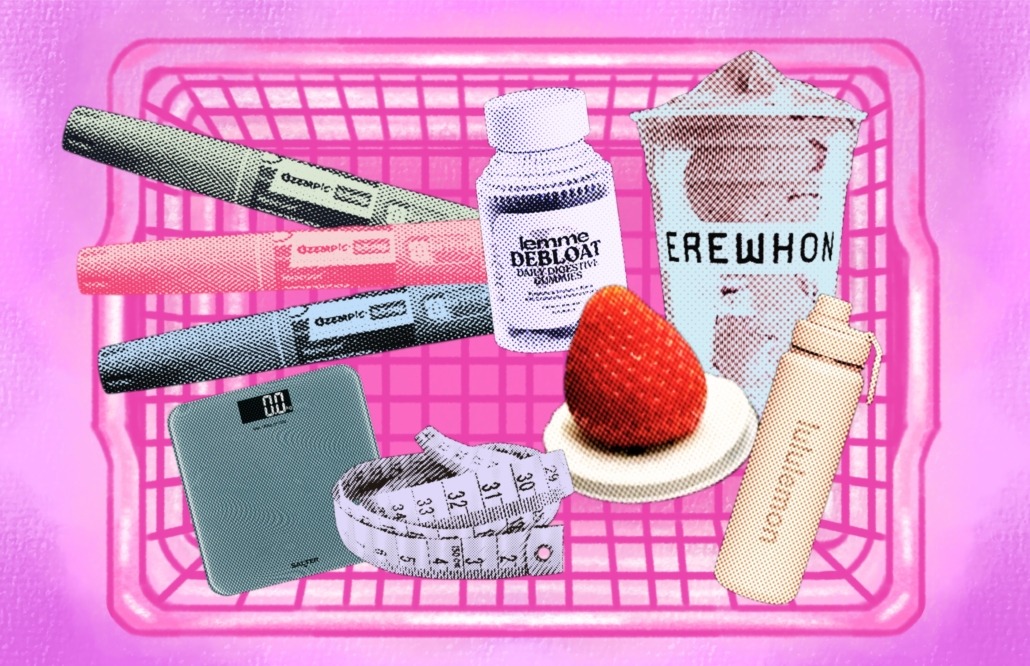

Beauty standards are becoming more physically and financially restrictive.
There is a new status symbol to futilely chase after, and it’s not a Chloé bag or Chanel flats — it’s health. Or at least the supposed appearance of it.
The 2010s era of body positivity is long gone, and skinny culture reminiscent of the early 2000s has boomeranged back into the mainstream: Thinness has been repackaged and sold as health. These days, it’s rare to open TikTok without seeing a video about peptides, protein or Pilates.
As the definition of health becomes more exclusionary, fitness is now about status, not longevity. With the rise of Ozempic powering skinny culture, it is not health we are being sold but rather an unrealistic concept of it.
In the face of a soaring affordability crisis, luxury grocery stores have transformed a typically mundane task into a spectacle. From Erewhon in Los Angeles, which is regarded as one of the most expensive grocery stores in the country, to Happier Grocery in New York, it’s clear that it doesn’t matter what food you choose to buy but where you’re seen buying it.
An April survey conducted by the McKinsey Institute for Economic Mobility and the WK Kellogg Foundation found that 90% of respondents view groceries and food costs as their main “cost-of-living concern.” Since the One Big Beautiful Bill Act passed last July, more than 4 million people have lost food assistance through the Supplemental Nutrition Assistance Program. But at least you can buy a single trendy strawberry at Erewhon for $19.
Social media marketing that preys and capitalizes on insecurities, especially in women, is nothing new, and GLP-1 drugs are just the most recent diet craze. Ozempic, meant to treat Type 2 diabetes, and Wegovy, an obesity medication, are weaving their way into many people’s medicine cabinets due to their ability to induce weight loss. Celebrities and influencers have fed into the weight loss buzz, giving these drugs their stamps of approval online.
In the 2000s, Tumblr was infamous for blogs promoting eating disorders and posting images of bodies as “thinspo,” or posts encouraging viewers to achieve thinness. The platform’s policy changed in 2012 to regulate blogs that “glorify or promote anorexia, bulimia and other eating disorders.” While these blogs are still active on Tumblr, eating disorder messaging has made its way to a new platform: TikTok, particularly with the tag “#SkinnyTok.”
Liv Schmidt, a popular influencer on SkinnyTok and Instagram, offers a subscription-based membership to her weight loss community, the Skinni Société, as well as access to The Skinni Vault, a digital library of her dietary advice for the low price of $250.
While Schmidt’s website markets her advice as “structure” and skinniness as “the standard,” her social media posts, including videos of herself eating bite-sized food portions, are essentially how-to guides on becoming and staying unhealthily thin, promoting undereating and appetite suppression disguised as portion control.
Heroin chic is also plaguing Hollywood once again: While fans speculate about which celebrities are on Ozempic or are suffering from eating disorders, it is not specific women’s bodies that we should judge, but the culture that demands unattainable beauty standards from them.
Scrolling on social media for 10 minutes is enough to convince many people that they absolutely need to purchase a vibration plate, mouth tape, a Pilates membership and skin treatments to halt the natural process of aging at the ripe age of 25 years old — it doesn’t seem to matter how healthy you are unless you can flaunt it online.
Despite what the pervasive marketing strategies might communicate, you do not need expensive products or a thin body to be healthy. Self-improvement is an admirable pursuit, but the current misconstrued way that we characterize health is a dangerous, unsustainable method of signaling status.
As toxic skinny culture becomes increasingly pervasive and fueled by influencers online, the pressure to conform can feel suffocating. Instead of pursuing health, it seems as if we’re simply chasing after an aesthetic. And while there is nothing wrong with shopping at Erewhon or having a CorePower Yoga membership, you do not need to adhere to this constructed image of health to actually be healthy.
Women’s bodies may never leave their place as a hot topic in popular culture, but body types are not something that should be viewed as trends. A truly healthy lifestyle will not stem from conformity to impossible beauty standards nor will it cost you your sanity.