WINS opens doors for women in the sports industry
The club is looking to create opportunities for women in an intimidating industry.
By ANYA MOTWANI
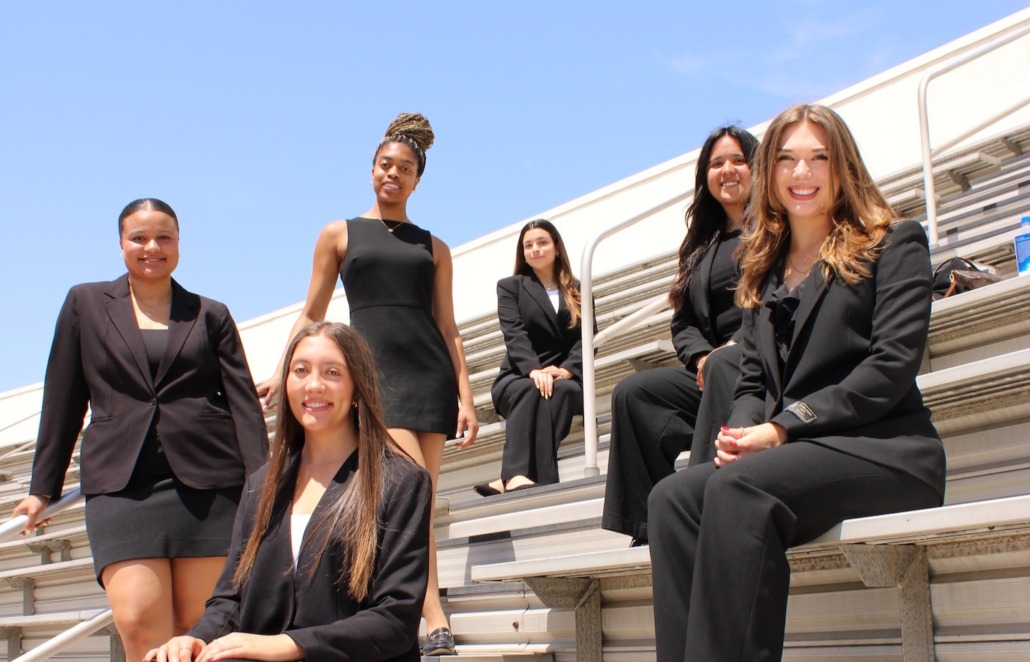

The club is looking to create opportunities for women in an intimidating industry.
When Milanni Barr started the Women in Sports Business Association, she knew she wanted it to be a space for any woman interested in the many career paths related to the sports industry.
Barr, president of WINS and a junior majoring in business administration, started building her executive board last fall. The organization is debuting on campus this semester, and Barr is ready to start admitting members. Barr said the club seeks to fill a gap on campus: the lack of sports-specific Registered Student Organizations catered to women.
“There [are] not a lot of women representing the sports industry in all areas of sports, so I felt like having executives … come and speak to our members will instill a sense of hope and inspiration,” Barr said.
WINS is not limited to business students, despite what the name suggests; Barr said she was conscious about creating an inclusive environment. The competitiveness of USC clubs has been heavily discussed, with students saying they face high barriers to entry. To widen involvement, Barr is setting two tiers of membership.
“One [tier] is a core member, which is a little bit more selective and more of an extensive application, but not necessarily an intense interview round,” Barr said. “The more general member is what you make out of the opportunity — if you want to come to all the events, or if you want to come to some, that is totally up to you.”
Adriana Brady, a senior majoring in journalism and the club’s secretary, joined WINS to find connection with other women on campus and get more exposure to the female experience working in sports.
“What I’ve noticed in classes is that we don’t really see a lot of women professionals come in, especially with some of my sports classes,” Brady said. “We generally need a little bit more representation of women in sports here on campus.”
Diversity and intention are key guiding principles for Barr, who said she wants to ensure guest speaker selections are informed by what members want and that anyone feels welcome to join.
“Some people are privileged and have a lot of access within the industry, whether their parents work in it or you know their community,” Barr said. “But [we are] making sure that people that don’t come from that background can still be exposed to the different nuances and [hear] from professionals.”
Eliana Nastase, a junior majoring in economics and mathematics, met Barr when they were both working for USC basketball — the women’s and men’s teams, respectively. She joined the executive board as treasurer and said she hopes the club can be an environment to socialize and help students with professional development.
“Sports business can be intimidating because, one, it’s male-dominated, but two, it’s a hierarchy [where] you have the coaches serving athletes, and supporting staff serving coaches, which are ultimately serving athletes too,” Nastase said. “We encourage girls, even if they’re not super interested in sports business, to join the club. They can learn transferable skills.”
Upcoming club events include “yoga-lates,” an activity combining yoga and Pilates next month organized alongside athletic clothing brand Alo, as well as speaker sessions. The varied events, Barr hopes, will draw as many different students as possible to WINS.
“There’s so much that goes on behind the scenes in athletics,” Nastase said. “It’s not just the players and the coaching staff, but there [are] so many different supporting roles. Whatever major you are in [or] career path, you could find a place in sports.”
Brady said sometimes just witnessing women operate in male-dominated spheres like the sports industry can be enough to motivate someone to dip their toes in.
“As a woman in sports, it can feel very lonely at times, especially if you’re the only woman in the room, which is something that we still see today,” Brady said. “I hope that our members feel that they know that they’re not alone in this space, and that they have other women who are interested in the sports industry that are also willing to uplift them, support them and grow with them.”
Barr echoed that sentiment and said she hopes the club can play a role in shaping the sports industry for the better.
“I’ve talked to different people who have said things have changed significantly in the sports industry, where at times there were no women’s restrooms,” Barr said. “Sometimes it’s like, ‘Wow, if no one else is doing it, maybe it’s not for me,’ but making sure [women] understand that it’s always for you, and as long as you push for it … that anything is possible.”
Disclaimer: Adriana Brady formerly served as an Assistant Sports Editor at the Daily Trojan in Spring 2026. Brady is no longer affiliated with this paper.