Music school can’t teach creativity
The value of art lies in connection that can’t be found in the classroom.
By ALEX GROSS
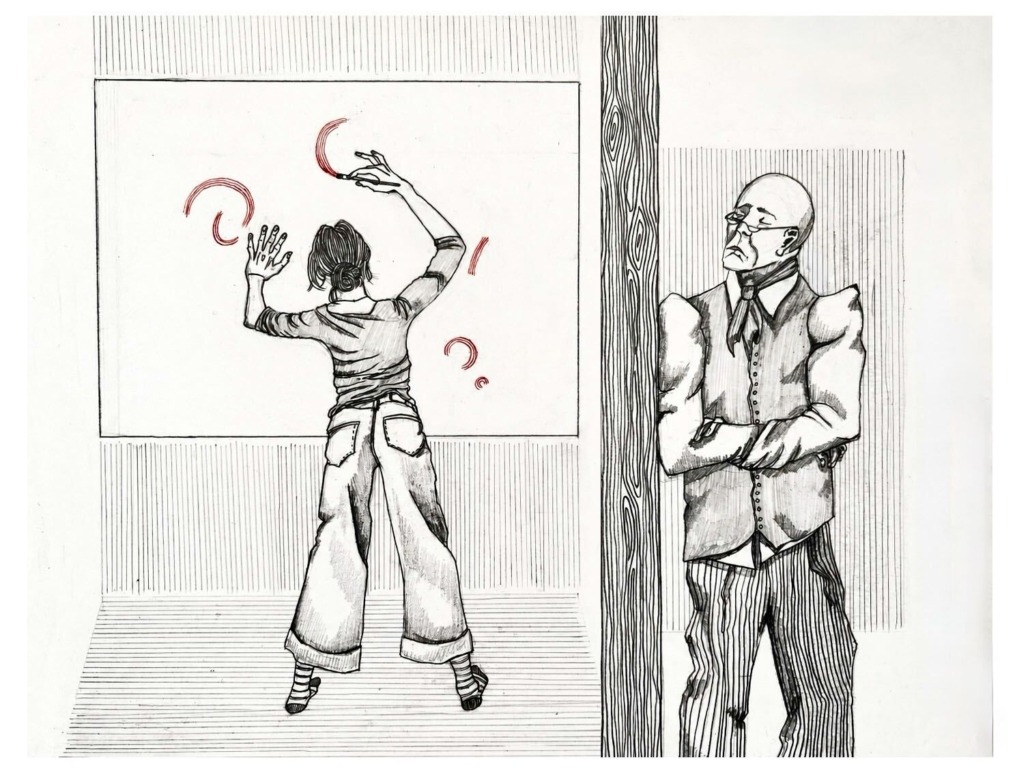

The value of art lies in connection that can’t be found in the classroom.
The concept of “art school” toes the line of oxymoron. How can you objectively teach something that’s beauty is subjective.
Sure, technical ability can be taught and certainly lends to the creation of work that wins the popular vote, but it isn’t a prerequisite for a masterpiece. Art is nothing more than the communication of one’s own human experience, and there’s nobody who can tell you how to convey personal emotions more authentically than yourself.
Being technically skilled without possessing creativity leads to art that’s almost impossible to resonate with; we can appreciate it, but it has no emotional complexity to understand.
Some of the most interesting artists are those who have no formal training at all, as it provides them with a fresh perspective on their medium. They prioritize their ideas, not the skill that it takes to execute them.
Education, for better or for worse, breeds conformity. Students are told the same thing as their peers. This works in the interest of building an informed society, but not so much a creative community.
Rick Rubin, famed producer and informal torch bearer of popular music’s counterculture, famously prides himself on having “no technical ability.” That’s the very trait that landed him jobs working with artists ranging from Johnny Cash to Rage Against The Machine to Travis Scott.
On his Substack inspired by his popular book “The Creative Act,” Rubin wrote that “by uncovering and challenging our hidden rules, we can free ourselves from unconscious limitations and open up new realms of possibility.”
These rules, which Rubin broke to achieve his unique perspective, are the same that shackle young artists solely obsessed with tradition.
Jack Benson, a junior majoring in jazz studies, believes these rules have a purpose, but only insofar as they construct growth, not restrict it.
“You can be intentional and craft more powerful and intricate, nuanced stories by learning,” Benson said. “If you’re intentionally playing outside of the key, then it’s hip. It’s cool. But if you don’t know the changes and you’re just playing whatever, then people will notice.”
While intention applies to trading solos over jazz standards, it also speaks to the larger creative process: You must first learn the rules in order to break them.
Traditions don’t survive because they’re strict; they survive by compromising and deconstructing themselves into a new and relatable form for each generation.
Art that tries something new and challenges listeners can push a genre forward more than work that strives to be easily digestible and familiar. It’s more important to champion an experimental amateur who brings something new to the table than a virtuoso who’s obviously ripping off one of the greats, even if the final product isn’t all that good.
At the end of the day, technical skill doesn’t result in effective communication. A poor musician will always be able to convey their own voice better than a masterful musician will be able to replicate someone else’s.
“I’m not really interested in music as a means of athletics,” Benson said. “The biggest thing is honesty and clarity: … telling your truth [and] … doing what you set out to do.”
The most interesting truths will find a way to shine through regardless of how they’re told. Because aside from the glamour of sonics and the allure of playing, that’s what we seek in music.
The best songwriters have lived experiences that inform their truth; they’re not sitting in a lesson being told what to write about.
N.W.A.’s political fire wasn’t lit in a lecture hall; it slowly burned as gang violence and the war on drugs in the 1980s ravaged their hometown of Compton. Lyrics on “The Freewheelin’ Bob Dylan” weren’t written about advice a professor gave him — Dylan wrote them about his experience as a southern Minnesota farmboy thrown into Greenwich Village’s pocket of the Civil Rights Movement in the early 1960s.
Music school doesn’t teach you how to be creative; it teaches you how to hone a creative spark. And more often than not, the most original ideas don’t start in a classroom.
Students have incredibly important perspectives that deserve to be shared through art — just don’t let your voice become lost in formal education’s monoculture that conflates expertise with artistry.