Students react to new CPT authorization requirements
Many international students said they feel distressed by uncertainty in internships.
By FEIYU LONG
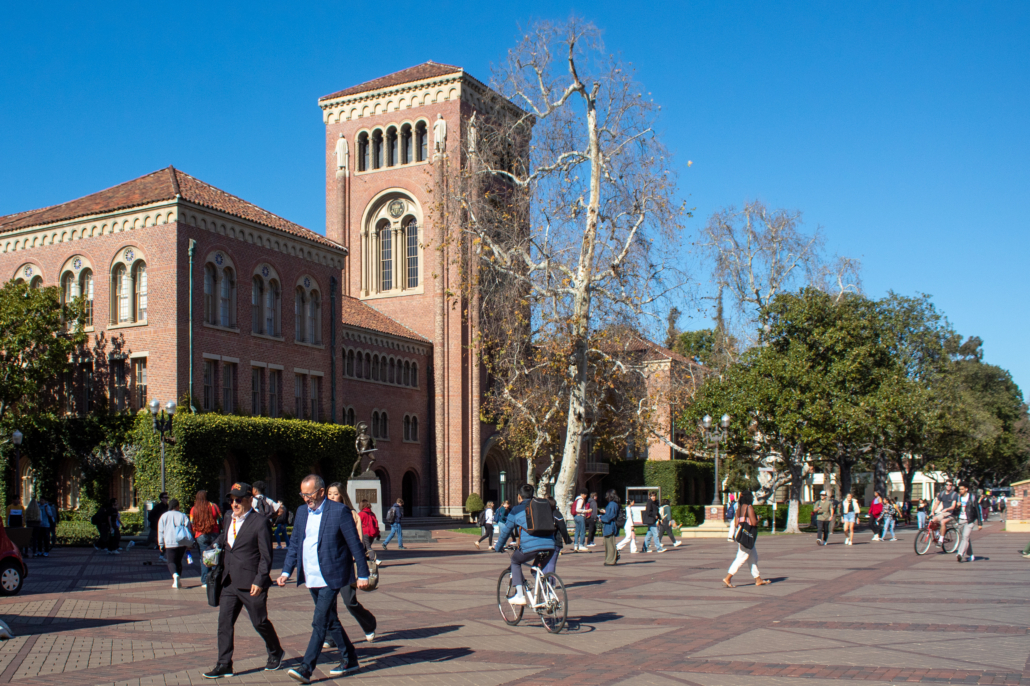

Many international students said they feel distressed by uncertainty in internships.
For Barbara Valent, a junior majoring in film production and dramatic arts, learning about the new Curricular Practical Training authorization requirements brought shock and distress.
“My reaction was definitely disbelief at first,” Valent said. “I researched more [about] what it actually means, and then, to be completely honest, I cried.”
The Student and Exchange Visitor Program released a broadcast message on Aug. 24 specifying that CPT, a form of work authorization that allows international students on F-1 visas to participate in off-campus internships during their degree program, will only be authorized for students in a degree program that has practical training as a graduation requirement.
As an international student from Slovakia, Valent said she now finds herself in a near-impossible pursuit of a life and career in the United States. Entering her junior year, Valent said she planned to secure acting- or production-related internships in the U.S. through CPT to demonstrate her employability. She said this would eventually help her to pursue an O-1 visa, a type of nonimmigrant visa for individuals with extraordinary ability or achievement.
Without access to that work experience, Valent said, she must now abandon the step-by-step career plan she developed over the summer.
“The dream that I’m here for is becoming an actress and director in Hollywood,” Valent said. “The small chance of making it has become even smaller.”
Andy Yang, an international student from China and a senior majoring in economics and data science, said the updated CPT policy has already prevented him from starting a role in finance and data science at a Washington, D.C.-based startup.
Yang said he received the offer earlier in August and submitted his CPT application about a week before the Office of International Services announced the updated policy. While his application remains pending, Yang said he can no longer begin his work as planned. He said the announcement has pushed him to consider backup plans after graduation, like attending graduate school or returning to China for work.
“Volatility has always been a theme for international students,” Yang said. “After this policy, different options must be considered and planned.”
Yang said he thinks requiring an internship to be part of a degree program’s graduation requirements is not a reasonable standard for CPT authorization because practical training is not equally applicable to every major.
Valent said internship experience is important for students regardless of whether it is required or not, and many international students come to the University with the idea that internships are part of the USC experience.
“Even if it’s not required, it’s very highly recommended in both of my majors,” Valent said. “It’s basically required for your career. You don’t want to leave USC without having had internships.”
Yang said he thinks that the new CPT authorization requirement can make U.S. universities less attractive for prospective international students. He said many international applicants he knows are “discouraged” and are already considering universities in Europe instead of programs in the U.S.
“It is highly possible that we lose a lot of international talent if we don’t allow them to work on site at U.S.-based companies,” Yang said. “The current status of CPT is pretty discouraging for international students, whether [regarding] attending all these programs or getting involved in the U.S. job market.”
Valent said the new policy has also made her question her choice to come to USC in the first place. She said she originally chose USC over several film production programs in London because she believed the University’s emphasis on networking and industry connections would help her build a career in Hollywood.
“I chose to bet on myself with the tuition and with being so far away from my family, … but now it definitely does feel like, ‘Oh well, I’m probably gonna be kicked out of the country after I graduate,’” Valent said.
Angelina Sandiford, a senior majoring in dramatic arts, also said she is “frustrated” by the rule change. While she is a domestic student, Sandiford said she is friends with many international students whose career development will be impacted by the new CPT policy.
“[International students] are also experiencing more uncertainty about their own jobs and their own future,” Sandiford said. “I know one of them said that they felt like they couldn’t really work. They said something about feeling like they can’t work just because they’re from a different country.”
Moving forward, Sandiford said USC should support international students by offering resources to help them navigate employment in the face of uncertainty. Valent said she thinks it would help if OIS would provide a step-by-step manual of what is required now for a CPT request to go through for different majors.
Yang said the University should continue to monitor how relevant regulations are changing and keep the international student community updated. He also said OIS should add more direct advising opportunities with students.
“I actually joined the drop-in advising with OIS, and it takes a lot of time to wait. Eventually, I got personal advice from [an] OIS advisor regarding my personal case,” Yang said. “I really think that every international student should have this opportunity, and this type of opportunity and resource should be more accessible to everyone.”
Over the past two years, the U.S. government has expanded screening for F, M and J visa applicants’ online presence, increased H-1B visa fees and issued a final rule replacing the longstanding “duration of status” system with fixed admission periods, effective Sept. 15.
Despite the many rule changes in the past few months and the stress brought along with them, Valent said she will not abandon her aspirations and encouraged other international students to remain hopeful.
“Hold on to your dreams. Don’t give up yet,” Valent said. “I’m not giving up — I’m just more fueled up to make it work.”