‘The Girl in the River’ struggles to develop depth
The suspense film fails to go beyond the predictable plot for a crime movie.
1
For fans of:
“The Black Phone” (2021), “Prisoners” (2013)
By MARINA YAZBEK

The suspense film fails to go beyond the predictable plot for a crime movie.
1
“The Black Phone” (2021), “Prisoners” (2013)
An unidentified man carries a limp body out of his car, its pale skin slowly turning purple. He walks over to the rail of a bridge and chucks the corpse over the ledge, letting it plummet to the bottom of the river.
The opening scene of director Brando Benetton’s “The Girl in the River” winds the film up with tension, and refuses to ease its hand at any point throughout the movie.
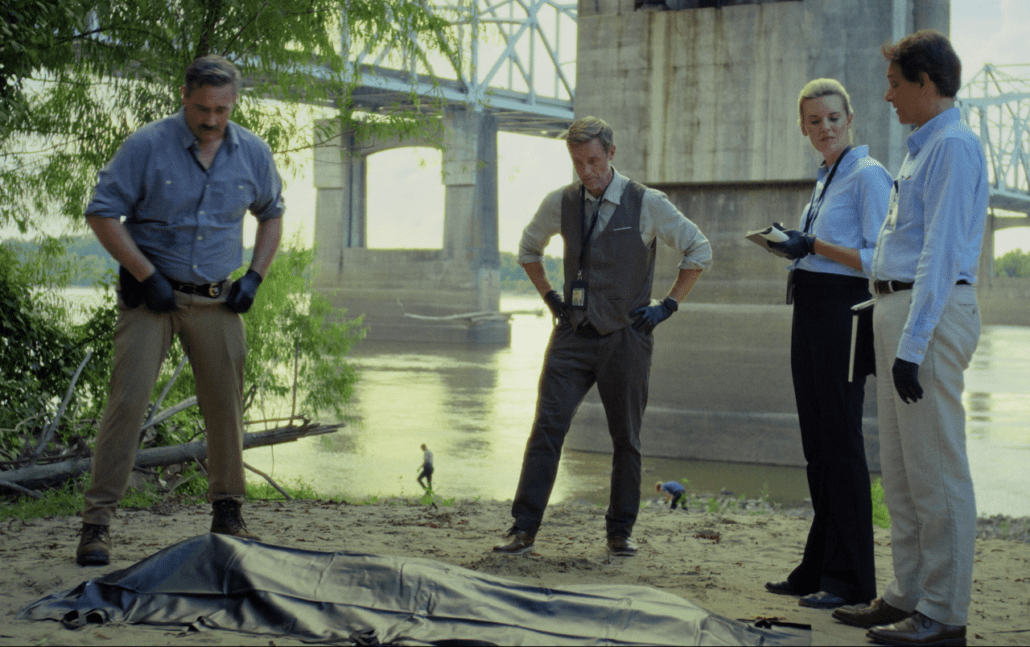
The movie follows newly graduated, determined forensic psychologist Amelia Pembrock (Maggie Grace) and legendary but bitter detective Alan Kramer (Devon Sawa) on, respectively, her first and his final case working in the field. The two are assigned to a case involving the abduction of twin sisters, one of whom was found dead in the river and the other of whom is reportedly still missing.
Unsurprisingly, the gap in experience between the two and their different modes of investigation drives the primary emotional conflict and builds frustration between them.
Their arguments bring up various controversial questions in their field of work: the validity of a hunch when a case is time-pressing, the basic requirements needed for a search warrant, and the role of academic study and precedent in an investigation lacking evidence.
However, that discourse is eclipsed by the poorly developed script and forced intensity of the film.
Throughout the movie, Alan and Amelia have many conversations with Erica Graysmith (Tiffany Haddish), the police captain, in which they discuss the facts and status of the crime. The film sensationalizes these meetings, using dramatic music and the actors’ stressed facial expressions to make it seem like a new shocking piece of evidence on their investigative trail will be revealed, when really they just regurgitate the same information endlessly.
The frequency of these generally pointless discussions slows the film down, as the same information keeps being passed around, prolonging the resolution for more time than is necessary. In order to make the case seem more complex, they use superficial and vague wording — “This is the opposite of a perfect crime,” and, “Maybe it’s not as simple as we think” — to fill in the spaces and cover for the fact that not much is developing.
Similar to the dialogue, the acting in these scenes also takes up too much space, with awkward pauses between each actor’s lines that give the film an unnatural cadence, making it harder for audiences to be convinced by the relationships in the film.
These static interactions between the cast make it clear that some of the humanity in the move was sacrificed in order to — unsuccessfully — exaggerate the theatrics of the case.
The actual facts of the kidnapping and murder were quite basic: The twins worked for both the town butcher as well as the coroner (Ralph Macchio), both jobs requiring those involved operating dangerous equipment, so the suspects were somewhat obvious from the jump. Amelia chooses to throw herself entirely into investigating the more glaring choice, the butcher, which leads to an unsurprising plot twist when it’s revealed he isn’t the culprit.
The only scene that truly merits its intensity is when Amelia commits the wildly illegal act of sneaking into the butcher’s house to look for a revealing clue, or better yet, the missing girl.
The house is full of eerie details, including butcher knives, an opaque separation curtain and the butcher’s expressionless mother watching Amelia make her way through the house, barely conscious. It is impossible not to watch in paralyzing fear, as the butcher misses Amelia searching his house by just a hair.
Ultimately, although the scene is exciting, it does not compensate for the shortcomings of the rest of the film, as there isn’t much else in the film that provokes the audience’s emotions. Since the film starts when the crime has already been committed, the viewer doesn’t get to know the twins, and are given no backstory aside from the fact that they were a rich politician’s children and allegedly very kind. The lack of context makes it difficult to sympathize with the story.
Similarly, Alan’s trauma from losing his son is an underexplored subplot of the film that leaves the audience more confused than weeping. Although Amelia tries to get him to be more vulnerable and accept his grief, they never get a chance to fully address it.
With so many overlooked elements of the film, from the depthless emotional baggage to the repetitive dialogue, the script holds “Girl in the River” back and prevents it from immersing audiences. Beyond the character-related shortcomings, the writing of the crime itself was predictable and lacked much-needed complexity.
“The Girl in the River,” despite having an intriguing premise, fails to stand out from other suspenseful films, resulting in nothing more than a lackluster hour and 32 minutes.