USC alums turn mugging into musical
Philip Labes and Micah O’Konis explore the United States’ gun-control divide through comedy.
By JULIA HO

Philip Labes and Micah O’Konis explore the United States’ gun-control divide through comedy.
Content warning: This article contains references to guns and gun violence.
The gun is magic: Point it at someone, and they turn conservative.
The megaphone is magic, too — one shout and the target swings left.
USC alumni Philip Labes and Micah O’Konis spent a decade building a comedy this silly around a question this serious: whether a father and daughter on opposite sides of American politics can still hear each other.
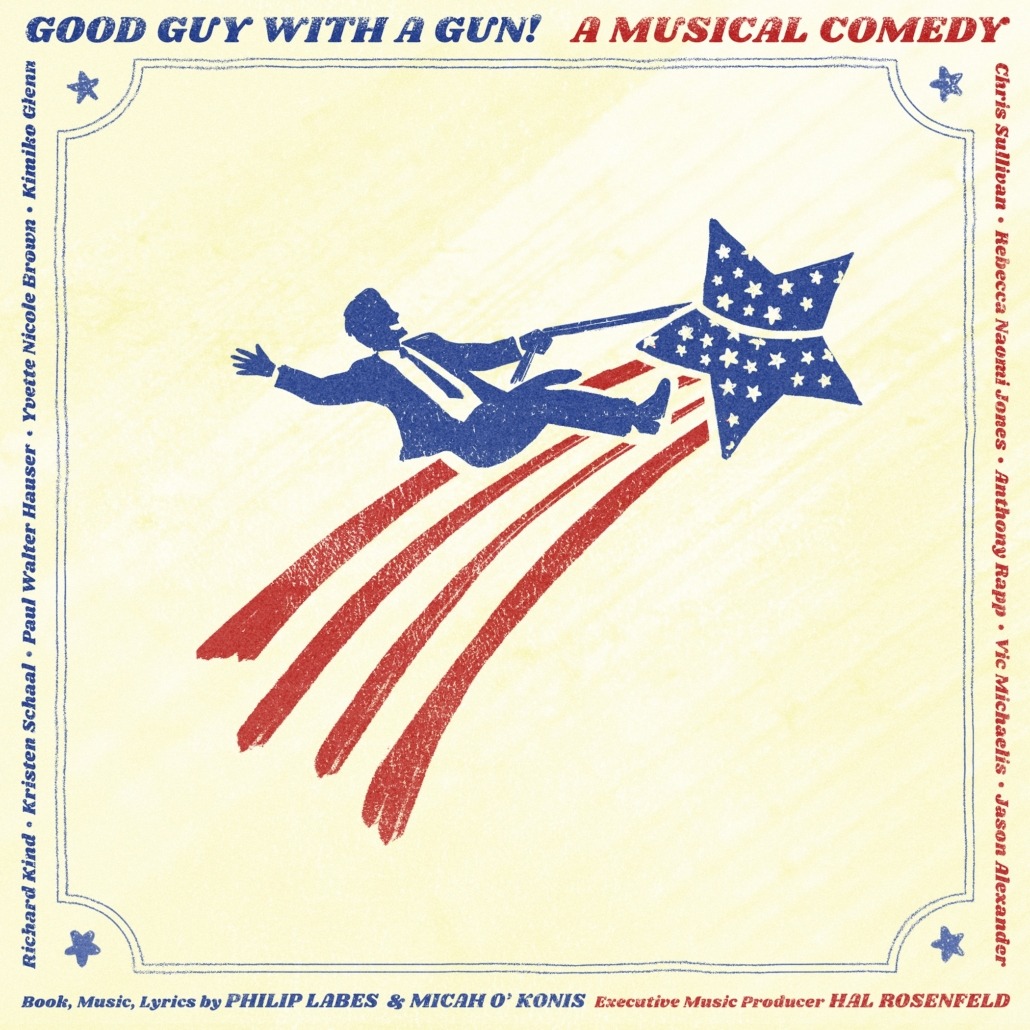
“Good Guy with a Gun!” pipes the irreverence of “The Book of Mormon” into the United States’ political fault lines as a satirical musical comedy concept album, released Aug. 14. Both 2015 graduates, Labes and O’Konis met as freshmen at a USC dorm mixer, both carrying guitars, and later became roommates.
“It’s not just a show about guns, or liberals versus Republicans, or father versus daughter,” said Hal Rosenfeld, the album’s executive music producer and music director. “It’s really a show about family — and it’s got a bunch of bangers.”
Its star-studded cast is the kind an independent project rarely lands: Chris Sullivan of “This Is Us,” Kimiko Glenn of “Orange Is the New Black,” Anthony Rapp of “Rent” and Jason Alexander of “Seinfeld,” among others. The show lived onstage first — a black-box run in Los Angeles, then two years at the now-shuttered Second City Hollywood.
The story was born from Labes falling victim to a crime. Then-sophomore Labes was robbed at gunpoint on the train home. He then told O’Konis they should write a musical about a National Rifle Association lobbyist, Labes said.
A separate gunman alert had locked down campus earlier that year, and what followed the mugging was a broad surge of activism — Labes rallying friends to write their senators — as the NRA seemed to swallow every gun bill whole, O’Konis said. The idea for the musical grew from there, over years of rewrites.
In the early drafts, then called “MORE GUNS!,” the magic gun turned people into guns — a sight gag aimed at a country whose answer to every shooting seemed to be another firearm, Labes said.
“The vision then of the comedy was that we live in a world where the people we disagree with seem to think that the thing that will fix the problem is more guns,” Labes said. “There’s shootings in schools, give teachers guns. There’s shootings in churches — yes, guns. Shootings in the mall, give the pretzel guy a gun.”
But the country’s affliction shifted, or rather, the pair’s read on it did.
The defining feature of American life was no longer the hardware, they said, but the certainty on each side that the other was a “brainless horde.”
So they rewrote the spell. Now, the gun turns whoever it is pointed at conservative: Ron Barkley (Sullivan), the NRA lobbyist, uses it on his daughter’s friends, while Jenna, Ron’s daughter, answers with a megaphone that turns people liberal.
When the COVID-19 pandemic closed the theater, the pair reached for the form that had raised them both. Neither had grown up a New York, Broadway-style theater kid; they had met the great musicals the way a teenager in South Florida, where Labes is from, or Chicago, where O’Konis is, tends to — through cast albums.
“To us, the cast album was the most real a show gets,” Labes said. “It was exciting to put it on wax.”
However, the show’s audio-only format brought new problems. The story had to speak for itself without sounding like it was explaining itself, so the dialogue was cut and cut again. And producing it independently meant three people — Labes, O’Konis and Rosenfeld — did the work of an orchestration team, a casting director and a post-production crew.
Though some of the strain was beneficial, O’Konis said. Rapp and Alexander’s characters had no songs of their own, so the pair wrote one for each — two of O’Konis’s favorite tracks on the album.
Labes and O’Konis did worry about being misread. The title invites two lazy readings — a smug swipe at conservatives, or a chest-thumping defense of them — and the album is neither.
“It’s really just a pretty focused story about one conservative dad and one liberal daughter, and about their relationship,” Labes said.
The two were just as wary of the opposite temptation, the centrist daydream in which both sides simply calm down and hum “Kumbaya.”
“We’re two musical comedy writers,” O’Konis said. “We don’t have those answers. We can pose questions. We can write material that hopefully challenges people.”
The depicted father-daughter relationship was chosen with intent, a way to hold two divides in one frame — one generational, one gendered; as young women move left en masse, men drift toward what Labes described as “strongman, authoritarian-style governance.”
“It leaves you wondering what’s happening next for this dad and this daughter — how can they continue on?” O’Konis said. “There’s a lot of comedy in the album, but it’s a very heartful story.”
Sophia Kang contributed to this report.