‘Forgotten Island’ reflects on friendship through Philippine mythology
The animated fantasy film explores relationships formed and strengthened beyond the digital age.
4.5
For fans of:
“Onward” (2020), “Coco” (2017)
By CAMILA ECHEVARRIA
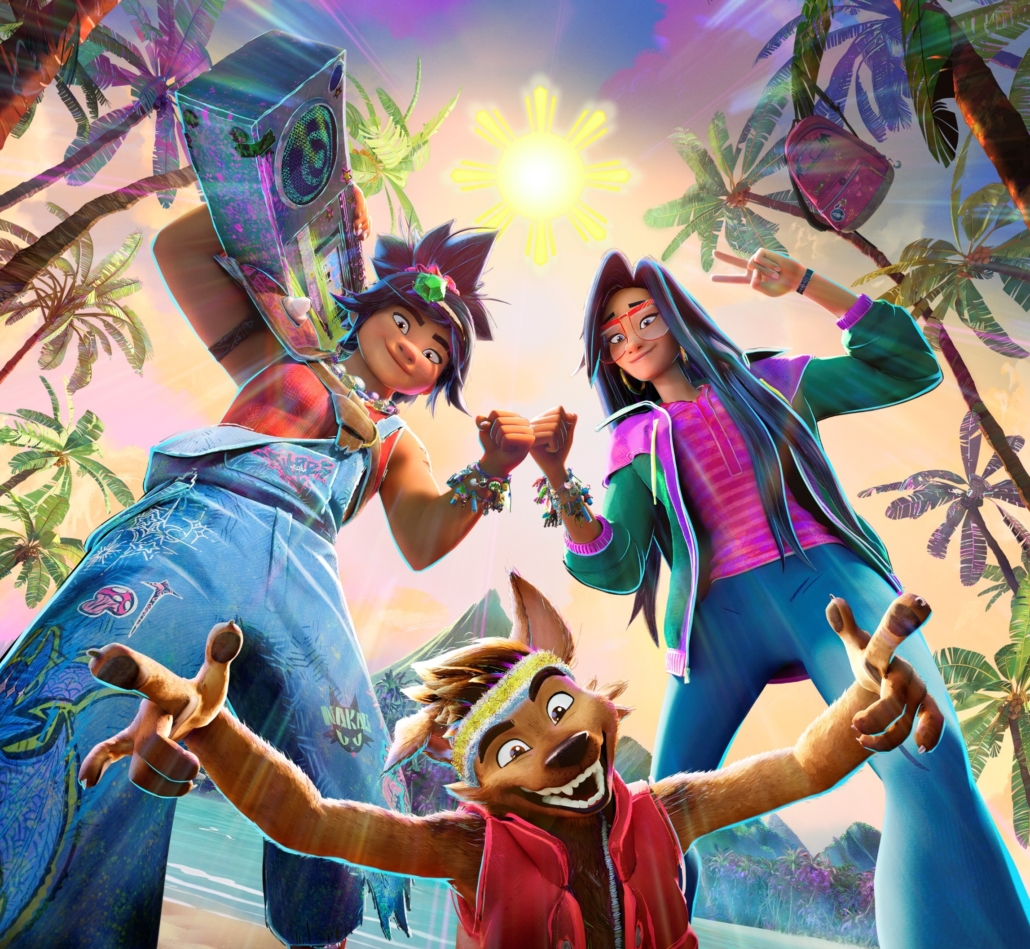

The animated fantasy film explores relationships formed and strengthened beyond the digital age.
4.5
“Onward” (2020), “Coco” (2017)
Last Thursday, the School of Cinematic Arts hosted an early screening of DreamWorks Animation’s new film, “Forgotten Island,” through the course “Theatrical Film Symposium.” The screening also featured a talk with the movie’s directors, Joel Crawford and Januel P. Mercado. The fantasy-comedy film, set in the Philippines in the ’90s, is set to be released in theaters Sept. 25.
The story follows childhood best friends Jo (H.E.R.) and Raissa (Liza Soberano). Despite their differences — Jo is impulsive and extroverted, while Raissa is more rational and shy — their friendship becomes stronger as years go by, accompanied by afternoons spent listening to the fantasy stories that Jo’s fun and peculiar grandmother, Lola Fatima (Dolly de Leon), shares with them.
However, their friendship is jeopardized when Raissa suddenly tells Jo she is moving to the United States for college. Jo is taken by surprise, unable to imagine a life away from her best — and only — friend. Hours before Raissa’s flight to the other side of the world, they find an unusual circular stone on the beach, which magically transports them to the fantastic forgotten island of Nakali.
They wake up without knowing where they are and can’t remember how they got there. Although they recognize each other, some things are different: Jo is wearing a mysterious crown, and Raissa is missing a part of her hair. The friends decide to embark on a journey to recover their memories and find a way to escape from the strange island.
The setting and references to the Philippines’ mythology are, undoubtedly, one of the most memorable parts of the film. As mentioned by the movie’s directors after the screening, their production works as “a love letter” to Filipino culture, to their friends and family, and to their memories. Most of the characters Jo and Raissa meet in Nakali are inspired by Filipino mythological creatures like the Batibat, the Tiyanak, the Manananggal and the Kataw.
These characters not only captivate the audience with their energetic physical traits and personalities, but also make the film’s plot unpredictable and appealing. The island of Nakali and the creatures living in it honor Philippine culture, increasing viewers’ curiosity about this country and its mythology.
The creatures not only add a layer of freshness to the story, as their personalities differ from Jo and Raissa’s, but they also work as tension-breaking elements with their funny words, expressions and behavior.
For instance, Bungi (Manny Jacinto) — a charismatic creature in Nakali — brings the audience a laugh when he shares that he’s too young to leave home, right before admitting he’s 200 years old.
Another character, Raww (Dave Franco), is inspired by Askal dogs, a breed native to the Philippines. Parts of his body change often, suddenly showing human or hyena postures and behavior, adding a consistent source of comedic relief.
The music is also well-suited for both the tone of the film and the era in which it’s set. The soundtrack manages to make the scenes feel less stressful, evoking nostalgia for the ’90s with tracks like “Don’t Stop Believin’” by Journey, “Baby Got Back” by Sir Mix-A-Lot and “Who Let the Dogs Out” by Baha Men.
Including popular musical hits makes the Filipino context feel more approachable for an audience not very familiar with the mythology and culture, bringing together cultural elements that are far from them with more recognizable ones.
The film’s comedy is engaging and charming. For example, in the key moment of conflict, Raissa tells Jo that she is moving to the U.S., and suddenly the kitchen in the background catches fire and ruins Jo’s makeup. The fun moments keep viewers engaged without moving their attention away from the key moments of the film. The film’s balance between comedy and drama makes the story dynamic and easy to follow.
Beyond the comedic aspects, the movie addresses a profound message on the importance of memories in shaping people’s identities, whether they are related to good or bad past experiences.
While trying to recover their memories to get out from the island and find the way home, Raissa and Jo relive some moments and feelings they kept hidden. And even though not all memories were happy ones, they end up realizing that all those experiences brought them to their current situation and, therefore, to their friendship.
The animation also keeps the story dynamic, as each mythological creature has a different size, animation style and color scheme. All these design elements work well to represent Nakali as fantastic, unfamiliar and very different from the real world.
“Forgotten Island” is a film that will appeal to audiences of all ages, whether that be children starting to understand the value of true friendship or adults who may need a reminder of its importance. The movie’s diverse and charismatic characters — accompanied by its balance of drama, fantasy and comedy, as well as a touch of nostalgia — come together with Filipino culture to successfully convey an important message: Friendship can break all barriers, even time and space.