MUCHO ADO
Dear Inde Navarrette, don’t let them change your name
The breakout “Obsession” star is the latest in a long line of Latine actors with “professional” names that better fit the industry.

By FABIÁN GUTIÉRREZ
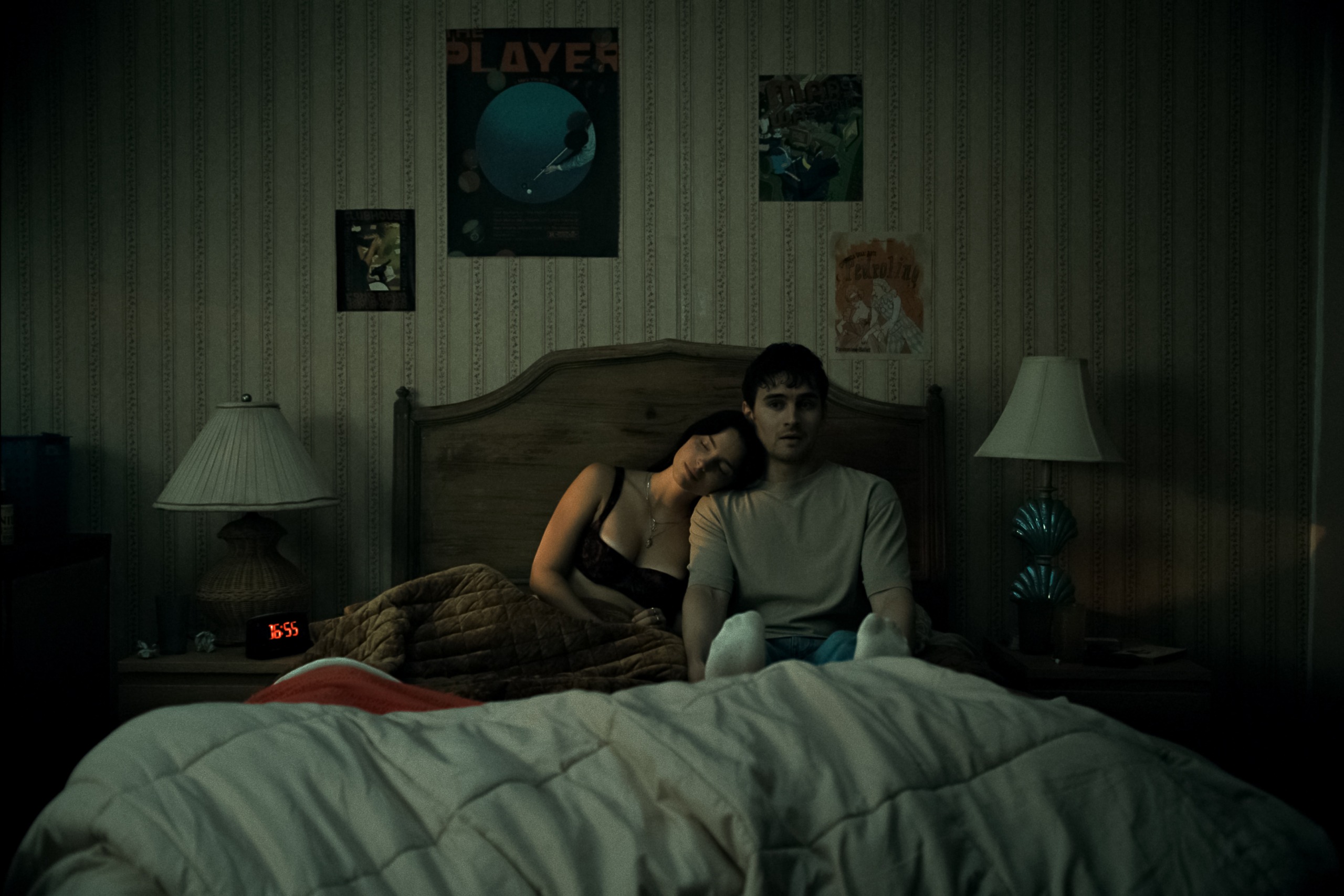

The breakout “Obsession” star is the latest in a long line of Latine actors with “professional” names that better fit the industry.
Inde Navarrette is a star. There’s no doubt about it.
“Obsession” broke records for a low-budget film after its theatrical release in May, and it led Navarrette to new heights as one of the recently announced X-Men as Rogue in the Marvel Cinematic Universe. The horror hit is also riding the ongoing wave of the genre’s resurgence, with Focus Features reportedly going all-in on Oscar campaigns for Navarrette and writer-director Curry Barker.
Navarrette’s success is a breath of fresh air: she’s both immensely talented and creative as an actor as well as magnetic and irreverent as an off-screen personality. For fellow Texans — she recently revealed her long-standing ties to Corpus Christi — Mexican Americans and all Latine artists, she’s an inspiration and reminder that we can and should be at the forefront of film and television.
But there’s one thing I can’t stop thinking about: the way she pronounces her last name.
The Spanish-origin surname Navarrete, when spoken in its original language, has all the rolled r’s and flat vowel sounds that you just don’t hear in English. So I was taken aback when I heard the actress herself pronounce it NAV-ə-RET-ee, rhyming with spaghetti. It sounded, to me, sanitized. Americanized.
I then thought of Anthony Quinn, the first Mexican actor to win an Oscar back in 1953. His is perhaps one of the most obvious cases of a name change derived from industry expectations. His full name was Manuel Antonio Rodolfo Quinn Oaxaca; to help him get a foot in the door, all that remained intact was his Irish last name.
A more contemporary example is 2026 Emmy nominee Oscar Isaac. At this point, you might see the angle coming: that’s not his full name. Óscar Isaac Hernández Estrada was halved, as he told it on “Saturday Night Live” in 2022.
“I said to Hollywood, ‘You can pick two of these names.’ Guess what they went with? The white ones,” he said.
Whether or not it’s played for jokes, the fact is that these are family names, left behind and outside of the limelight, because these actors would be more palatable to casting directors — and perhaps United States audiences as a whole — without them. With the rich history in the arts that the Latine community has within and beyond the U.S., it’s baffling and frankly insulting that even household names don’t feel at home.
But, notably, Navarrette isn’t leaving her name behind. She’s kept her last name intact in spelling; when the credits roll, you see her heritage just as clearly as you do when she’s interviewed, proudly repping her Mexican roots. One could certainly argue it’s harsh to criticize her for merely pronouncing it how she possibly heard it said around her while growing up. But it’s a missed opportunity, nevertheless.
Half of my professors this semester don’t know how to pronounce my name. They make educated guesses based on what they think it might be from an anglicized perspective. I can’t fault them for that. But it’s a single symptom of a larger, more diseased system that alienates Latine individuals in subtle ways. For the longest time in USC’s records, and still on my USCard, my name is spelled wrong because their digital system couldn’t handle letters with accent marks.
I hope to encourage my fellow artists to expose the general public to our names, just as much as artists can highlight what we look like, sound like and what we have to say on screen and on stage.
It’s the type of public service Xóchitl Gómez did for however many people were exposed to Nahuatl pronunciations for the first time when she broke out in “Doctor Strange in the Multiverse of Madness” (2022). It’s the type of stubborn pride that leads countless cinephiles to look up how to pronounce Alejandro González Iñárritu’s name. It is education as much as it is legitimization.
The Latine community in this country has a million and more worries that are more pressing and more life-threatening than this one. But urging the moviegoer to respect us and our names as much as the Marlon Brandos and Brad Pitts out there is to empower us to take our rightful place at the heart of the arts. The little details in generation-spanning efforts of equity and balance add up.
So, to the breakout Latine actor of this year, I say, firstly, thank you. I hope I speak for all of us when I say that seeing names and faces like ours “in the heights” of Hollywood is much-needed inspiration during difficult times. And secondly, in any and every way you can, you should take some turf back. Plant a flag, take up space, say your name and roll those r’s.
Fabián Gutiérrez is a senior writing about the Latine community and experience on screen and stage in his column, “Mucho Ado,” which runs every other Thursday.