‘Hollow Bones’ doesn’t take flight
Bestselling author Jodi Picoult’s latest novel centered on grief and motherhood has its highs but mostly lows.
2.5
For fans of:
Elin Hilderbrand, Nora Roberts
By ANNA JORDAN
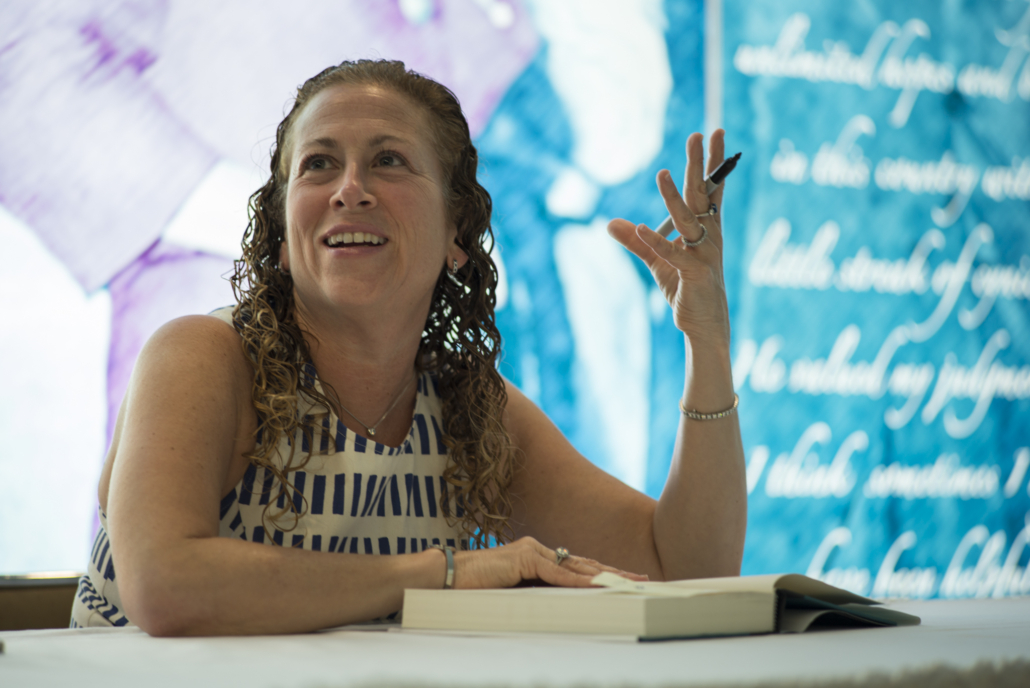

Bestselling author Jodi Picoult’s latest novel centered on grief and motherhood has its highs but mostly lows.
2.5
Elin Hilderbrand, Nora Roberts
Despite having over 40 million copies of her books in print, Jodi Picoult isn’t necessarily a hot-topic writer on the cutting edge of craft talk and controversy. She’s the kind of author whose books are often found in the hands of a middle-aged woman sitting on the beach or selected by a grandmother while shopping for her groceries.
Released Sept. 15, Picoult’s latest novel, “Hollow Bones,” falls victim to several stereotypes of grocery-store lit in prose, structure and subject matter — and yet, there’s still a glimmer of innovation hidden between its pages in its character work, holding the book back from complete derivation.
That glimmer, however, is painfully absent from the first of three parts of the book. “Hollow Bones” centers around Molly Ambrose, the 25-year-old director of the Rhode Island Department for Emergency Preparedness, who lost her mother when she was just two months old in the 9/11 terror attacks.
But Molly and her husband — a detective who is 20 years her senior — aren’t prepared when she unexpectedly gets pregnant. Despite wanting to focus on her career, her husband convinces her to have the child while his “knees still work.”
There are some compelling features of this first stretch. It’s fascinating to watch neo-archivism take place in a book about the 25th anniversary of 9/11 that was published just four days after that benchmark.
Yet, the prose is inundated with pop culture refreshes for the book’s presumably middle-aged reader and info dumps about emergency response protocol for the layperson. The dialogue is as overwritten as a CW show, and the witty banter swapped between characters reads like ham-handed millennial Tumblr references — a direct quote from the book: “Mother ate and left no crumbs.”
It’s a slog at times, to say the least.
But the best part of “Hollow Bones,” the most redeemable middle third, lies at the end of the slog and the beginning of the meat of the book: The receptionist at Molly’s OB-GYN who helped her through an emergency is actually her mother, Eloise, whom Molly’s father recognizes when the family is at lunch.
It turns out that Molly’s father, Adam, and her stepmother, Evie — who was also Eloise’s best friend — never told Molly that Eloise not only grew up in an abusive evangelical church before running away to art school, but had also changed drastically after giving birth to Molly.
Eloise began to hallucinate that, to save Molly from eternal damnation, she must give her daughter to Jesus herself — a textbook yet undiagnosed case of postpartum psychosis that no one recognized.
After weeks of fearing that she’ll hurt her baby and slipping in and out of auditory hallucinations, Eloise witnessed the tragic events of 9/11 on her way to a psychiatric appointment, which jolted her into making a seemingly lucid decision: To protect her baby from herself, Eloise must run away and leave her young family behind. It’s heartbreaking, it’s compelling and it’s super annoying that it was backlogged by Molly’s comparatively uninteresting narrative.
Beyond the ennui latent in Molly’s parts of the book, a single question can unravel most of the novel’s real estate: Is 9/11 essential to this story? On its face, perhaps — at times, the story features the push and pull of the public versus the private, a large-scale tragedy versus the inner turmoil of Molly mourning a person she never really knew.
However, in execution, the tragedy itself is a blip in Eloise’s already jam-packed story that rarely comes up throughout the second part of the novel. Upon entering the third part of the book featuring the aftermath of Eloise’s reintroduction, Molly has zero connection to the attacks at all.
Picoult uses 9/11 as an uncomplicated way to avoid imagined, original character depth by prioritizing a well-known, recent and public tragedy. At this point, the reader most likely has their own lifelong, preconceived emotions behind the highly publicized and publicly mourned attacks, bringing in their own sense of grief rather than earning any emotion from Picoult.
In the same vein, while Eloise’s individual story offers a much more impressive and unique display of craft from Picoult, in the greater structure of the story, 9/11 could be replaced with any life-altering mass tragedy, real or imagined. There’s too much distance between the event and the characters to make the character-event relationship focal to the emotional core of the novel.
In the author’s note, Picoult traces back her reasons for writing this book, saying that she received a letter from an incarcerated reader about her experience with postpartum psychosis and separately stumbled upon the famous PostSecret entry, reading, “Everyone who knew me before 9/11 believes I’m dead.”
But though those two instances in her life feel connected to Picoult, their relationship within the novel feels amorphous and underbaked. The core of this story is Eloise, not 9/11, and the novel would be one of Picoult’s most innovative yet if her story was left to breathe without external context weighing her down.
There’s merit to accessible authors like Picoult, but only if their novels can stand on their own two feet; though it tries, “Hollow Bones” often stumbles.