USC senior connects identity and music industry
Valeria Gonzalez’s senior capstone project focuses on a series of panels, exploring career pathways, connection and identity.
By XIADANI PEREZ
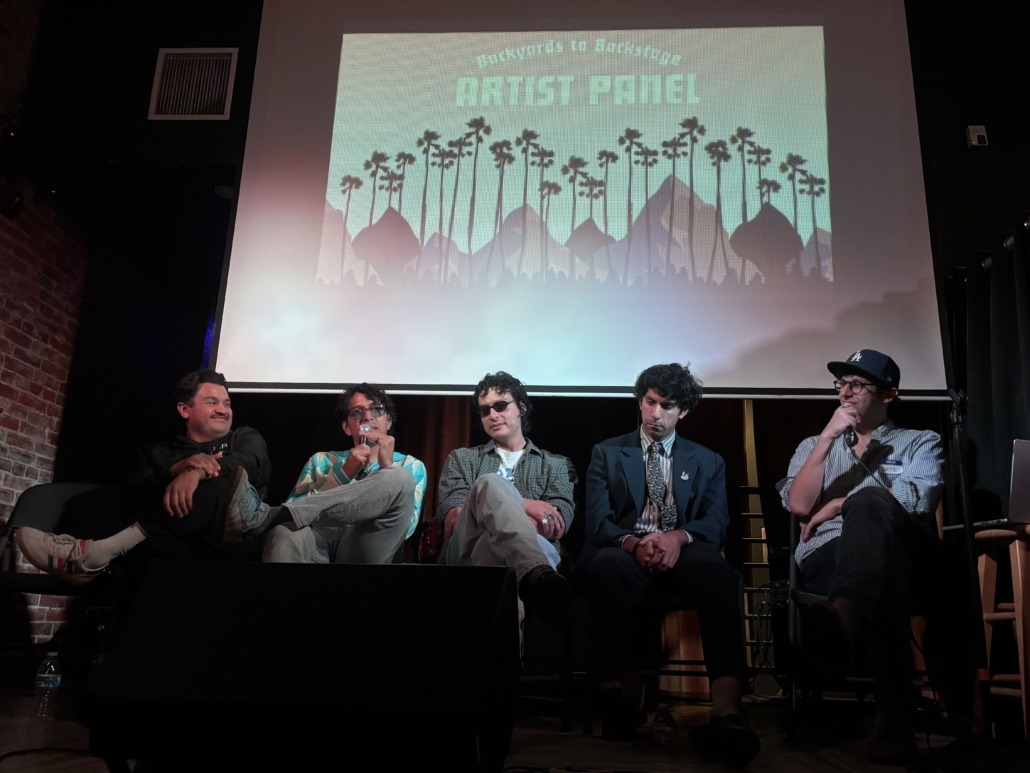

Valeria Gonzalez’s senior capstone project focuses on a series of panels, exploring career pathways, connection and identity.
Valeria Gonzalez spent her spring semester meticulously planning “Backyards to Backstage,” a series of speaker panels intended to bridge the gap between her local Pomona community and the professional music industry.
“I knew I wanted to bring the abundance of resources that I’ve gained these last two years in the music industry program to the very same community that introduced me to this world,” said Gonzalez, a senior majoring in music industry.
Gonzalez culminated her milestone Sunday by returning to the scene that inspired her at The Haven in Pomona. She attended many concerts at local independent venues that ignited her passion for live music.
Initially a Latino studies major, she ultimately transferred into the music industry program and was determined to merge both academic paths into an initiative to empower others.
“A lot of the artists that I brought in were Latinos, and they are passionate about uplifting their people, so that meant a lot to me,” Gonzalez said. “I love empowering other Latino and [underrepresented] professionals in the industry.”
Gonzalez said she considered this mission to be a testament to her own experience, emphasizing the importance of going the extra mile to introduce herself and establish relationships. The event embodied her values, acting as a faucet of knowledge for an eager crowd.
The afternoon opened with a designated space to take free headshots, followed by a workshop that offered tips to strengthen resumes. The workshop covered an overview of suggested structures and terms that catered specifically to aspiring music industry professionals.
The first panel, moderated by USC musicology professor Nate Sloan, featured artists Victor Campos, Eduardo Arenas, Pablo Sotelo and Jose Corona.
As the musicians each discussed their start in music, they made it evident that they identified with a particular notion: the necessity of finding a space for belonging. For them, not only did music provide a means of creative expression, but it also stood as a symbol of unity for listeners.
“I really appreciate that each of the artists on the panel were from all walks of life,” said Joel Ramirez, an attendee. “Some of them had started their journey a lot earlier, some maybe later, but they all still found their way into music.”
The discussion continued to cover the topic of identity and what it means to be Latino in an underrepresented environment. Corona, drummer of alternative-rock band The Red Pears, expressed his pride in representing his cultural background and understanding the significance of being a figure for others who relate to his experiences.
“As things grow and continue, we learn … who we are, how we present ourselves, our culture and our community. That’s a big part of you, and people see that,” Corona said.
With a better understanding of themselves as individuals and the growth of their bands, the artists said they learned that music has the power to push back against societal standards and expectations.
The pursuit of their passion came from realizing that their paths didn’t have to be defined by a traditional job. Music allowed them space to find success in a field that called to them, rather than dealing with dissatisfaction in the structure of other workspaces.
For Arenas, the bassist, vocalist and guitarist of psychedelic Latin soul and funk band Chicano Batman, music was about upholding their values and staying authentic to their purpose.
“Chicano Batman was also a rebellion for me against my job, against the status quo,” Arenas said. “Everybody looked at us like we were weirdos, and we were. We were out to not satisfy absolutely anyone, and that’s the root of our success.”
Eventually, music meant something more multifaceted for these artists.
“I loved music and loved making it, but I feel that in this world … it is a political statement to be Mexican American making the music that we do because we’re existing in these spaces that we weren’t allowed in before,” said Sotelo,
the lead vocalist and guitarist of alternative indie-pop band Inner Wave.
The panelists’ identities as Latino musicians fostered a sentiment of optimism that resonated with the audience. For some, they became beams of hope in local music scenes throughout Los Angeles and beyond.
“It really goes to show how community is such an important aspect of music-making, and for me, the most profound part of this panel was seeing the community in person,” attendee Vianey Flores said. “Just knowing that these musicians have been able to make it, and they exist in front of me.”
The second half of the series featured several executive professionals. Together, they shared their journeys spanning from early introductions to music and media to their current positions. The panelists’ experiences varied, from founding artist management and booking companies to promoters and strategic forces.
The official panel event concluded with a happy hour for networking, where guests were encouraged to engage with one another and the panelists. Gonzalez closed the event with a headlining show later that night for Integra Pink with supporting acts Los Frills and Ghetto Foos. She aims to continue her work as an intern with Live Nation and hopes to keep exploring the live production side of entertainment.
“That [connection] is something you can’t replace with anything — being able to foster this space and have people be happy and learn new things,” Gonzalez said. “That’s really valuable, and it means a lot to me to be able to contribute to that.”