NO STRAIGHT ANSWERS
Don’t fall in love with your friends
A relationship cannot remain emotionally balanced when one person carries feelings the other does not share.

By ANDREW CARDENAS
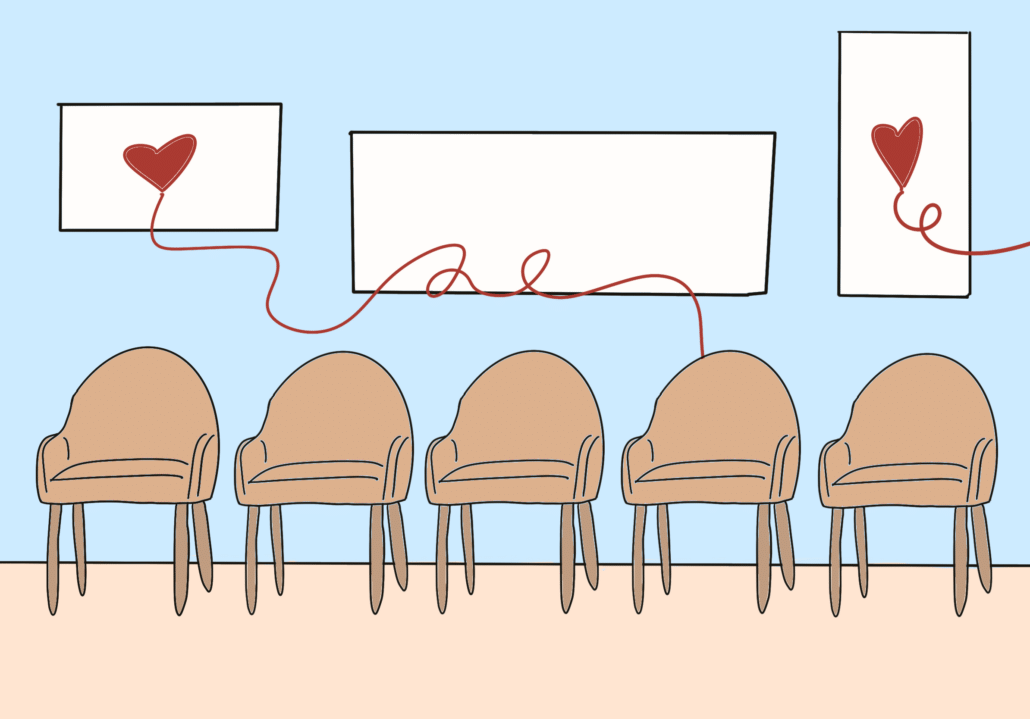

A relationship cannot remain emotionally balanced when one person carries feelings the other does not share.
For two months, my days have revolved around one person. When he’s sad, I notice before he says anything. I have rearranged my schedule to be there when he needs someone. My friends noticed that he seemed lighter around me; I treated that as evidence. From dining hall dinners and late-night conversations, I constructed a private future — and convinced myself he was building it with me.
Then I learned he has had a girlfriend for several years and is not attracted to men. The facts changed immediately. My feelings did not. That contradiction has forced me to confront whether we can ever just be friends.
The answer, right now, is no.
We cannot be just friends while my feelings for him exceed friendship. I know he is straight and I do not mistake his kindness for romantic interest, but that knowledge doesn’t diminish how deeply I care for him. I care deeply for my friends, too; with him, however, that care is accompanied by a desire for closeness that cannot be reciprocated.
Friendship cannot remain emotionally equal when one person is carrying more feelings. Friendship cannot survive as a waiting room for romance — even when you know that romance will never arrive.
Aristotle distinguished levels of friendships based on utility, pleasure and virtue in Books VIII and VI of “Nicomachean Ethics.” The highest form is one in which two people wish each other well for the other’s own sake. Aristotle attaches an important condition: that goodwill must be mutual and recognized by both people.
A relationship requires both people to agree on what it is. I don’t care for him because I expect him to love me back; my kindness is simply the overflow of feelings that already exceed friendship. But even unconditional affection is not neutral, and staying close is not necessarily proof of maturity. When friendship comes at the expense of healing, it can become an excuse to avoid letting go.
At USC, avoiding the grief necessary to let go is easy. Our residential campus compresses entire relationships into a few blocks. The same person can occupy your dining hall, classroom, study spot, friend group and walk home. Closeness accumulates without either person deciding what it means.
Routine begins to resemble commitment. Familiarity starts to feel like fate.
This ambiguity is acute for queer students. Attraction and sexuality cannot be assumed, so we learn to search ordinary interactions for possibility. A long conversation, or a daily invitation to dinner, can begin to feel charged precisely because certainty is rarely available.
Sara Ahmed’s “Queer Phenomenology” offers a language for this experience. Ahmed describes orientation as the way our lives acquire direction through what — and whom — we turn toward. Desire creates paths: It organizes where we go and which possibilities come within reach.
I oriented myself toward him. Because he became part of my everyday life, I organized my emotional world around his presence. But proximity is not reciprocity. Someone can stand beside you every day without moving toward the same future.
Romantic rejection does not mean the connection was imaginary. The care between one another may be real; what was imaginary were the conclusions drawn.
We should stop treating rejection as proof that we invented every meaningful part of a relationship, but we must also stop treating intimacy as proof that romance is inevitable. A connection can be authentic without becoming the kind of relationship one person wants.
Iris Murdoch wrote in “The Sublime and the Good” that love requires the difficult realization that someone other than oneself is real. Loving him honestly means seeing him as he is: a person with a girlfriend, a sexuality and a life I do not get to alter. Accepting that reality will require grief. I have to mourn a future that never existed.
It will also require boundaries: fewer daily meals, less constant availability and no longer performing emotional labor as an unspoken romantic bid. Distance is not punishment; it is how I can determine whether I value the friendship itself or only the possibility I attached to it.
The real question is not whether I can stop loving him on command. I cannot. It is whether I can eventually accept the kind of love he is capable of giving me, without treating it as a lesser version of what I wanted.
Maybe we can become friends when friendship stops feeling like a consolation prize. Maybe we can be friends when I can care for him in the way he does for me.
Andrew Cardenas is a senior writing about love in all its forms in his column, “No Straight Answers,” which runs every other Wednesday. He is also the DEIA director at the Daily Trojan.