LA’s infrastructure is inexcusable and needs to change
A waste and accountability crisis is at the heart of broken city services and crumbling infrastructure.
By JACOB STRAND
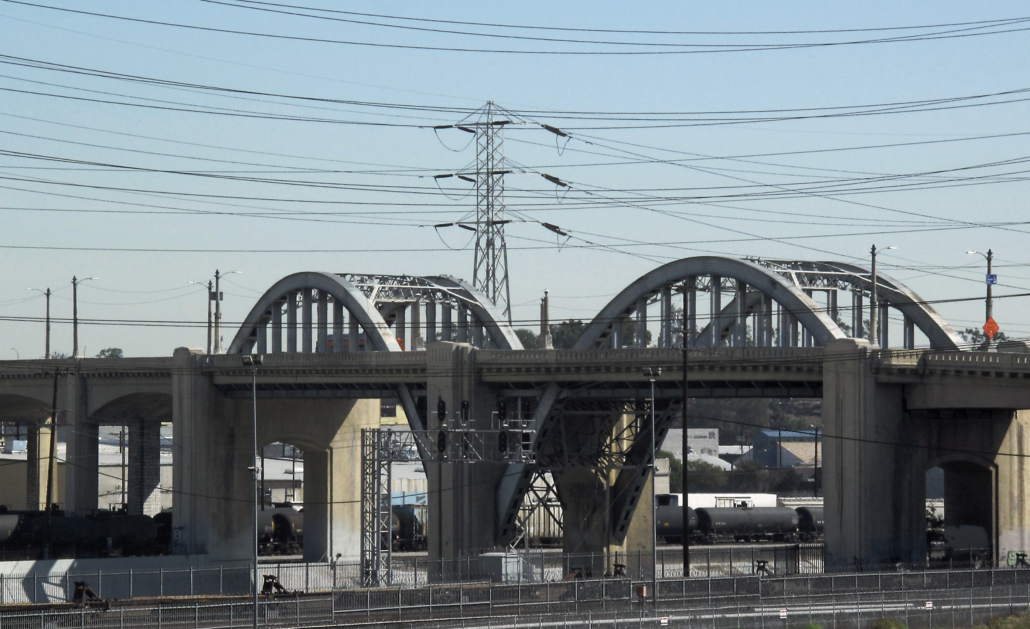

A waste and accountability crisis is at the heart of broken city services and crumbling infrastructure.
Every day, I skate back from my classes to see the same uncovered manhole in the middle of the sidewalk at the intersection of Vermont Avenue and Exposition Boulevard. As far as I know, the potentially dangerous, several-feet-wide hole in the ground has been left unrepaired for months.
Around University Park Campus and across Los Angeles, there is and has been a clear problem: L.A.’s most basic infrastructure is absolutely abysmal. Citywide, there are potholes that sit in the middle of busy streets, there’s cracked pavement that has been uprooted from the ground and broken streetlights that keep entire neighborhoods in the dark for months.
The current state of affairs is unacceptable for Angelinos who pay for and rely on these essential services for their safety.
The city of L.A.’s fiscal year 2024-25 budget totaled almost $13 billion, with around $4 billion allocated to public infrastructure services. While the city’s spending has been trending upwards year over year, our streets and sidewalks only appear to be getting worse.
In January 2026 alone, 6,707 potholes and 5,225 broken streetlights were reported citywide. In 2024, annual streetlight service requests in L.A. totaled more than 45,000, and total MyLA311 reports rose 5.2% the same year.
The rise in reports has coincided with increasing liability payouts year over year: Data from the city’s Controller’s Office revealed that over the past six years, over $350 million was spent on liability payouts for dangerous conditions.
City services have inadequately resolved infrastructural decay, despite billions in taxpayer funds apparently directed to the betterment of the city. A 2021 audit revealed a backlog of 50,000 unanswered service calls, and on-the-ground reports have uncovered service-requesting issues, long-standing unresolved issues and amateurish fix-up jobs.
The city’s failure here is in the lived experience of millions of residents. The over 5,000 lawsuits against the city for dangerous conditions since 2020 represent over 5,000 individuals who have claimed injury due to the city’s negligence of our public spaces.
City negligence has made residents’ lives more difficult and less safe, aggrieving thousands, and it has cost hundreds of millions of taxpayer dollars.
The question remains: why are city services so deficient; how does L.A. remain so structurally inadequate despite spending billions on its infrastructure?
L.A.’s wasteful and inefficient handling of issues doesn’t end at its street infrastructure, but also extends to other adjacent issues like homelessness, housing and transportation. At the root of this far-reaching problem is an inefficient governmental structure.
The city of Los Angeles is unique. Compared to many other major American cities, the city government is highly decentralized.
A strong city council system, a comparatively weak mayor’s office and a gigantic agency network create a burdensome administrative environment that makes essential and basic services difficult to function efficiently. Bureaucratic barriers limit comprehensive action, and the complex state of L.A.’s municipalities alongside fragmented permitting and departmental processes further complicates productive decision-making.
Jurisdiction over something as simple as street repair and construction includes seven independent agencies with their own leadership and goals, on top of 11 different city agencies and the mayor-appointed Board of Public Works.
But excessive city bureaucracy has consistently inhibited efforts across the board in providing government services, even beyond infrastructure. L.A.’s development of public transportation, for example, has been mired in years of intra-departmental deliberation and cross-municipal permitting delays. The result of these challenges is ballooning expenditures with minimal tangible results.
With the 2028 Summer Olympic and Paralympic Games approaching, Mayor Karen Bass and the city council have acknowledged these issues and taken steps in the right direction, instituting the first Capital Infrastructure Program in the city’s history. The program, which aims to reform some of the city’s information and coordination processes, will hopefully make progress in tackling L.A.’s excessive bureaucracy.
However, it should not take the arrival of the Olympics to force city leadership to tackle this long-standing problem.
“We need to bring in all of our infrastructure needs, not just the sidewalks around the [Los Angeles Memorial] Coliseum, but everything across the city, and really evaluate it,” said Michael Shear, the deputy chief of government affairs and research for the Los Angeles City Controller’s Office, in an interview with the Daily Trojan. “We have to actually grapple with our problems and our budgets as they are, and figure out how we can solve this as it is.”
The city’s government and current administration have a long history of missteps before finally stepping up to the plate.
Angelinos deserve better, and the city’s failure to deliver on something as basic as sidewalks ought to be answered for. Reform and accountability are not only what Angelinos need, but what we deserve. Los Angeles doesn’t have to be broken, from its streets and sidewalks to the heights of its administration.