Unemployment statistics hide entry-level job crisis
High youth underemployment, increased by artificial intelligence and the increasing cost of living, could lead to an affordability crisis for new graduates.
By YIYI XU
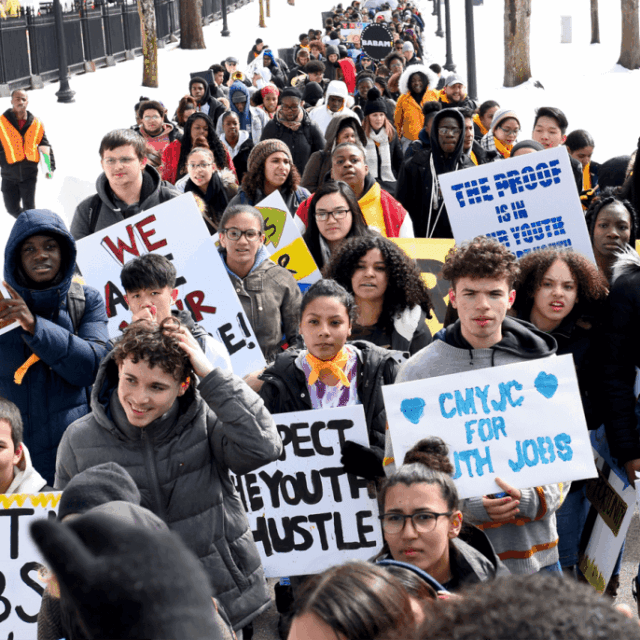

High youth underemployment, increased by artificial intelligence and the increasing cost of living, could lead to an affordability crisis for new graduates.
“It’s so hard to find a job nowadays” and “I wish I were born when the economy was trending up” are some of the most common complaints heard across college campuses.
For college students who soon have to find jobs after graduating, the transition from student life to working life is more of a crisis than an exciting new stage. People aged 15-34 across the world are more pessimistic about the job market than those aged over 55. This is especially apparent in the United States, where a 21% gap exists between youth and adults over 55 in believing now is a good time to find a job locally, feeling particularly uncertain about the job market.
This sentiment is strong even at USC, a school renowned for its career-concentrated network and resources.
Cecilia Wang, a sophomore majoring in cinema and media studies, said she feels anxious about finding a job in the future, or even figuring out what she could do. Despite the resources and prestige that come with a USC degree, she’s still struggling to see a positive career outlook because of the increasing number of people who hold degrees.
“There are so many people with degrees now compared to 10 years ago,” Wang said.
This seems to contradict official and statistical accounts of unemployment. As of August 2026, the U.S. unemployment rate was 4.1%, one of the lowest rates in the past two decades, with no sign of any immediate upticks. In fact, over the past year, the unemployment rate has been steadily trending down.
It can be easy to simply dismiss the anxiety and the hardship that students are experiencing in finding work as laziness, entitlement or being too picky about jobs. But this criticism masks the hidden crisis for youth in the job market.
In reality, while the overall unemployment rate in the U.S. has been steadily trending down, the youth unemployment rate has remained higher than the overall rate, and as of July 2026 is at 9.1% — more than two times the national average. What’s more, the underemployment rate for recent college graduates has been at its highest since the COVID-19 pandemic, reaching a crippling 42%.
Being in a developed economy with general job security doesn’t necessarily mean individuals are optimistic about their career prospects. The flip side of a stable job market is that young people cannot get into a market people aren’t leaving.
In a developed economy, most industries prioritize efficiency and stability over rapid expansion, meaning young people fight for limited job openings. This is exactly how the official unemployment rate can be deceptive when used to evaluate the difficulty new workforce members face in finding a job.
The lump of labor fallacy — the idea that there is a finite amount of jobs in the market, and that climbing the corporate ladder is becoming increasingly difficult because older workers in high-paying positions aren’t leaving — has been rejected by economists, though still widely held across society. The mismatch between economic statistics and limited opportunities available to young professionals can cause anxiety and pessimism among such demographics seeking employment.
To add to all of this, the rise of generative artificial intelligence in the workplace is creating an unprecedented, yet inescapable, wave of unease among youth. The increased involvement of AI tools has an outsized influence on college graduates trying to land their first entry-level job.
In the 80s, you could work your way up and climb the corporate ladder by starting with a commonplace white-collar position. But now, college graduates are expected to enter the workforce with experience, skills and knowledge that are supposed to be taught to them through their first job.
All of these factors are compounded by the increasing cost of living. California’s housing market has seen soaring prices over the past two decades, drastically raising the financial bar for homeownership. Affordability is impacted by both earnings and spending, and if USC students are struggling to stay in Los Angeles even with a job, their pessimism is grounded in real circumstances.
Ultimately, the U.S. — and especially California — still promises abundant career possibilities for its youth. But when young college graduates blame the economy for hardships in finding a job, older generations need to recognize it’s more than just an empty complaint. For all the students struggling to see the light at the end of the tunnel, the economy is making things difficult, but a difficult start doesn’t define your future.