DUGOUT DIARIES
How did the Brewers get here?
Milwaukee’s run to the World Series has been a sight to behold.

By BENNETT CHRISTOFFERSON

Milwaukee’s run to the World Series has been a sight to behold.
Before the 2026 Major League Baseball season started, FanGraphs gave the Milwaukee Brewers just a 1.9% chance of winning the World Series — good for 13th in the league. Their odds of making the playoffs at all sat well below 50%.
Seven months later, the Brewers have won more games than any other team in the sport, swept the mega-budget Los Angeles Dodgers in the National League Championship Series and handled the Tampa Bay Rays in five games to take home their first championship title in franchise history.
How did we get here?
Well, for starters, that preseason projection was a little insulting in hindsight: Milwaukee had the best record in the league in 2025, and it brought back nearly its entire core, besides former ace pitcher Freddy Peralta.
The Brewers’ success also speaks to the sport’s general unpredictability, with teams like the New York Mets — who finished dead last in the NL East at 74-88 — having vastly better title odds than Milwaukee before the season began.
However, the issue may not be how good the team looks on paper, but how well the team performs when it matters most. The Brewers, for all their recent regular-season success, have a horrific postseason track record.
In its last eight seasons, Milwaukee made the playoffs seven times, including five NL Central titles. During that span, the Brewers suffered five first-round exits and lost in the NLCS the other two times — both to the Dodgers. Before this season, they hadn’t even reached the World Series since 1982.
What, then, was so different about this year? Did Milwaukee simply decide that enough was enough and finally lock in?
I mean … kinda, yeah.
Let’s use the NLCS as an example. For the past two years, the Brewers and Dodgers have been the last teams standing in the NL, and one has swept the other each time — Los Angeles in 2025, and Milwaukee in 2026.
Last year, the Brewers’ offense went all but silent against the Dodgers’ billion-dollar starting rotation, mustering four runs total across the four-game series. The pitchers did what they could, combining for a 3.71 ERA, but there was simply no stopping Shohei Ohtani and company.
This year, however, Milwaukee’s bats came alive, averaging more than five runs per game and recording more than twice as many hits as last season’s series. The pitching staff was sharper as well, posting a 2.25 ERA, despite none of the starters going longer than five innings.
Brewers catcher William Contreras was at the center of this postseason, making headlines for his all-around dominance, and he may be the best example available of this year-to-year turnaround. In last year’s NLCS, playing with a broken finger, Contreras went 2-for-14 with no extra-base hits or RBIs; this year, he went 5-for-14 with a double, home run and three RBIs.
It’s not like Contreras was a substantially better player this season: His regular-season offensive stats were nearly identical to 2025, and most of his defensive metrics actually declined considerably. He found a way to pull through in the season’s biggest moments, and it’s paid dividends for his team — as David Freese could tell you, sometimes that’s just the way it goes.
Contreras is far from the only one, too. First baseman Jake Bauers went from 2-for-9 in 2025 to 4-for-14, six RBIs and an NLCS MVP. Second baseman Brice Turang improved from a .192 OPS in 16 plate appearances to a 1.290 OPS in 17. Even on the pitching end, reliever Aarcon Ashby went from a 4.50 ERA across three outings to 6 2/3 scoreless innings and two saves.
To be clear, this isn’t a case of 20 different players going on simultaneous Linsanity runs to win a World Series on the power of friendship alone; the Brewers are an extremely good baseball team.
They led the league in on-base percentage, ranked second in ERA and recorded by far the highest run differential in team history. Their one supposed downfall — a lack of home runs — didn’t stop them from scoring the second-most runs in the regular season, nor did it stop them from averaging nearly five runs per game in the playoffs.
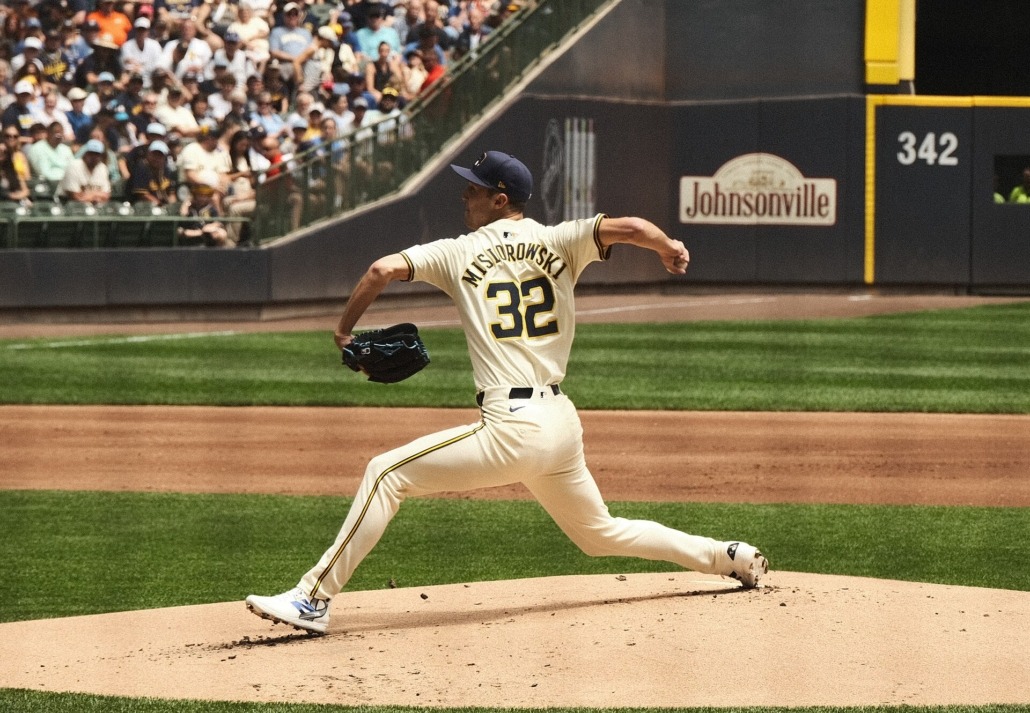
I haven’t even mentioned Jacob Misiorowski, easily the best pitcher in baseball this year, who threw 103.5 mph on the very first pitch of the World Series. Nor have I mentioned outfielder Jackson Chourio, one of the best young players in the game. For a team allegedly lacking in star power, Milwaukee seems to have plenty to go around.
The end result is a dangerous combination: an incredibly talented, severely underrated team, fueled by the constant heartbreak of years past and hungry for a championship no matter the cost. Those preseason odds may have been at just 1.9%, but what we saw this month didn’t surprise me in the slightest.
An earnest round of applause to the Brewers for finally winning that elusive first title. I’m just glad it wasn’t the Dodgers again!
Bennett Christofferson is a senior writing about baseball’s biggest stories and controversies in his column, “Dugout Diaries,” which runs every other Thursday. He is also the managing editor at the Daily Trojan.