Everyone is owed the chance to be heard
When we ignore and mock voices, listening becomes a cruel and selective sport.
By PIRIL ZADIL
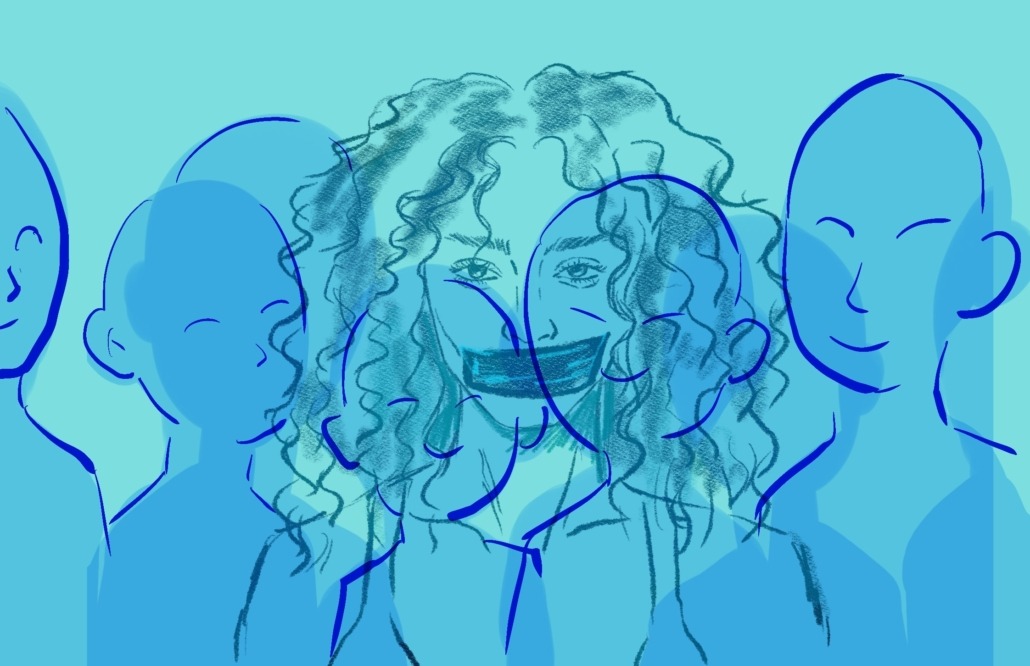

When we ignore and mock voices, listening becomes a cruel and selective sport.
Linguistic discrimination is defined by the University of Detroit Center for Excellence in Teaching & Learning as “when individuals are mistreated and/or devalued based on their language use.”
A 2023 study on “Confronting Linguistic Racism,” by Rossier School of Education professors Nooshan Ashtari and Stephen Krashen, illustrated how pervasive this issue remains. A participant in the study said, “I’ve gotten comments either to me or behind my back that I sound ‘angry’ when I speak in English because of my accent or their preconceived notion about Arab men and culture.”
During my time at USC, I have personally witnessed students mock Indian professors’ accents, going so far as to entirely tune them out for their “unintelligible” dialect. Yet, accent discrimination is only a single facet of a much broader problem.
People with disabilities that affect their speech are frequently interrupted in group settings by those eager to move the conversation along, too impatient to sit through someone’s momentary hesitation.
When I spoke with a friend at USC who experiences this issue firsthand, she emphasized how frustrating it is to constantly have to fight to keep up with everyone else’s pace instead of being allowed to communicate at her own rhythm.
While some indeed interrupt out of impatience, others mistakenly believe that they are sparing those with speech impediments from the struggle of having to articulate their own thoughts, assuming individuals who stutter or hesitate possess cognitive disabilities. In reality, disfluency is often merely a result of motor issues and physical limitations that have nothing to do with neurological disorders.
A clear pattern emerges in analyzing these examples: patience, consideration and listening are limited for people with non-normative communication styles. Even the slightest aberration — an unfamiliar accent, a slower pace, a non-traditional dialect — deters people from listening.
While the reasons for dismissal are false, the effects they have on the ignored are painfully real; being systematically ignored and silenced is damaging to the human spirit.
People who are conditioned to perceive their own voices as nuisances for others have a tendency to develop self-censorship. In fact, there is a theory in political science and mass communication called the “Spiral of Silence” theory that claims people tend to become more reserved and silent when they feel as if their opinion is unpopular or underappreciated in a group.
Without genuine self expression, people can even be led into social isolation where, lacking authentic human connections, they become increasingly depressed.
An analysis at Brigham Young University found that the lack of proper social bonds heightens health risks in a comparable level to smoking 15 cigarettes a day. The same study concluded that isolation and long-term loneliness are twice as harmful to mental and physical health as obesity.
Being silenced does not only affect the individual; it is also damaging to specific communities. The voices society often wishes to silence — people with ethnic accents, those with disabilities — mostly belong to the already marginalized. Therefore, dismissing their words advances the rhetoric that the only people worth being heard are able-bodied, white individuals.
Without people to advocate for solutions to the problems only they have experienced firsthand, change is stifled. Even if privileged people wish to speak up for the marginalized, they are not primary sources of what the community needs to improve.
Yet, people continue to listen selfishly; they denounce accents that do not match their ideas of smooth speech, and they expedite disabled people without the patience to wait a couple more seconds.
Dr. Chester Buckenmaier wrote for the U.S. Medicine that, “the biggest communication problem is we don’t listen to understand; we listen to reply.” Even before someone begins to speak, we’re already planning how we’ll respond — internally or externally.
As a society, people have to abandon the belief that speech is solely for the benefit of the recipient and recognize that everyone deserves the chance to be heard.
USC students, the next time you have to take a course from a professor whose accent challenges you, don’t retreat. Lean in. Sit closer, listen harder and treat it as a chance to grow. No one can get far in life avoiding voices that sound different from their own.
Likewise, when you feel tempted to interrupt a friend with a stutter, pause and remember that a little patience and an open mind is a low cost to bear for an improved society that accommodates all groups.