Students care for campus’ furry friends
Students are contributing to animal welfare through fostering and giving food.
By NOOR HASSAN
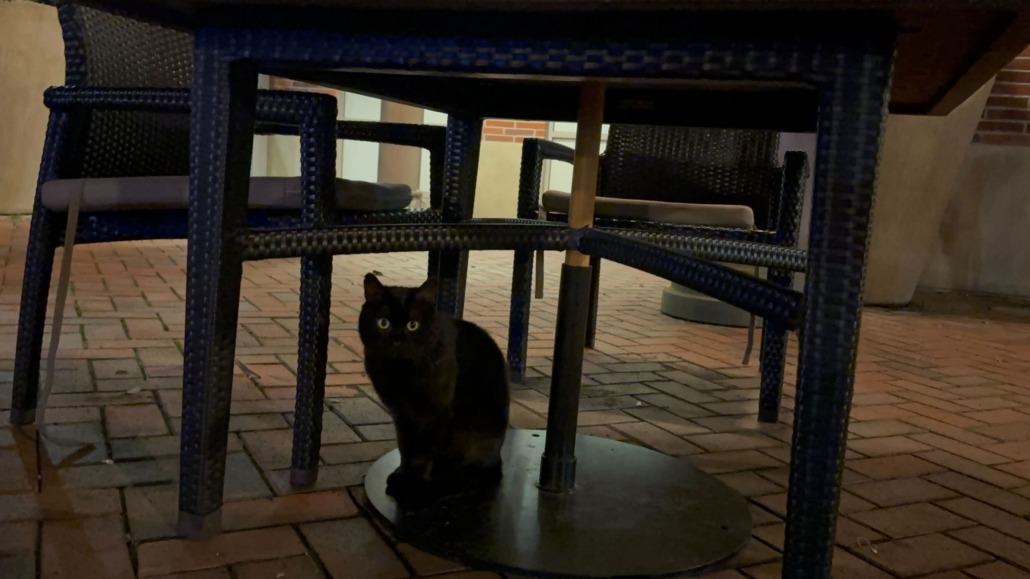

Students are contributing to animal welfare through fostering and giving food.
What began as a simple nightly habit of feeding a stray black cat soon grew into a movement that Donnaferl Belidhon, a sophomore majoring in film, never expected anyone to notice.
“I [wanted] to prove that kindness and tenderness and softness can still exist even now,” Belidhon said. “It’s a small thing. It’s a small life. It’s a cat. It’s precious. And that’s the least that I could do,” Belidhon said.
Despite the busy pace of college life, some USC students have found time to support animals in need. From feeding cats on campus to fostering dogs without forever homes, students are giving their time, money and hearts to the stray pets of Los Angeles.
Around Parkside Dining Hall at night, some students may notice a small black cat roaming under tables. For Belidhon, the cat, whom she named Sinta after the word for “love” in Tagalog, became part of her nightly routine.
“I noticed that the cat is there all the time. So I’m like, who’s feeding this cat? What do we do with this cat?” Belidhon said. “Why not try to feed it myself?”
Belidhon said the project holds great importance to her — after struggling with her mental health, she began feeding Sinta to form a new connection in a world she viewed as becoming “lonelier and colder.”
Donna began buying canned food and bringing it to Parkside. Soon, though, the costs began “piling up,” leaving her overwhelmed with weekly expenses. To help cover the cost of feeding Sinta, she set up an online fundraiser.
“It’s seven bucks every week … One dollar, 50 cents would make [a difference],” Belidhon said. “Why not start a GoFundMe?”
Despite putting up posters advertising the GoFundMe, Belidhon said donations have been few — at the time of publication, the fundraiser has received $20. Nevertheless, Belidhon continues to feed Sinta whenever she sees her and hopes others will treat the cat with care.
“[Sinta’s] fine there, she doesn’t have to get shelter, she doesn’t have to get rescued … as long as people feed her with actual, proper cat food,” Belidhon said. “It’s a good life for a cat, rather than being stacked away in some adoption shelter.”
While Belidhon cares for Sinta, two other students are helping animals across the city by fostering dogs from the overcrowded South LA Animal Shelter. Andie Morelli, a senior majoring in communication, and Daniela Soto, a senior majoring in public relations, said they began fostering after what was meant to be a casual visit to the shelter.
“We also saw the crisis at hand. There are so many animals at the South L.A. shelter in particular, and so many of those dogs are on the euthanasia list,” Morelli said. “We were really just taken aback by it and wanted to help.”
Soto said fostering had been on her mind for years. Seeing the dogs’ conditions and the shelter’s lack of resources made it difficult for her to walk away without adopting at least one of them. As a result, she and Morelli made it their mission to get these dogs adopted, and they created an Instagram account to introduce the dogs and their personalities to potential owners.
When becoming a foster animal caretaker, one must balance dealing with potential medical issues and meeting the animal’s daily basic needs. In addition to these responsibilities, fostering comes with other challenges, Soto said: leases, landlords and roommates can make caring for dogs difficult. Despite the obstacles, Soto said it’s worth it to make the animals happy.
“Even 24 hours outside of the shelter reduces their stress by so much,” Soto said. “Whatever people have the time for is helpful.”
When prospective adopters reach out, Morelli and Soto not only help match dogs with the right homes, but they also coordinate visits before adoption.
“Just getting that first point of contact is really helpful,” Morelli said. “Otherwise, you see people adopting, changing their minds, returning the dog, and that’s kind of where it gets messy.”
The pair has officially matched two dogs with new families and hopes to continue with their mission of finding others who are willing to foster. They hope other students recognize that fostering doesn’t require a long-term commitment, and that even temporary care can greatly improve a dog’s quality of life.
“Fostering is temporary,” Morelli said. “But it really improves the conditions of their life. It’s so much better than being stuck in a small cage in terrible conditions … anything that you can give an animal is way better than what they’re getting in the shelter.”