COMIC RELIEF
Podcasts are the new open mic
Comedians have an exciting outlet and opportunity to create their own platform.

By NINA KREMER
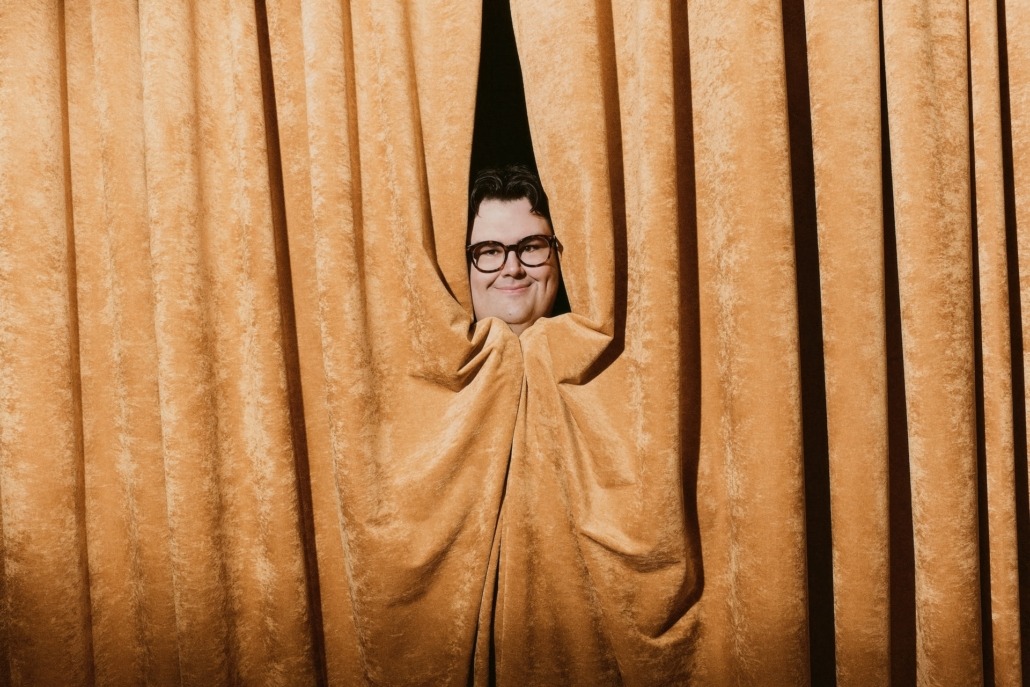

Comedians have an exciting outlet and opportunity to create their own platform.
“Why don’t you have a podcast?” internet personality Caleb Hearon asked fellow stand-up comedian Chris Fleming on the former’s podcast “So True with Caleb Hearon.”
“Because I think something awaits for me in the divine for resisting,” Fleming replied.
Not to womansplain the joke — I’m going to anyway — but Fleming’s response is funny not only because he suggests there’s something immoral about podcasting, but because he’s astutely observed that it seems to be a particularly fatal vice for most comedians.
There seem to be more and more podcasts popping up every day as washed-up celebrities realize they’ve found a new and exciting way to monetize their fame. But the medium isn’t all rewatching and rehashing old shows — sorry “Office Ladies,” I don’t care — it’s become a way for unknown comedians to get their start.
Podcasting is beloved by both the very famous and the not-quite-yet because it allows an individual to openly speak their mind on their own terms. There is no one controlling the narrative but the individual themself, and their podcast can be whatever they want it to be.
Legendary funny lady Amy Poehler won the first-ever Golden Globe for podcasting at the 2026 Awards on Jan. 11, a moment that solidified that the immensely popular medium has finally broken through to critical acclaim.
For new comics, it can be daunting to take that first step and get in front of an audience. The first time you tell a joke to a group of strangers rather than friends is the moment you truly know whether you’re funny or not. Bombing at an open mic is, without a doubt, a rite of passage.
But with the decline of third spaces and, really, all forms of human interaction, brought about by the pandemic, podcasting has replaced the open mic and even challenges stand-up comedy itself.
Now, you may be saying to yourself, “Nina, just two weeks ago you were decrying Vanity Fair’s assertion that internet shows are the new Late Night, and now you’re saying podcasting is the new stand-up. Get a grip, girl.” Listen, I can support my argument. Walk with me.
The plague of podcasting reflects a distinctly Generation-Z sensibility. Instead of pacing nervously across a stage, mic in hand, podcasters have aura, for lack of a better word. They sit in their comfy chairs, in their well-lit studios with mics set up for them — so much more nonchalant. They also rarely brave a joke alone, appearing in dynamic duos like the “Giggly Squad,” “Ride” and “Upstairs Neighbors,” or bringing on guests every episode to laugh with.
The back-and-forth dialogue feels much more inviting, like you’re privy to a comedian’s hangout and gab sesh rather than a mental breakdown. While some of the hilarity that naturally ensues when someone is nervous and the innate respect for putting themselves out there are lost, podcasting democratizes comedy in a uniquely contemporary way.
Getting in front of an audience is difficult enough, but gaining an audience is near impossible. Specials on streaming platforms really only allow more experienced comedians to reach people at home and make a name for themselves. Podcasting is so much more accessible. It has allowed up-and-comers to sit in front of a camera, do their thing and put it all out there for ruthless internet critics’ consideration, and it has propelled their careers massively.
Take Hearon, for example. The “Saturday Night Live” reject went viral on TikTok, but truly established himself as a podcaster. Now, he might be one of the most notable comedians with a podcast and without a following prior to his online fame — or USC’s very own Jake Shane. The Annenberg School for Communication and Journalism alum similarly went viral for his funny TikToks, and his podcast “Therapuss with Jake Shane” has become a hit, hosting many A-listers.
Even “SNL” cast members Bowen Yang and Ego Nwodim have joined their friend Poehler in podcasting, making audiences laugh on their own outside of the show — thank god they’re still around even after their unfortunate departures from “SNL.”
Similarly, seasoned stand-ups Tig Notaro, Mae Martin and Fortune Feimster have even banded together to form a podcast, “Handsome,” which combines their talents.
“The Bald and the Beautiful” and “Sibling Rivalry” also deserve a mention. Drag queens Trixie Mattel and Katya Zamolodchikova as well as Bob The Drag Queen and Monét X Change have used their podcasts to make a name for themselves as comedians outside of their performances on “RuPaul’s Drag Race.”
Podcasts allow comedians to try out new material, and while they lack the immediate and sometimes soul-crushing feedback of silence, they need look no further than their own comment sections to see what audiences think.
As the market becomes increasingly saturated and more and more people fancy themselves funny enough to listen to for hour-long episodes at a time, you might be asking, “Nina, why don’t you have a podcast?”
It’s a lucrative enterprise, and I’m afraid I don’t believe anything awaits me in the divine. So I’m excited to announce that you can tune in to my podcast, “Comic Relief,” on YouTube, Spotify and Apple Music. Just kidding … I don’t have a name for it yet.
Nina Kremer is a sophomore writing about comedy in her column, “Comic Relief,” which runs every other Wednesday. She is also Arts & Entertainment editor at the Daily Trojan.