CONFESSIONS OF A SHOPAHOLIC
Prairie dress, no husband necessary
The conservative aesthetic is finally separating from its right-wing ideology.

By JULIA HO

The conservative aesthetic is finally separating from its right-wing ideology.
A few months ago, I caught a somewhat flattering stray. A friend of mine was at a club meeting, and a girl he wasn’t very close with asked him if he knew me.
He answered that we were good friends, and she revealed that we were public relations classmates. The conversation flowed casually until she mentioned that she loved my style.
Specifically, she loved how I dressed “like a widower” and “Amish” nearly every day.
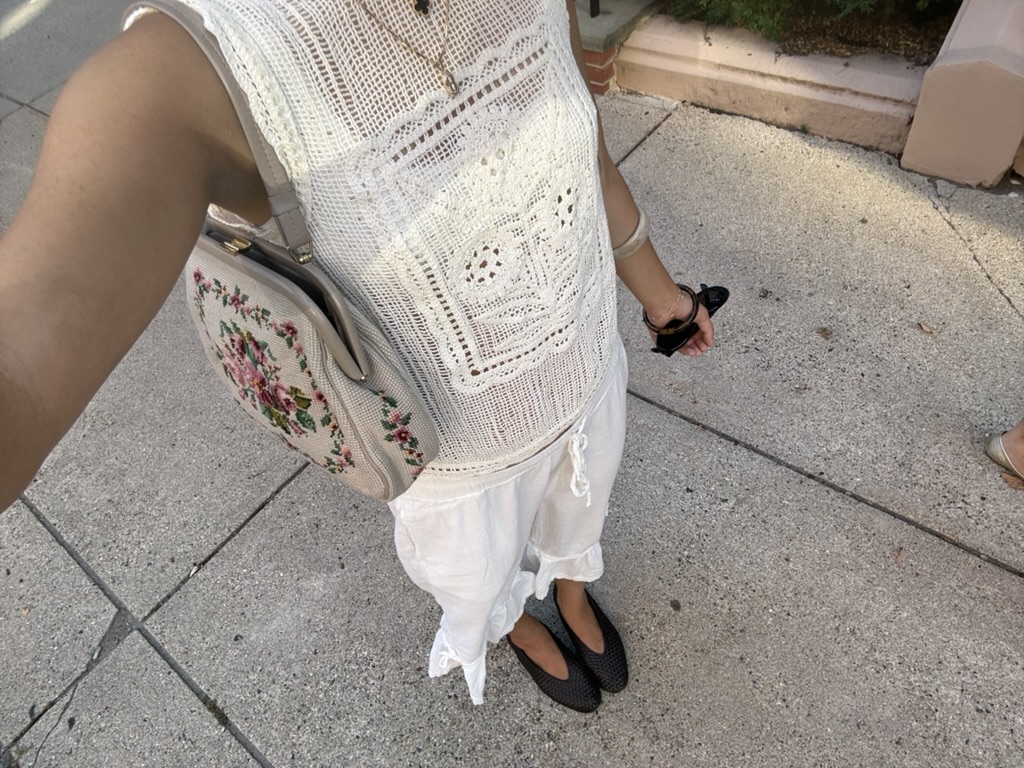
It was a fair assessment — I enjoy a monochromatic fit and am heavily invested in the black-garment population of my wardrobe. I do also love a long sleeve in August, a hem that clears the ankle and a neckline that hovers around the collarbone. I own three pairs of Tabi flats and two pairs of penny loafers, and I have never once put any of them on out of sadness. It’s comfortable and it’s sleek, and both are reasons enough.
The trouble is that over the past two years, the internet gave this look a new identity. What I wear now gets called “tradwife” — the better-tailored descendant of “cottagecore,” which was the same impulse with more mushrooms, more strawberries and worse construction.
Every name for this aesthetic is a marital status. Tradwife. Milkmaid. Nap dress. Coquette, if you squint. Men wearing the identical linen shirt get to call it linen.
The good news is that the label is losing its resale value. Nara Smith, who has built a TikTok audience of over 12 million on videos of herself making marshmallows from scratch in couture, spent a July 29 episode of “Call Her Daddy” taking the tradwife designation apart point by point — noting that she has worked as a model since she was 14 and that her husband does the dishes.
Smith has been objecting to this label since 2024, to no effect. So the position isn’t new; the price is. Smith told Alex Cooper on “Call Her Daddy” that the label has cost her opportunities. But Jessica Grose, a New York Times opinion writer, is unmoved, reading the movement as content rather than conviction. The aesthetic is outliving the ideology, which means the clothes are up for grabs, and I intend to grab them.
The discourse gets one thing wrong: Coverage is neutral. A Victorian widow was the most covered woman in any room. Nuns, same thing. Amish dress is closer to anti-fashion — the Ordnung governs dress precisely so its wearer isn’t performing for outsiders, which makes wearing it as a trend a betrayal of the source material so complete it loops back around into chic.
What makes the tradwife look a tradwife look is not the fabric. It’s softness plus an implied man: the apron, the ditsy calico, the loose romantic curl, the children just off-frame. Delete the husband, and what’s left is an extremely austere silhouette.
So why not just let the label go? Researchers who have analyzed tradwife accounts find the content isn’t just sourdough and analog living: It casts feminism as the device that shoved women into a hostile labor market and offers submission as the solution. A March 2025 study in Terrorism and Political Violence, analyzing 61 accounts using the tag of “tradwife,” found anti-feminism was the common thread across an otherwise ideologically scattered group.
None of this is new. The 1970s prairie revival — brands like Gunne Sax and Laura Ashley — came out of back-to-the-land counterculture and ran concurrent with second-wave feminism; hippie communards and Mormon brides bought the same dress. The look has always been politically illegible, and that’s the feature. Modest dressing was never white Christian property, predating social media by centuries.
Monochrome does most of the labor, and not for noble reasons. One color head to toe is the easiest thing to throw on. It takes no thought at 8 a.m. and looks deliberate whether or not you were. Black is my default. White monochrome is permitted in summer and is arguably more severe, since it announces you do not intend on doing any housework.
Then choose texture instead of print. A high lace collar, a crochet knit, an eyelet panel — anything a little Victorian at the throat for a touch of mourning and a sneak of ’70s. For colder weather, a classic rollneck sweater is a must-have.
Floral is permitted … conditionally. Go big and dark — palm-sized flowers on a dark background, the kind of print that was everywhere in 1974. Avoid tiny pastel sprigs on cream: That’s farmhouse curtain, and you might actually look like someone’s wife. No, thank you. Another alternative is a lace slip skirt to forgo flowers altogether.
Shoes must have an opinion. For me, the average ballet flat doesn’t say enough; a Tabi flat is like a full-fledged argument. Penny loafers in brown or black. Boat shoes, unironically. A clog, a boot, anything with weight and visible hardware.
Accessories are where you can afford one soft thing, provided it isn’t wholesome. A handkerchief tied at the back of the head is fine; knotted under the chin, it is a milkmaid, so mind the knot. White crew socks with a lace trim, worn with loafers or Oxfords, read schoolboy instead of sweet. Sunglasses, always. Nothing kills wholesome faster.
Julia Ho is a senior writing about fashion history, pop culture and the shopping decisions in between in her column, “Confessions of a Shopaholic,” which runs every other Wednesday. She is also a chief copy editor and the staff development director at the Daily Trojan.