Dating in the modern age is often considered a difficult feat, with technology and the internet constantly at the center. The latest romance movies seem to only emphasize this struggle further, with recent releases such as “Regretting You” (2025) and “One Night Only” fumbling through Instagram mentions and TikTok slang, resulting in cringeworthy nonsense.
However, in an era where rom-coms seem overly concerned with being both relevant and timeless, “Finding Emily” is a shining light. The directorial debut from Alicia MacDonald leaps and lands gracefully in the middle, finding the perfect combination of chemistry, plot and relatability.
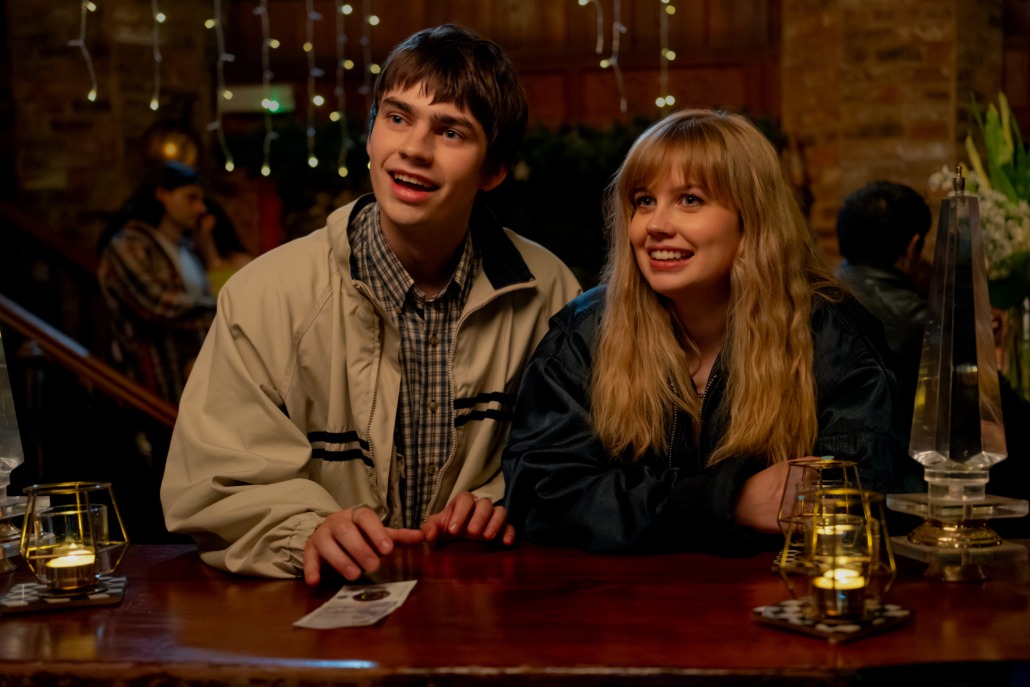
“Finding Emily” follows 23-year-old university sound engineer Owen (Spike Fearn), who, after meeting his dream girl named Emily in a club, asks for her number. But when he tries to contact her the following day, he discovers that she had mistyped her number and is unable to reach her. Instead of giving up, he decides to make his search for Emily public, attracting the attention of a psychology student and fellow namesake, Emily Raine (Angourie Rice).
Daily headlines, sent straight to your inbox.
Subscribe to our newsletter to keep up with the latest at and around USC.
Emily Raine is desperate to finish her thesis paper, which theorizes that romantic attachment is an unnecessary byproduct of evolution and love is no longer needed in modern society where adults can function independently. Fascinated by Owen’s “delusional” behavior, she decides to make him her case study without his knowledge and helps him pursue his missing Emily.
Fearn’s charm does a great job of carrying the film’s slightly creepy premise. Owen, more often than not, acts without thinking, which would come off as frustrating if not for Fearn playing him with sincerity. Owen is obviously well-intentioned, and his hopeless romantic delusions rub off on the audience just as much as they do on Emily Raine. Fearn’s comedic timing is also well-balanced with his emotional deliveries, making Owen all the more likable.
For example, after anonymously emailing hundreds of students named Emily at the university, Owen becomes a controversial figure as email recipients have mixed feelings about his intentions. As a result, he decides to go on the school’s live radio to both clear his name and clarify his intentions.
In the process, he reveals that he has written a song about the mystery Emily and is immediately coaxed into playing it on air. Fearn’s charm is so strong that what would have been an especially cringeworthy scene is actually stomachable.
Owen’s character also brings out the best in Emily Raine, who is less than tolerable at times. Several of the film’s conflicts derive from her selfishness and inability to recognize it until after she has created problems for others. However, combined with Owen’s determination and their fantastic chemistry, the audience can’t help but root for the two to succeed — both individually and together.
The film doesn’t pretend the two are attracted at first sight, especially considering that their entire meeting is centered around another girl. Their fall for each other is slowly built up, and when they eventually confess, it doesn’t feel rushed or forced. But when something as small as the offer to hold her hands as they push through crowds becomes more than politeness, the moment feels like an exciting reward for the anticipation.
The film also does a fantastic job of depicting various other relationships authentically. Emily Raine’s interactions with her best friend Anna (Cora Kirk) feel unbelievably natural, with inside jokes and heart-tugging moments to support. Owen’s relationship with his brother Matt (Jack Riddiford) is illustrated similarly as they bicker and wrestle but show up when it matters.
The soundtrack of the film is fun and fitting: “Let’s Have A Kiki” by the Scissor Sisters plays in the background as Owen and Emily Raine try to look for mystery Emily’s name at several LGBTQIA+ clubs; “Super Graphic Ultra Modern Girl” by Chappell Roan accompanies Owen’s crusade as it blows up online; and even “Call Me Maybe” by Carly Rae Jepsen makes an appearance. The playlist understands who its audience is and targets them accordingly.
The editing of the movie emphasizes its comedic elements. One of the best scenes in the film is when Owen is mass-emailed by the Emilys he mistakenly cc’d instead of bcc’ing, and we see all of the Emilys physically surround him.
The inclusion of social media and slang can be cringey at times, but not because it feels unnatural. It’s truly a feat when the use of phrases like “lesbian-coded” and “manic pixie dream girl” don’t feel as if they were miswritten by a middle-aged person.
The film is far from perfect — Owen’s tendency to dig himself into a hole and Emily Raine’s similar habit of self-sabotage become increasingly irritating.
But “Finding Emily” transcends the romance genre by acting as a dedication to love itself. Although contacting 318 Emilys in the hopes of finding “the one” isn’t necessarily the best idea, the film shows viewers that finding love in all its forms is easier than it seems.