Go ahead, be the villain because you can
Do not let anyone dictate how you should live, only you can answer to yourself.
By MILAN HOANG
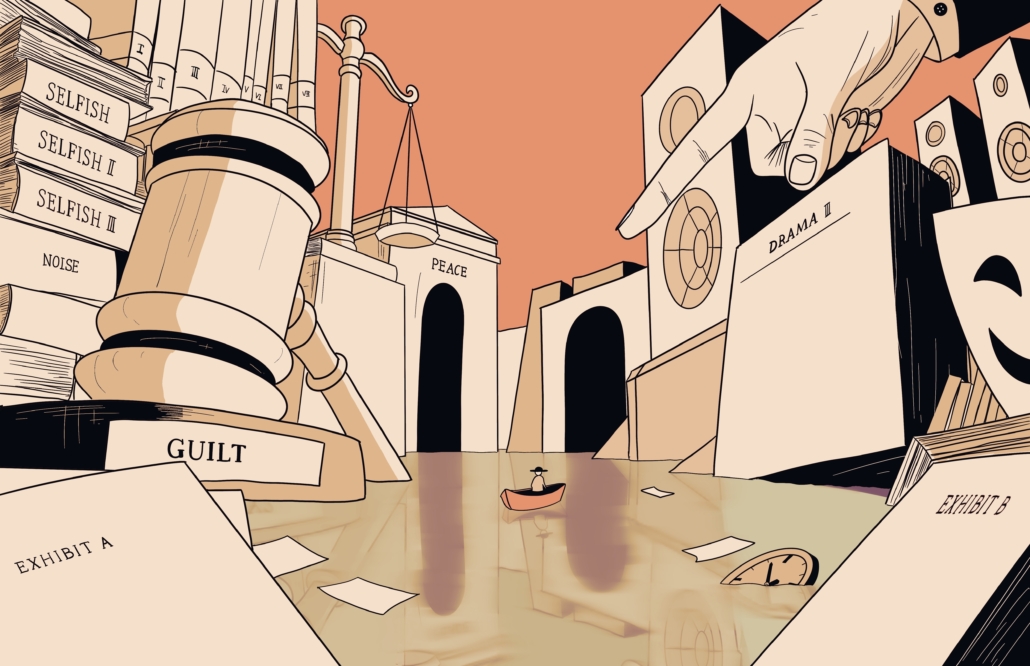

Do not let anyone dictate how you should live, only you can answer to yourself.
Who are you living for? The answer should be you.
Not the version of yourself that reads well to everyone else — the one that you have to live with.
Over the summer, I reached out to a former friend to ask for clarification and closure on a situation I honestly had no business reopening: I wasn’t owed an explanation. I wasn’t entitled to closure. But sometimes, you just want peace of mind.
However, maybe in doing so, you disturb someone else’s peace. Maybe it’s better to leave things alone.
On paper, some people would call bringing old issues up the wrong call. Reckless, a little inconsiderate and really unnecessary. It’s proof that you weren’t careful enough with someone else’s feelings. But stop caring about what that says about you — reaching out doesn’t have to say anything at all.
Sometimes, we can start to treat our mistakes as circumstantial evidence in a trial that other people get to preside over: We break something, hurt something, lose something and our first instinct isn’t “how do I feel about this?” — it’s “what would they think?” The problem isn’t the mistakes we make — it’s how much authority we hand other people over what those mistakes say about us.
It’s worth asking where that instinct to please others at a detriment to our emotional health even comes from — as it turns out, it’s trained, not inherent.
An October 2024 YouGov survey found that 93% of Americans admit to at least one constant people-pleasing behavior: things like avoiding conflict, saying yes when they mean no, feeling responsible for managing other people’s feelings. More than half — 52% — say they feel unable to say no at all.
That’s not a personality quirk shared by a sensitive few; that’s most of us, most of the time, quietly editing ourselves for an audience that may not even be watching that closely.
We forget that the people we imagine judging us are, most of the time, far too busy holding their own trials to sit in on ours. We walk on eggshells for a world that isn’t watching as closely as we think. Doing what’s right for you doesn’t reward caution — it rewards the decisions you actually made for your life, whether they’re “bad” or not.
This moral tension feels especially sharp here, at USC. USC’s culture runs on being visible — Los Angeles’ proximity to the entertainment and business industries means networking and branding aren’t optional in student life; they’re a part of the infrastructure. You’re expected to treat yourself like a public project under construction, one that other people always have access to evaluate for potential.
In that kind of environment, the pressure to be legible — to make every choice explainable, every decision defensible to some imagined room of recruiters, professors or future contacts — settles into daily life. Living for an audience stops being a choice and becomes the default setting.
Which is exactly why choosing to live for yourself instead — quietly, without needing it to be defensible — is a countercultural act on a campus like this. It’s not rebellion for its own sake, it’s a refusal to let your life be morally surveilled and authored by an audience you never agreed to perform for.
That means giving yourself permission to make the bad decision sometimes, the one that doesn’t hold up on paper. Give yourself the same grace you’d give a friend who did the exact same thing — especially when no one gave it to you.
You don’t owe anyone a clean narrative or an airtight case for why you did what you did. You might not get the clarity that you want from others — no explanation, nothing that resolved it the way you may have expected it to. But you get something else instead: the version of peace that comes from knowing you did something for yourself, not for the responses of others.
The more “responsible” and palatable choice ends up costing you something more — your peace. So, call someone your friends wouldn’t approve of. Tell someone off. Step on someone’s toes. Skip the explanation. You don’t need one. And you most certainly don’t need permission to live.