USC clubs are too exclusive
Competitive clubs are making it impossible for students to explore their interests through student groups.
By YIYI XU
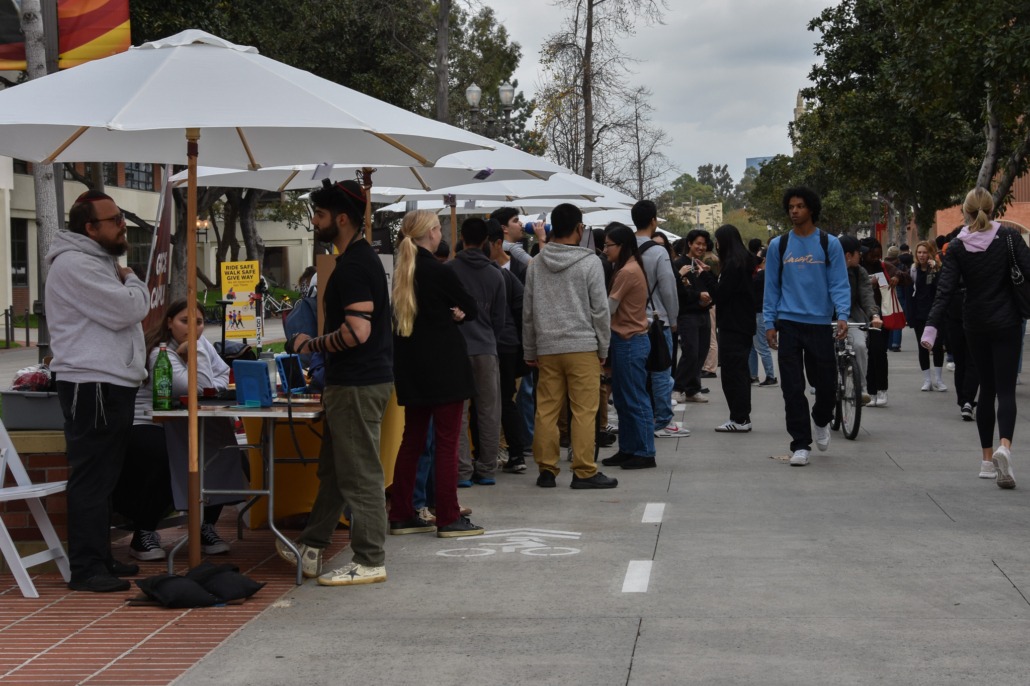

Competitive clubs are making it impossible for students to explore their interests through student groups.
As a freshman walking through the tents at the Involvement Fair for the first time, you walk by rows upon rows of consulting clubs and pre-professional organizations. They talk about mentorship, career preparation and networking. But you keep wondering: where are all the cooking clubs, non-competitive leisure sports, arts and crafts, and book clubs?
It’s not that USC doesn’t lack a variety of student organizations; over 1,000 clubs are listed on EngageSC, including service-focused, cultural, athletic and artistic clubs. The problem is that recreational clubs are often overshadowed by competitive, career-oriented clubs. The Involvement Fair simply doesn’t fully capture the variety of USC’s extracurricular life.
USC has long been known as a career-oriented school. Famous for its alumni network, location and innovative curriculum, USC attracts career-minded students. These clubs offer networking opportunities and skill development one wouldn’t learn in the classroom, and in some cases, the selectivity of these clubs makes them rigorous. However, we may need to readjust the way we view them; they may offer great opportunities, but they’re not all there is to college life.
You can expect the same application process at most of USC’s pre-professional clubs: attending the info session, a long written application, an interview for the lucky few and perhaps a second interview or a tryout. All this, just to realize that you might not even get in.
Underlying this draining process is the assumption of all the pre-professional clubs at USC that every freshman who just walked onto campus already has a loaded resume, multiple achievements and extracurriculars, and the willingness to commit time and passion to the club. But most freshmen don’t know what they want their college life to be the moment they step onto campus.
Understandably, these clubs want to know they are wisely investing time and money into letting the right people enter their community. Therefore, it makes sense for them to look for specific qualities, like dedication and passion. But the commitment level required to simply apply also means it’s almost impossible for people to explore all of their interests. The stakes are too high.
This seems to contradict the entire idea of attending college, supposedly a platform for all to explore what they want to do through higher education. It’s supposed to represent infinite opportunities and unlimited possibilities. But why are the University’s clubs perpetuating the pressures of the job market?
The even bigger issue behind these competitive clubs is inequality in the selection process. According to a study from three USC researchers in the Journal of Student Financial Aid, the demanding recruitment process disproportionately alienates low-income students who rely on working outside of class to support themselves, even when receiving financial aid.
Based on a Brown University study, students from more privileged backgrounds tend to have more resume-building experiences entering college compared to those who came from underfunded schools and poorer family backgrounds.
The difficult process of getting a club to gain the status of a recognized student organization at USC doesn’t help either. The requirement for five student officers who need to complete their training, a full-time USC faculty member and various paperwork to register, regardless of the type of club, demotivates people who just want to start a club with people of common interests.
This perpetuates a vicious, competitive recruitment cycle. Freshmen who join the competitive clubs will rise through their ranks and continue the process, while those with non-academic interests have to struggle to find their community themselves.
Several other elite schools have implemented policies to make student clubs more accessible, including requiring clubs to transparently outline the approximate time each part of the application would take, giving greater visibility to recreational clubs, making the catalogue of clubs easier to navigate rather than having to visit dozens of Instagram accounts and webpages just to get the most basic information, or even just making the process of establishing a new club easier.
That said, USC has already implemented basic rules to prevent club applications from becoming unjustly selective, barring clubs from denying membership based on major, GPA,membership in other organizations, or even requiring interviews. But, obviously, many clubs still interview and have rigorous application processes. We can do much more.
None of these reforms would require eliminating selective clubs, but would instead open more options and make opportunities accessible for the students who need them.
Ultimately, the problem isn’t that USC needs more clubs, but that we need more accessible clubs with lower commitments, allowing students to explore the University’s offerings and find people with common interests without first having to prove commitment or qualifications.