Meal plan exemptions reveal larger issue of high University costs
Students using religious exemptions to avoid paying for University plans are often guided by dietary, health and financial concerns.
By ANYA MOTWANI
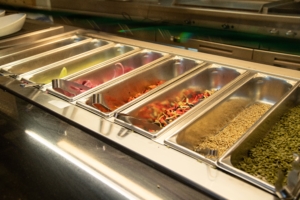

Students using religious exemptions to avoid paying for University plans are often guided by dietary, health and financial concerns.
Getting a religious exemption to get out of USC’s mandatory meal plan proved harder than Aqsa Janoo expected. For the then-sophomore, it took almost a month going back and forth with the University before she received a refund for the plan.
“It was not easy. I didn’t have a clear idea of where to go or where to submit a form for getting out of [the meal plan],” said Janoo, a junior majoring in business administration. “Initially, I was presented with the choice of getting reduced down to the Community 50 plan.”
The Community 50 plan is marketed as an option for students not already on a required one. It includes 50 meal swipes for use around campus and 100 dining dollars.
“[I had to] keep following up in order to explain why even that plan was not suitable for me,” Janoo said.
Janoo said that for her and other Muslim students who follow a halal diet, the requirements for processing meat and limiting cross-contamination with non-halal foods are often not met at University dining options.
USC’s meal plans range from $500 to $4,840 a semester, and all sophomores, juniors and seniors living in University housing are automatically assigned the $2,074 per semester Flex120 plan. The Community 50 plan offered to Janoo now costs $960 a semester.
USC started adapting its dining halls to offer options for students who would normally opt out for dietary or religious reasons. The University recently opened a new dining location at the USC Chabad Jewish Student Center this semester, where any student can use meal plan swipes to access kosher food options.
“We are doing a parallel process [for other religions]; we’re trying to do everything at once. We are working with [USC] Hospitality to land a Jain meal plan. … One of the things we have done for Hindu students is we have a pop-up cafe called Conscious Eats every Thursday,” said Varun Soni, dean of religious life. “For Muslim students, right now, almost all of our meat is already halal on campus. … We’re trying to work with vendors to get even a higher level of halal.”
Anya Shah, a Jain student, submitted her request for religious exemption to the USC meal plan in May 2025, after realizing how few options there were while enrolled in the Cardinal Meal Plan her freshman year.
“The options were generally very limited, and I felt like I was not eating healthy by any means,” said Shah, a junior majoring in business administration. “One of the biggest issues I had was cross-contamination. … They wouldn’t be cleaning the pans in between the meat products touching, [and] because I’m vegetarian for religious reasons, it was really hard for me to go through that.”
The approval process was almost immediate. Shah credited the swift process to submitting her appeal early, before the next school year began. Both Shah and Janoo said few healthy options fit their respective dietary restrictions.
“I’m eating healthier [this year] because the options that I could eat at the dining hall were not super healthy,” Janoo said. “I would always just be eating the pizza or the veggie burger or something like that. I know I’m spending less [on groceries than on the meal plan] and also eating the food that I want and [that is] better for me.”
In February, a Stanford University student published an essay in The Times, a British publication, alleging that fellow undergraduates were falsely claiming religious exemptions to the required meal plan.
But for Shah, the issues mandatory meal plans posed went beyond students claiming false exemptions.
“It really just shows a larger issue of the lack of proper, healthy, nutritious, good food to some level in these dining halls,” Shah said. “If people are resorting to using religious exemptions to get out of meal plans, there needs to be a topic of conversation to understand what are some other ways that we can offer an alternative so people are not doing that.”
Shah pointed to cost as a main motivator of pushing for her exemption, and as a possible reason why others were too.
“There’s a few folks at USC who I know who use the religious exemption even if they were not part of a religion, and it was fully driven by cost because the cost for them cooking and eating would be … far less than what they were paying for the meal plan,” Shah said.
On-campus resources like the Trojan Food Pantry work to help address food insecurity and offer “a supplemental food resource” to students, according to its website.
Soni pointed to the Jubilee Co-Op Cafe, which serves about 200 to 300 students each week at the University Religious Center courtyard on Tuesdays from noon to 1 p.m. The cafe offers free vegan meals for any student.
“No one should be spending $100,000 a year on tuition and not [be] able to feed themselves,” Soni said.