‘Primetime’ challenges sensationalism, exploitation
The film questions the morality of Chris Hansen’s hit show “To Catch A Predator.”
4.5
For fans of:
“Network” (1976), “Nightcrawler” (2014)
By ANNE TILLEY
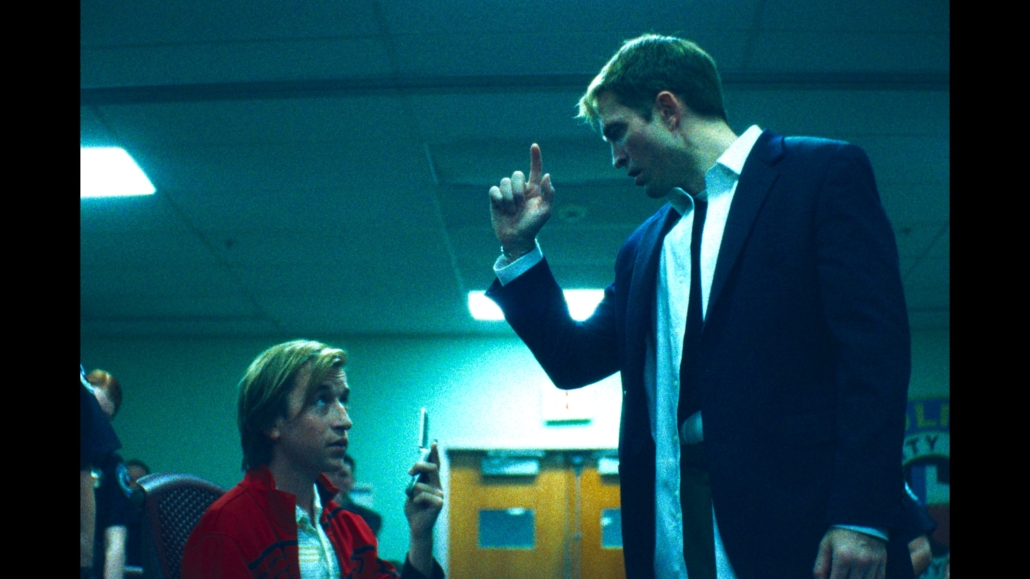

The film questions the morality of Chris Hansen’s hit show “To Catch A Predator.”
4.5
“Network” (1976), “Nightcrawler” (2014)
Through a series of twists and visceral moments disconnected from reality, “Primetime” poses as a startling commentary on one’s inability to tear their eyes away from the macabre.
“You see how this looks, right?”
A smug Chris Hansen (Robert Pattinson) asks this question as he struts into the opening scene of “Primetime.” A24’s latest release follows NBC’s charismatic television presenter and his team as they expose men who try to have sex with minors — a goal that, by Hansen’s methods, proves polarizing.
In this dramatized, fictionalized retelling of “To Catch a Predator’s” legendary television run, director Lance Oppenheim explores Hansen’s insatiable appetite for network approval. This desire for the acclaimed primetime slot ultimately culminates in a show-cancelling scandal.
Desperate for a massive career surge to prove his worth to his family, his network and his fictional producer Andie (Merritt Wever), who is considering working with ABC’s rival show, “What Would You Do?,” Hansen sets off to find an immensely powerful predator nicknamed “the White Whale.” This hunt drives the second half of the film, with Hansen as the ringleader of a frenzied media circus.
“Primetime” is propelled by Pattinson’s jarring Hansen impression, complete with an uncanny replication of his signature drawl. Pattinson does more than put on an accent; through his microexpressions, movements and body language, he conveys Hansen not as the manicured figure Americans idolized, but as an image carefully procured to serve justice to the worst men imaginable. With his demanding presence and formidable confidence, Pattinson is an undeniable star as Hansen.
Besides Pattinson, the supporting performances are also electrifying. Oppenheim highlights the unique use of decoys, adults disguised as minors, to lure predators onto a set. Dan Plumb (Skyler Gisondo) and Del Harvey (Phoebe Bridgers) are based on real-life decoys, who face their own moral reckonings as the show becomes more involved with the cultural zeitgeist.
Gisondo plays Dan Plumb, whom Hansen dubs “Decoy Dan,” a bumbling young actor who stumbles into the world of “To Catch a Predator” and is based on Dan Schrack, a real decoy on the show. Gisondo turns what could have easily been a comedic relief role into an intense portrayal of a young man wrestling with his consciousness.
Dan simultaneously serves as the refreshing, juvenile counterpoint to Hansen’s moody composure. His unbreakable optimism is tested by his dark work, resulting in emotional breakdowns that leave audiences breathless.
Opposite Gisondo is Bridgers as Del Harvey, who serves as an integral part of the online watchdog network Perverted Justice. In Bridgers’ acting debut, Del mentors Dan, coaching him on how to separate himself from the heaviness of their work.
Although her role was smaller than Gisondo’s, Bridgers perfectly conveys a dedicated, tomboyish Del, providing spunk and quirkiness that make her character unforgettable. Despite her few scenes, Bridgers’ quiet confidence in the new medium makes her a critical component of the cast.
“Primetime” also serves as a masterclass in gripping storytelling. Oppnenheim’s background in documentary bleeds into his feature debut, serving as a hybrid between a fictionalized account of Hansen’s life and a true crime thriller, which leads to a singular viewing experience: Audiences feel connected to the familiar tale of “To Catch a Predator,” yet are never quite sure where this retelling is heading.
Delicately placed comedic elements give the film a surreal, satirical feel, matching its source material’s bizarreness. Moody shots are framed in almost too-tight close-ups. Hazy camera shots resemble a fever dream, living in the same saturated aesthetic used by “To Catch a Predator” and other reality shows of the early 2000s. Viewers feel transported to a nostalgic period in collective memory, where primetime cable television was a defining staple of every American household.
In his signature searing interrogations, Hansen constantly asks his predators, “What would have happened if I wasn’t here?” The film ends with a reframing of the question, as Hansen tearfully reflects on the mess he has caused, seeing the ruin of his show directly caused by his own obsession with sensationalism.
Throughout the film, Hansen’s iconic lines — including “Why don’t you have a seat right there?” and “What do you think should happen to you?” — are placed as corny segues, garnering laughter from crowds. However, the actual material is no laughing matter. This terrible irony leaves audiences unsure whether to laugh or cry at the movie’s end. This intentionally evoked cognitive dissonance adds to the morality-centered questions rooted at the heart of the film.
Despite its successes, “Primetime” shies away from some massive real-life implications. In countless real cases, Hansen and his team’s blunders resulted in pedophiles walking away from failed stings through legal loopholes. Some cases were even dropped due to the group Perverted Justice’s mishandling of evidence. These add an additional layer of controversy to the Hansen ethics debate, yet the film spends little time displaying the resounding consequences of the stings.
“Primetime” highlights that, despite the good Hansen did, his methods may have done more harm, contributing to an exploitative, sensationalized reality where Hansen serves as judge, jury and executioner.
“Primetime” provides an unsettling reflection on media ethics as Hansen and his team are forced to confront themselves and evaluate their own moral stances. Oppenheim challenges viewers to inspect their own consciousnesses through gripping cinematography, painfully human performances and brutal irony.