It’s time to tax the rich
Proposition 40 is a crucial first step toward economic equality.
By EMMA IBRAHIM
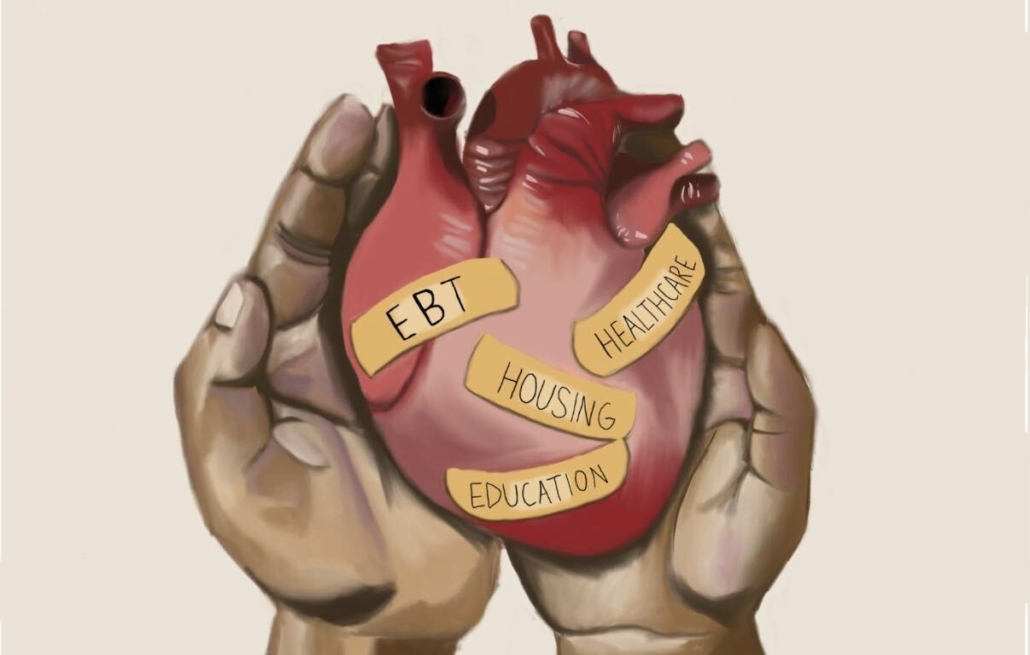

Proposition 40 is a crucial first step toward economic equality.
When the gatekeepers of wealth — Elon Musk, Jeff Bezos, Mark Zuckerberg and Tim Cook — lined the front rows of President Donald Trump’s second inauguration, it signaled a bad omen for our current economic state. Despite Trump heavily crafting his campaign around easing the suffocating cost of living, we are submerged in one of the worst affordability crises in United States history.
The U.S.’s war with Iran, whose ambiguous logic may soon earn it the title of a “forever war,” is driving gas prices to unprecedented highs. Since Congress passed the One Big Beautiful Bill Act last July, more than 365,000 Californians have lost access to CalFresh food assistance through the Supplemental Nutrition Assistance Program, according to U.S. Department of Agriculture data.
California’s healthcare system is crumbling, and up to 3.4 million people risk losing their Medi-Cal insurance coverage. Across the state, 83 hospitals may be forced to close, including five in Los Angeles, leaving many patients unable to access care.
With Proposition 40, also known as the billionaire tax, on November’s ballot, the discussion of wealth distribution has been reignited as a vital move to rescue the federal programs that many Californians depend on and begin mending the wealth gap.
Much of our country’s wealth is concentrated among the top 1%, including tech billionaires Larry Ellison and Sergey Brin, while 63% of Americans live paycheck to paycheck. Prop. 40 tangibly questions the status quo of our class system and –– with the gutting of California’s welfare programs –– demands that billionaires finally pay their fair share.
Spearheaded by Service Employees International Union-United Healthcare Workers West, Prop. 40 is a one-time, 5% wealth tax on the roughly 200 billionaires living in California. While some revenue will support state food assistance and K-14 public education programs, 90% will fund healthcare coverage and keep emergency rooms and clinics open.
“Starting right here in California, these billionaires are going to learn that we are still living in a democratic society where the people have some power,” Vermont Sen. Bernie Sanders said at the Billionaire Tax Now campaign kickoff in February at The Wiltern.
The One Big Beautiful Bill Act slashed more than $1 trillion in federal healthcare spending throughout the next decade. According to the California Department of Health Care Services, California could potentially lose $30 billion each year in healthcare funding. Nearly one in three Californians rely on Medi-Cal, but massive cuts to federal funding jeopardize these patients’ health, plunging many people into uncertainty.
While some fear that taxing the wealthy elite will force them to flee California and cause state revenue to plummet — echoing a similar concern clouding the New York City mayoral election in 2025 — we are already immersed in a precarious, unsustainable financial situation.
Appeasing the billionaire class by catering to their desire to line their pockets comes at the expense of hundreds of thousands in California who are desperately counting on these services.
As the gubernatorial election nears, a poll conducted by the UC Berkeley Institute of Governmental Studies and the L.A. Times found that Californians listed cost of living as their chief concern. In L.A.’s mayoral race, housing costs are driving voters’ decisions on their November ballot.
The threat of our democracy succumbing to a plutocracy is inching closer to reality each day. Our politicians must defend our access to healthcare and food assistance programs with as much determination as billionaires guard their wealth.
While a one-time wealth tax in California may just be a Band-Aid fix for the broader systemic issue of wealth inequality, it shifts the conversation from an empty, abstract campaign promise to an imaginable reality that our lawmakers can and must act on.