Janelle Monáe’s Wondaland returns to USC
The panel explored the world of horror, sound and prosthetics.
By XIADANI PEREZ
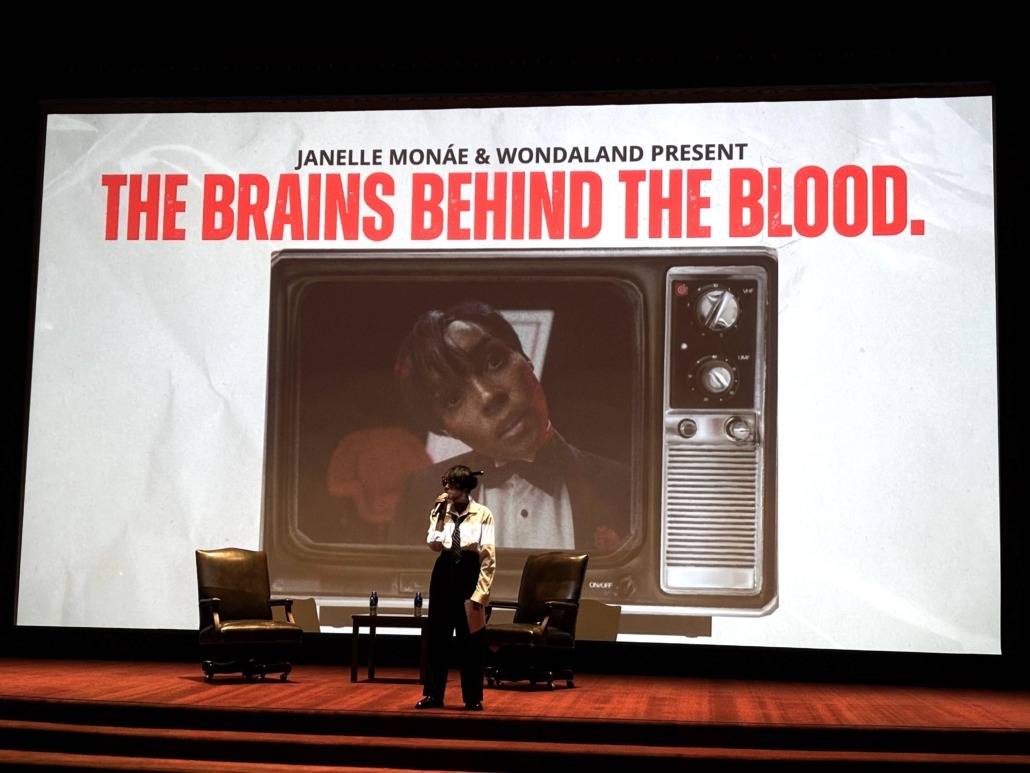

The panel explored the world of horror, sound and prosthetics.
Behind every jump scare and costume in a horror movie is a team of artists who bring concepts to life. Earlier this week, guests gathered for a panel conversation featuring singer-songwriter Janelle Monáe to pick the minds of a few professionals behind iconic horror projects.
On Tuesday, the USC School of Cinematic Arts sprang into the Halloween season through an intimate series of conversations with renowned guest speakers and a focus on the contemporary horror film industry. Monáe’s multimedia creative collective, Wondaland Arts Society, presented “The Brains Behind the Blood” for a second time at Norris Cinema Theatre.
The event began with Jason King, dean of USC Thornton School of Music, introducing Monáe by highlighting their career across a variety of fields including music, film, fashion and literature.
“Janelle creates entire universes, worlds that challenge conventions, expand our imaginations and invite us to see ourselves and our futures differently,” King said.
In October 2025, Monáe created a new Halloween tradition of hosting special horror-themed panels at USC to recognize contributing professionals. She explained that “The Brains Behind the Blood” was organized to foster a safe space for a community excited and passionate about Halloween and horror.
“What I wanted to do [with The Brains Behind the Blood] was honor the people who are doing the work in the spaces that we also get to reap the benefits from,” Monáe said. “These are people that put in their blood, sweat and tears, from writers to directors, to composers, to makeup artists and special effects artists — the people who really make our imagination stretch and believe in something we didn’t know we could believe in.”
Monáe first spoke with celebrity makeup and special effects artist, Saisha Beecham, during which they discussed Beecham’s journey from starting as a self-taught artist to establishing a strong roster of clients.
Beecham reflected on how she navigated and overcame fear to bring peace and acceptance to her career and life. Throughout the night, rather than referring to fear as a result of a traditional scary impetus, it was instead associated with fear within oneself, confidence and career.
“You have a choice to sit in the fear, sit in the sadness; or you can just decide to find where the silver lining is,” Beecham said. “[Fear] is a word I always try to avoid. You can’t be resilient if you have fear.”
Similarly, filmmaker and screenwriter JT Mollner also discussed the importance of reframing his approach to failure: Mollner said he values protecting the authenticity of his creative and artistic vision rather than letting fear take control.
“I truly believe that sticking to the truth of [a project or work], and blocking out those fears is what makes good work and makes things successful on many levels,” Mollner said. “I think I’m failing if I don’t block those thoughts out, because when you start self-censoring and changing who you are based on your fear of a failure, you can’t consider it a product, because that’s a piece of art.”
In between both conversations, the audience heard from Thornton alum and composer Michael Abels. Widely known for his scores in director Jordan Peele’s “Get Out” (2017), “Us” (2019) and “Nope” (2022), Abels spoke about how resonance with the horror community adds personal value to his work.
“There’s a joy that’s hard to explain, when something is performed for an audience that has an experience, and it reaches them in the way that you intend, and sometimes even in the way you don’t intend,” Abels said. “That connection comes from me doing my nerdy thing to a real human experience that’s shared with people.”
Monáe expressed struggling with isolation amid an overwhelming flow of creativity, but reinforced Abels’ value of community and seeing the people in their world. The loneliness is inherent for her, but being surrounded by like-minded creatives who understand greatly helps alleviate such emotions. Community is a reminder of support and humanity, especially in a harsh business environment.
“When you are by yourself, with your ideas, your mind, creativity and what you’re accessing, each thing can be different; it can be lonely,” Monáe said. “It’s so wonderful to know that I’m not alone in this.”
Eventually, the event shifted from a discussion to a panel, during which the audience was invited to ask questions. The speakers offered advice to students and aspiring professionals about the emotional toll of working in a high-stakes industry, balancing collaboration and artistic integrity, imposter syndrome and changes in the state of contemporary art.
“It was a privilege to be able to listen to them and gain insight and ask questions. I think they’re awesome,” said Colin Fraser, a senior majoring in communication. “Monáe is one of the most visionary artists producing right now. The group of which she’s assembled to speak here today at USC is her Avengers team that are collaborative and actualizing on art that’s transformative.”