USC students reconnect with nature
In an age of screens, students wonder if they’ve abandoned their relationship with the outdoors.
By LAUREN PHAM & EMILINE BELIARD
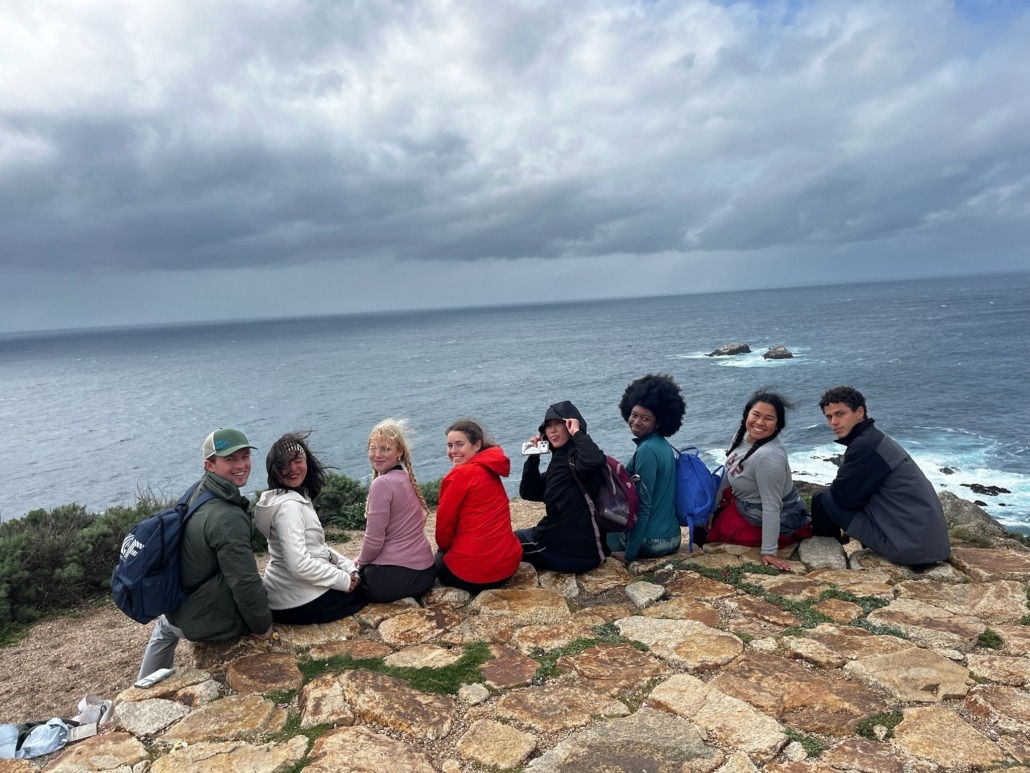

In an age of screens, students wonder if they’ve abandoned their relationship with the outdoors.
Living in the car-centric city of Los Angeles can make it feel nearly impossible to cultivate and maintain a relationship with the surrounding world — especially when one lacks a vehicle. But even in the bubble of a college campus, some students are intentionally creating opportunities to connect with their environment, from daily mindfulness practices to outdoor-focused student organizations.
Allison Agsten, the director of the Center for Climate Journalism and eco-chaplain for the Office of Religious and Spiritual Life, said that as humans, we reach for the closest distraction we can when we’re uncomfortable.
“When we are struggling with difficult emotions, the first impulse might be to grab the phone to narrow our worlds a little bit,” Agsten said. “[Students] have a lot on your minds. School isn’t easy. Everybody has relationship dynamics, whether it’s family or friends that they’re trying to sort through, and sometimes you just want to escape it, but there are other healthy ways to do that.”
For Ryan Long, a senior majoring in criminal justice and president of SC Outfitters, this healthy escapism can look like spending time outside organically. When Long first came to USC, he was seeking ways to keep in touch with the outdoors; SCO, an all-student-run outdoors club, became that outlet for him.
“Getting out of our immediate surroundings … is the hardest part; as soon as you get outside of the city block, you have a million things right at your fingertips,” Long said. “[SCO has] all the gear, we handle all the logistics, including transportation and food, and then we have scholarships available.”
Organizations like SCO that are led by students of all grade levels and backgrounds offer a wide range of activities that can strengthen one’s bond with the natural world.
According to Robin Mitchell Stroud, director of student engagement programs for the Office of Religious and Spiritual Life, paying attention to nature is one of the first steps to making these connections.
“We actually are nature; we have to pay attention to that,” Mitchell Stroud said. “One of the easiest things you can do on campus is literally just to pay attention to what’s outside the window and what you pass every day. … If we connect with nature, it gives us another form of belonging.”
Peaks and Professors, a student organization and registered 501(c)(3), similarly offers students opportunities to get outdoors and focus on nature through hikes organized by student guides and a professor. This unique model does more than foster connections to the physical world; it builds human connections, too.
“You get to see the humanity side [of] the professors and realize [that] they’re humans too,” said Hailey Pulis, a sophomore majoring in economics and data science who is a member of both SCO and Peaks and Professors.
Despite these benefits, Pulis emphasized the struggle many students still face when it comes to accessing nature in Los Angeles.
“It takes a lot more time that students don’t really have,” Pulis said. “Being a college student, a lot of people don’t have cars, … so it definitely takes a lot of initiative.”
Cat Moore, founder of The Belonging Studio and former director of belonging at USC, said it’s difficult for people to turn their attention toward nature amid the many issues and responsibilities of day-to-day life.
“There’s so many problems, and we’re aware of them 24/7,” Moore said. “It’s a tornado, but also one of the things [you] can do is step outside of that and start small.”
Agsten suggested that students expand their idea of what nature means and practice finding beauty everywhere, which Agsten employs through a personal rule to not have headphones in when she’s outside.
“When we may find ourselves in nature or when we’re alone, we might listen to music, … but we could probably all use a little more [quiet time],” Agsten said. “If you have those headphones in, you’re not going to hear that gentle thrum of the hummingbird’s wings. You’re not even going to know it’s there.”
Consciously seeking nature has been proven to lower stress, leaving people more motivated and energetic than before, according to Allyson Pimentel, director of Mindful USC. Our relationship with nature is both ever-changing and reciprocal.
“Nature has its own sort of medicine, its own healing qualities, its own relaxing properties,” Pimentel said. “It’s really an exchange right? We breathe out what the trees need, and they in return give us what we need.”
Mindful USC is another on-campus organization that offers nature programs, from beach retreats in Santa Monica to mindful tree tours, earth tours and chances to tend to the gardens on campus.
Getting back in touch with one’s inner child can also help students connect with nature, according to Mitchell Stroud.
“As children, we all loved to play in nature,” Mitchell Stroud said. “We loved to climb trees. We loved to splash in the puddles. … Let’s do something that makes us feel joyful.”