
Constitution a paradigm and living document
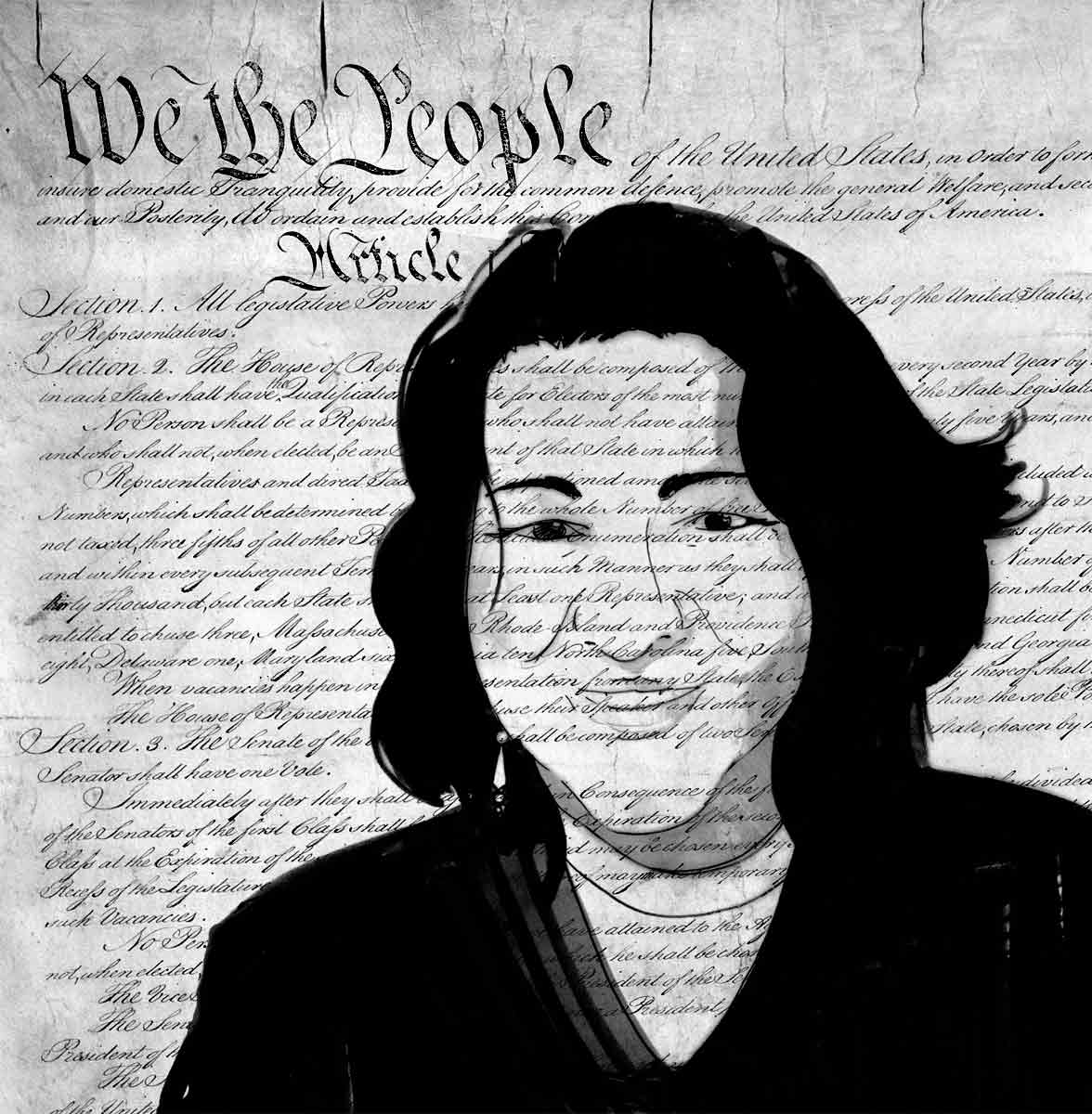
Matteo Marjoram | Summer Trojan
Few panties get in a bunch over issues like constitutional interpretation, except in that rare case when a U.S. president nominates someone to the Supreme Court. Incidentally, this nominee actually wears panties (presumably), and in the forthcoming weeks, hers might actually get in a big, messy bunch.
Neither as visceral an issue as abortion nor as relevant as immigration, constitutional interpretation is nonetheless more important than either — it has the final say on both these issues, after all — but few even know which side they are on. And small wonder if we look at the sides, which are far less clear-cut than we might expect, and far more esoteric.
Some call their philosophy on constitutional interpretation “originalism” — that the constitution has a set meaning, decided by our forefathers at the time of its inception; others say they believe in “activism,” and that the constitution is a living, changing document. And there are plenty more “isms” where those came from.
The problem is, us layfolk rarely bother with philosophical isms, especially of the jurisprudential kind, mostly because we don’t know what they mean. The man who runs the local bakery might believe we should interpret the U.S. Constitution based on the original intent of the framers, but he would never say — barring an unlikely background in either philosophy or law — that he subscribes to the tenets of judicial originalism, unless he wants to scare away paying customers.
However, perhaps now, in light of Sonia Sotomayor’s nomination to the Supreme Court, we should start to think more meaningfully about where we stand. How should our nation’s founding document be interpreted? It is a question that Supreme Court justices spend their entire professional lives trying to answer. Few could give an answer.
Over the next several weeks, we will hear a few more isms than we might be used to, and it is our responsibility to judge for ourselves if Sotomayor’s personal ism is the right one.
During her confirmation hearings, Sotomayor’s judicial philosophy will be dissected with every political implement the Senate has, cast under a microscope, picked at and prodded, and finally left exposed for all to see. It will be a tedious process, but one which should reignite in the national consciousness this noble and age-old debate.
No one can say what Sotomayor’s philosophy will look like. Some accuse her of judicial activism, or legislating from the bench. Such a philosophy was perhaps best articulated by former Justice William Brennan, who said: “The ultimate question must be, what do the words of the text mean in our time?” His is a living constitution.
This idea seems, on some level, very wrong, for it disregards entirely the intent of the framers, who strove to create a constitution for all times, not just their own. Moreover, how can we say the Constitution is explicit in one area — say, in the age requirement for the president — but interpretable in others?
On the other hand, there is originalism, a “jurisprudence of original intent,” wrote former Attorney General Edwin Meese. Here, the Constitution is viewed as inseparable from its original meaning. Not only does this prevent extreme cases of judicial activism, but it may also be a way of ensuring a more objective interpretation.
Still, this philosophy isn’t perfect either. Some profess to know much about the genesis of the Constitution, but the truth is, we don’t, or rather, couldn’t. How, for example, could we ever know what the framers would have thought about stem cell research?
Perhaps there is a middle ground. Justices in general should defer to authorial intention when they can — when the law is clearly enumerated — but should not be slaves to the text’s original meaning. Sotomayor’s richness of experience should, in part, inform her jurisprudence — but inform, not define.
In accepting her nomination, Sotomayor said: “For as long as I can remember, I have been inspired by the achievement of our Founding Fathers. They set forth principles that have endured for more than two centuries. Those principles are as meaningful and relevant in each generation as the generation before. It would be a profound privilege for me to play a role in applying those principles to the questions and controversies we face today.”
That sounds about right — and I don’t think we have an ism for that just yet.
Jason Kehe is a sophomore majoring in print journalism.