How, why and where does USC test its wastewater?
USC currently tests wastewater for influenza, norovirus and coronavirus.
By ZACHARY WHALEN
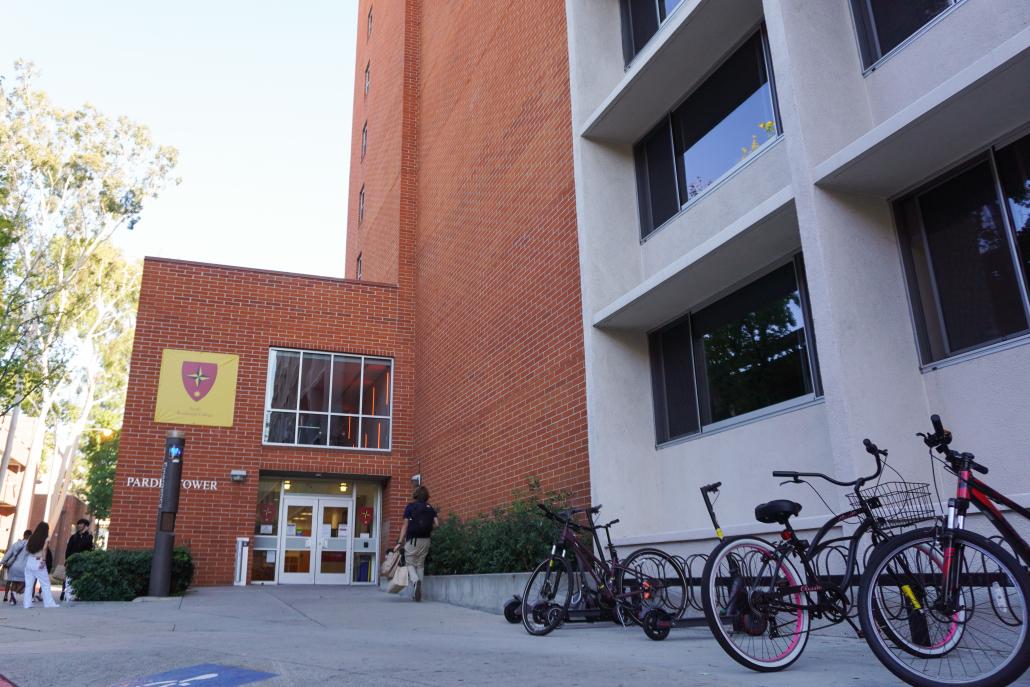

USC currently tests wastewater for influenza, norovirus and coronavirus.
Every weekday at USC, there’s a group of undergraduate students who embark on an early-morning walk, not to grab coffee or rush to an 8 a.m. class, but to collect and examine wastewater samples from USC student housing. Their work fueled the once-frequent emails from Student Health that alerted residents when coronavirus is present in their building’s wastewater, and can be used to test for nearly any infectious disease on campus — should the need arise.
Dr. Angie Ghanem-Uzqueda, a clinical assistant professor of Family Medicine and Population and Public Health Sciences at USC, said while the coronavirus pandemic is largely over, the wastewater surveillance system is still a useful tool to act as an early warning system for any new infectious diseases. Ghanem-Uzqueda said the University was lucky to have wastewater testing as a means of health surveillance, especially since many other colleges either dismantled their wastewater testing programs after the coronavirus pandemic, or never had one to begin with.
“My main source of surveillance is the data that comes into Student Health based on students coming in for care, but we have some limitations there. So, [wastewater testing] was a pretty exciting source of information that gives us a wider understanding of the health of students,” Ghanem-Uzqueda said.
Olivia Schoettke, a sophomore majoring in biological sciences, is one of the research assistants in charge of collecting samples Monday through Friday. The team is provided with a golf cart to transport a cooler filled with samples, but Schoettke said she didn’t mind walking the route with the rest of the team.
“We all just have fun talking and walking around campus. And whenever we don’t get a golf cart, everyone’s upset, but it’s kind of fun, because we get to go on our little morning walks and debrief the weekend or the week,” Schoettke said. “I just love those [walks].”
Taara Shastri, a research assistant for the wastewater surveillance project and a freshman majoring in environmental engineering, said she has enjoyed the opportunity to work with Student Health alongside a “great team of environmental engineers” on a project that had a tangible impact on student life.
“I remember at the beginning of the year we would get emails every day saying how many [COVID-19] cases there were,” Shastri said. “It was really cool realizing, ‘Oh, that’s the work I’m contributing to now.’”
Adam Smith, the principal investigator for the wastewater surveillance project and an associate professor of civil and environmental engineering at USC, said the project started during the coronavirus pandemic. Smith said when researchers realized there was a strong correlation between coronavirus in communities’ wastewater and clinical cases in those communities, and that it was an “effective strategy to survey populations at a zoomed-out level,” it made sense to utilize the methodology at the building scale.
The project started with two autosamplers on campus and has now grown to 26 sampling stations throughout USC Village, Century and Cardinal Gardens apartments, and on-campus housing. The machines collect a small sample from the wastewater every hour and capture the full scope of the wastewater in a given day — unless unassuming USC students unplug the machines to charge their phones.
Smith said the cost-effectiveness of wastewater testing, as well as how quickly it revealed, made it an ideal method for health surveillance.
“[Wastewater testing] is very cost-effective, and so when we think about a lot of funding that’s drying up at the [Centers for Disease Control and Prevention], or other organizations that might be monitoring infectious diseases, wastewater surveillance tends to be more attractive,” Smith said.
Once all of the samples are collected, they are brought back to the lab. The samples are then separated and concentrated into droplets that are simultaneously tested. When the lab has the results, the data can be analyzed and sent to Student Health.
Smith said he was pleasantly surprised at the dedication the research assistants had shown to the project, with some staying on for several years in a row.
“It’s kind of a gross thing that we’re doing. It’s got an ick factor. And I think some of our environmental engineering students kind of understand that and realize that that’s a big component of what environmental engineers do,” Smith said.