PAULI’S SLICE
Lessons from Anthony Bourdain on cultural curiosity, combating ignorance
Recounting the most important lesson by Bourdain, the man who taught me to embrace life’s complexities.

By PAULINA DA SILVA
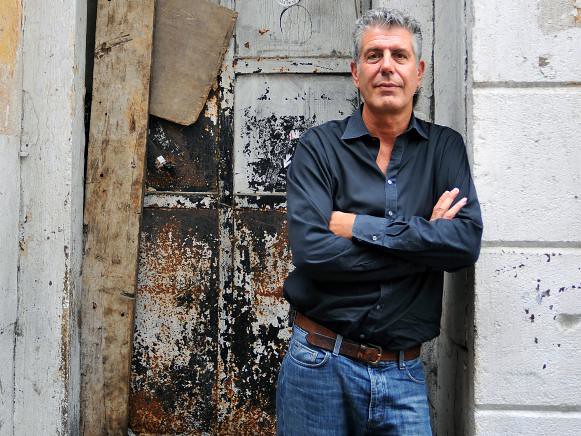

Recounting the most important lesson by Bourdain, the man who taught me to embrace life’s complexities.
In the late Anthony Bourdain’s 2010 memoir “Medium Raw: A Bloody Valentine to the World of Food and the People Who Cook,” he penned, “Without experimentation, a willingness to ask questions and try new things, we shall surely become static, repetitive, [and] moribund.”
Bourdain’s words in “Medium Raw” are words to live by, but now, they feel more like a warning: a stark reminder that in an age of growing hostility and undeniable ideological polarization, starving our curiosity risks leaving us complacent.
In recent years, an ignorance pandemic, fueled by a subconscious, societal bias of the foreign, or the instinctive tendency to separate the world into a binary “us” and “them,” has deepened collective divisiveness, making genuine understanding more unattainable.
That reminder resonates louder and more urgently today, as cultural and political divides harden into reflexive suspicion toward anything foreign. This phenomenon of increasing fear, coupled with the consistently established conclusion that any element of uncertainty significantly increases people’s level of discomfort — certifies the importance, but also the difficulty — of getting oneself to try new things.
A world-renowned chef and storyteller, Bourdain was respected for more than his contributions to the culinary sphere. At a time of rising nationalist and xenophobic sentiments amid a post-9/11 United States, he took the novel stance of preaching tolerance and open-mindedness at all levels. Bourdain took it upon himself to serve the average American the cultural richness found across the globe with fresh flavors of dignity and respect, showing Americans they had nothing to fear in these “Parts Unknown.”
Through his storytelling and documentaries, Bourdain successfully monopolized and transformed Americans’ discomfort with the unknown by feeding them digestible bits of culturally educational television. His goal was to acclimate the American mind to the possibilities of exploration, whether motivated by self-fulfillment or a yearning to seek novelty.
This metamorphosis of fear into interest was a manifestation of Bourdain’s bewitching storytelling: At age 15, I read Bourdain’s most notable literary work, “Kitchen Confidential: Adventures in the Culinary Underbelly.”
These invaluable lessons — from the fact that food is the single most unifying gift given to us, to the idea that a lust for life is never a foolish pursuit to have — permeated every aspect of my being. Chiefly among these lessons, he instilled in many an irrepressible longing to travel and see the offerings of the world, in direct combat against the pandemic of ignorance.
Bourdain was right, of course: The world is the greatest teacher of tolerance. My time in places such as Mexico and France has reaffirmed this belief — the world is ours to see, to enjoy.
Mexico taught me the value of fostering a connection with my personal heritage; during my time there, what one can gain from understanding and engaging with their culture was illuminated. While in France, I learned the value of culinary simplicity, from purchasing a freshly baked baguette from a local boulangerie and accompanying it with freshly churned, demi-sel butter.
Today, Bourdain’s lessons hold more relevance and urgency than ever. His unrivaled curiosity and cognizance of the world’s beauty show us that difference is not something to fear, but to embrace.
Something as simple as a shared meal or intentional conversation could be the remedy to the alienating amount of hatred prevalent in today’s society. By approaching others with a Bourdain-reminiscent sense of compassion and humility, we can begin to show one another the kindness that we all deserve.
To me, Bourdain embodies the concept of humanity. His perpetual desire to become integrated within cultures outside of his own and his relentless pursuit of knowledge sparked in me, and many others, an unquenchable fire to do the same. However, his exploration of the road less taken was monumental for its time, as an unwavering champion for those often marginalized by popular society, acting as their voice.
Exploration nourishes the human soul, and it is only through intentional exploration that we as humans can grow into better, more well-rounded versions of ourselves.
Bourdain shouldn’t just be remembered; his worldview offers a corrective lens to a world that walls itself off, both politically and personally. We must combat our propensity of seeking what we already know.
I urge readers not to just go, but to search with purpose: to seek connection and listen with intent to learn, because Bourdain showed us that the world becomes richer when we honor its people and their stories. His worldview matters now more than ever before, reminding us that empathy and curiosity are the antidotes to division.
Paulina da Silva is a junior writing about cuisine, culture and community in her column, “Pauli’s Slice,” which runs every other Tuesday.