Our ‘model’ democracy needs to learn from Brazil
They convicted their right-wing felon while we voted ours back as the president.
By ALEX GROSS
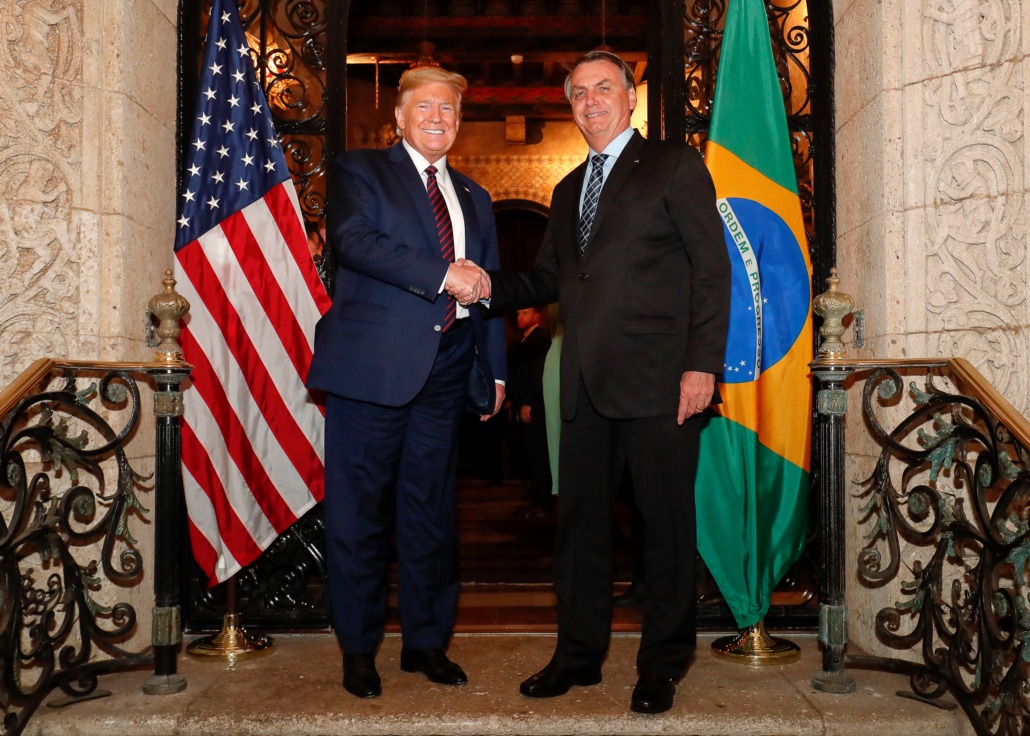

They convicted their right-wing felon while we voted ours back as the president.
The two most populous democracies in the Western Hemisphere were, until recently, seemingly similar case studies for what happens when conservative extremism hits a sound democracy through the vessel of an ignorant cult of personality.
The United States is trudging through what might be its most socially polarized era in recent history, thanks to none other than the brash President Donald Trump. Just a couple of years after his election, Brazil’s presidency found itself in the hands of Trump’s Portuguese-speaking incarnate, Jair Bolsonaro.
When the respective countries finally decided they’d had enough embarrassment from international headlines and voted in new presidents, both Trump and Bolsonaro staunchly denied their election results.
Just when it seemed the lies and misinformation –– hallmarks of each presidency –– had caught up to the failed incumbents in the form of formal charges, the bones of the U.S.’s democracy proved far more brittle than Brazil’s.
Brazil’s Supreme Federal Court found its former president guilty of plotting a military coup and sentenced him to nearly 30 years in prison, while the U.S. Supreme Court granted Trump sweeping criminal immunity from charges related to his 2020 election rebuttal — a ruling that undercut efforts to hold him accountable and cleared the path for his return to office.
The U.S. has had the world’s longest continuous democracy since its founding in 1776, inspiring countless other republics in the modern age, such as Great Britain, Mexico and Australia. Political science students at USC and across the country are taught that the Constitution carried the world into a new era of government.
But without dutiful responsibility and devout care given to the task of balancing a democratic government, inherently American traditions such as the Constitution and all its institutions become irrelevant relics of the past.
Why should the American people respect a court ruling when their president doesn’t respect them?
Even though his deployment of the National Guard to Los Angeles in June was declared illegal by a federal judge, Trump is still threatening to send troops to Chicago, and he has already dispatched federal agents in Portland to suppress protests — a move local leaders condemned as an “abuse of power.”
After being given a court order demanding he turn back planes attempting to deport alleged Venezuelan gang members in March, Trump invoked a 227-year-old maritime war law to ensure the flights landed.
In a July study conducted by The Washington Post, it was revealed that the Trump administration has been accused of “defying or frustrating court oversight” in more than a third of rulings made against them.
No matter how many regimes come into power or how extreme their policies may be, governmental institutions should never be wielded to serve anyone other than the people.
Even the more fortunate USC students who don’t have to worry about racial discrimination by the United States Immigration and Customs Enforcement or their gender identity being targeted have experienced this attack on democracy firsthand. Budget cuts have swept across campus in the form of layoffs and removal of majors, showing just how low education is prioritized in Trump’s U.S.
It seems silly to be celebrating a democratic nation’s employment of common sense, but unfortunately, that’s one category the U.S. seems to lack in this political era.
Perhaps Brazil took it upon itself to defend its democratic institutions because it knew just how fragile a free and fair government can be. Only 60 years ago, a military junta took over the nation, subjecting citizens to an authoritarian dictatorship that suppressed everything from the press to elections.
Brazilians in defense of democracy know the symptoms of tyranny when they see it. Bolsonaro’s versions of the Trump-branded assault on journalism and violent insurrection toward the government hit a little too close to home to be let off the hook by the Brazilian Supreme Court.
Americans are often surprised to hear that the Founding Fathers had little faith in the average citizen to make important government decisions, which is why they created the electoral college. That skepticism feels prescient given how many of us have been fooled by the Trojan horse of authoritarianism in the White House.
Despite those doubts, the Constitution ultimately entrusts the people with final authority: Courts can rule and candidates can posture, but voters remain the last line of defense in a democracy. Twice in the past ten years, that final say has been a vote of confidence in Donald Trump. A vote of confidence in Donald Trump is ultimately a vote against democracy.