Feminine queerness is always othered
Most queer media is about men but written by women, including, “Heated Rivalry.”
By ANNA JORDAN
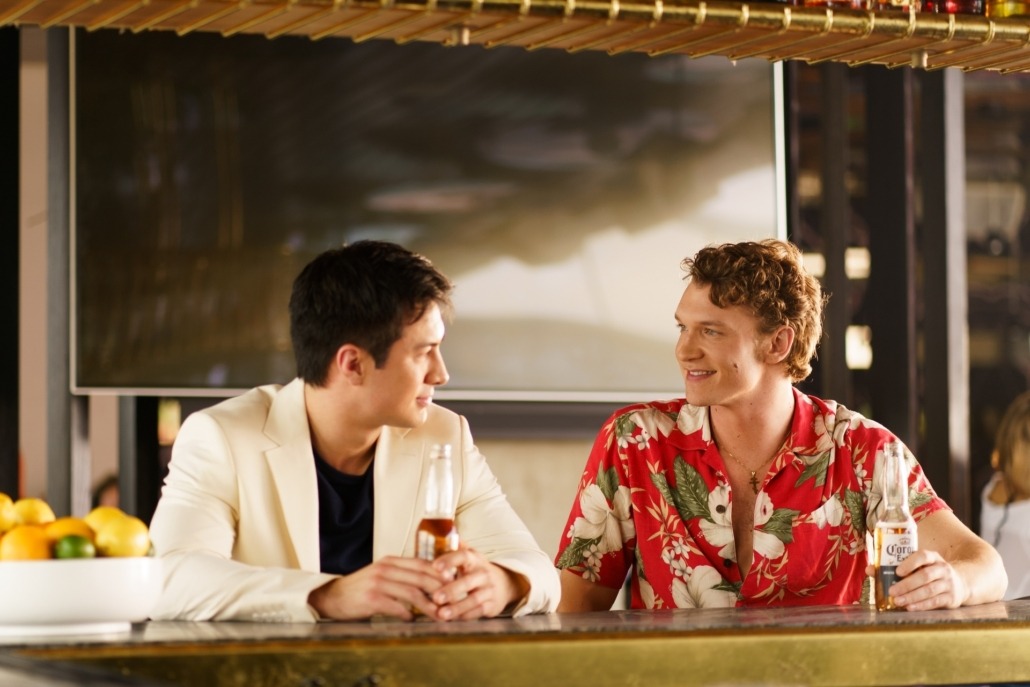

Most queer media is about men but written by women, including, “Heated Rivalry.”
Unless you’re off the grid entirely — and I’m talking Amish levels of off the grid — you’ve probably heard about the HBO-distributed series “Heated Rivalry,” a queer hockey romance with an enemies-to-lovers plot based on Rachel Reid’s 2019 novel of the same name.
It’s gaining traction thanks to its fast-paced writing, compelling performances and the sheer volume of sex scenes that pop up throughout the series — a factor not uncommon in HBO-based shows on streaming like “Euphoria” or “Game of Thrones.” What is relatively uncommon about the show is its rapid rise in popularity as a show surrounding the personal and professional lives of queer men.
Though queer media has expressed a steady growth in pop culture since the dawn of the 21st century, when observing the queer media that erupts into cultural phenomena and develops fanbases beyond the queer community, a pattern emerges almost unwaveringly:
They are centered around men, typically white, cisgender and able-bodied.
. The men of these stories such as “Call Me By Your Name” (2017), “Young Royals,” “Heartstopper,” “Red, White & Royal Blue” (2023) and now, “Heated Rivalry,” grapple with their desire as “other,” or as not conforming to the heterosexual norm, propelling the plot with their angst.
A startling amount of masculine queer romance media — including the literary basis for “Heated Rivalry” — is created by and for women who are attracted to men seeking to vicariously experience a relationship lacking an inherent gendered power imbalance, pursuing the eroticism of equality through the vehicles of queer male bodies.
As queer writer Claire Rudy Foster wrote for Electric Lit, “Straight women seem to feel entitled to write gay characters because they think homosexuality is simply an inherent desire to attract and please a man. She may think, ‘He’s just like me because he likes penetration and getting his hair done.’ A gay character is just a straight woman with different genitalia, right?”
The leads of those stories are less representative of real-life queer stories and more functional as cloaked vehicles of heterosexuality: Marginalized identities become placeholders, and the stories lose their authenticity.
“When a straight woman decides to ‘redeem’ the gay narrative by making her main characters mainstream-hot, cisgendered, able-bodied guys, and ‘gives them’ a happy ending, she is not making progress. She’s not even being subversive,” Rudy Foster continued. “She’s merely repeating the age-old trope of straight people controlling queer bodies, and she’s doing it to make money and titillate the audience of straight women who buy her books.”
All queer people feel angst about not conforming to the societal norm at some time or another, and yet male depictions of queerness achieve more popularity by far than those of other queer narratives. Sure, there are moments of mild collective cultural interest in feminine queerness; however, these media are almost exclusively removed from modern or reality-based conversations surrounding queerness based on their plots or settings.
These media are arguably the most popular examples of queer media centered on women on the screen, and yet each of them is removed from the reality-based or modern context of the current queer discussion. Whether it’s because they’re period pieces or often feature extreme narrative circumstances, the only feminine queer media that are able to break into the greater cultural discussion are those which recuse themselves from the norm as “other.”
These masculine-centered queer media reinforce male narratives as being more compelling than those of feminine queerness because they redefine masculine queerness as more relatable, bordering on mundane. The turmoil of men becomes a realistic angst felt about being different as opposed to that of women, which becomes a feeling experienced in the past or in extreme, fantastical circumstances.
It’s not that there aren’t less relevant stories centered around queer women than those featuring queer men, it’s that the priorities of the mainstream are filtered through a heterosexual lens that prioritizes the patriarchy — and it’s not the only filter queer media squeezes through to be heard.
Because of the emphasis on white narratives that have dominated Western media for centuries, these queer stories are whitewashed into oblivion; out of the examples that I listed of queer media, very few feature leads that are people of color. The obsession with white homosexuality isn’t as progressive as it seems, it’s just rewriting the straight, white female lens into something that continues to uphold a white supremacist patriarchy.
An emergence of queer media into the general conversation is always exciting for the LGBTQIA+ community: It’s exciting to see people relate to something that, until recently, was seen as morally wrong or intrinsically defective. Nevertheless, it’s necessary to be critical when watching the same stories reach popularity. The men in these stories represent real, complex human beings, not just Ken dolls that straight women force to kiss for their own entertainment.
Rather than seeing queer people as extensions of heterosexual desire, use these male-centered shows as stepping stones into progressing popular queer media into intersectional territories. Flip the script on yourself and your own identity and explore what queerness can mean beyond the men you see on the screen. As much as it can be fun to watch, there’s a whole queer world out there, beyond hockey fujoshi.