Many concerned on AI in education, USC survey finds
Results showed many are concerned on how chatbots affect academic integrity.
By ADAM YOUNG
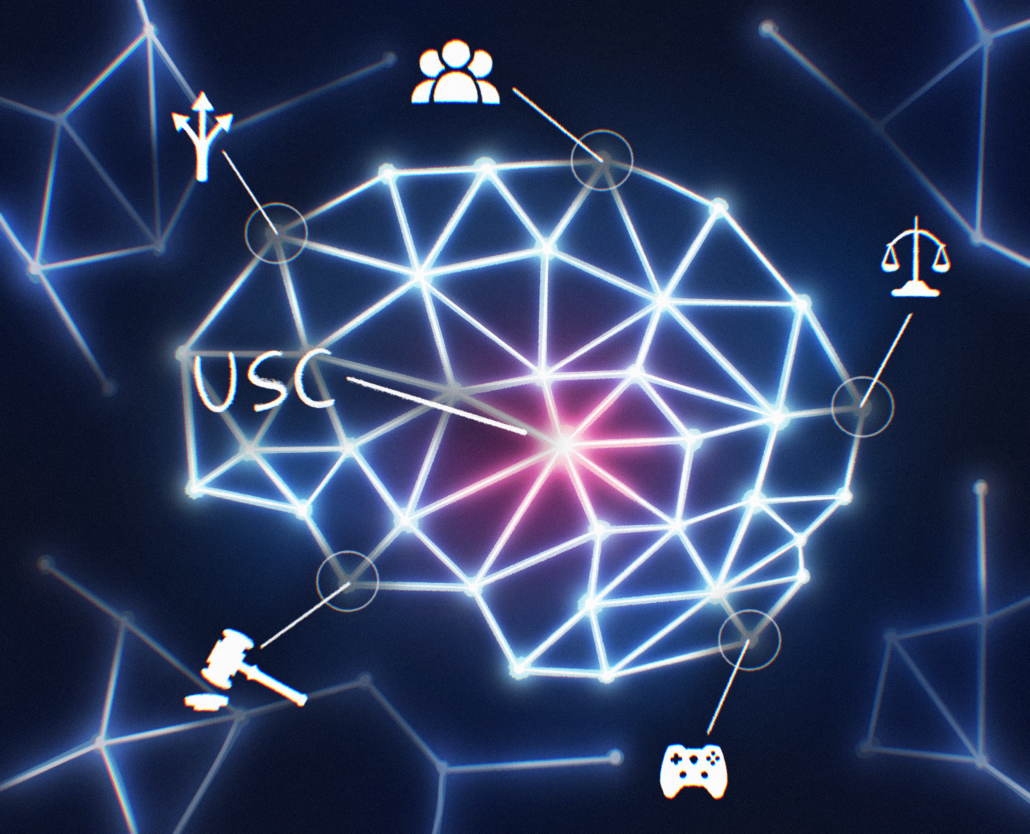

Results showed many are concerned on how chatbots affect academic integrity.
A University survey on artificial intelligence, whose findings were released Thursday, revealed that faculty, students and staff averaged “very concerned” about how generative artificial intelligence will affect critical thinking skills.
Geoffrey Garrett, chair of the President’s AI Strategy Committee and dean of the Marshall School of Business, said in last week’s academic senate meeting that the survey received about 1,000 responses — out of the estimated 37,000 active ChatGPT users using USC emails. The results should be taken with “a grain of salt” due to the survey’s small sample size, Garrett said.
The survey, released in November, included open-ended questions and multiple-choice responses. The responses to the open-ended questions were not released by the University but were summarized in the survey findings page emailed to the campus community by Garrett. The Daily Trojan has requested the survey responses; the University did not respond in time for publication.
One survey question asked how concerned respondents were about chatbots affecting different aspects of higher education. Each category had three options: not concerned, somewhat concerned and very concerned.
The results showed that respondents averaged between somewhat concerned and very concerned about how chatbots may affect academic integrity, critical thinking, lead to job loss and be misused.
Respondents who were more familiar with using chatbots were measured to be less concerned with chatbots in the aforementioned categories, but they were still “somewhat concerned,” on average.
An open-ended question asked respondents what concerns or challenges they have about chatbot use at USC. The review said respondents wrote they were concerned about the potential negative impact on critical thinking skills and learning outcomes, according to the survey findings page.
Respondents also raised issues about the University’s ChatGPT Edu rollout, asking for clearer policies, guidance and training on using chatbots. USC launched its free ChatGPT Edu workspace in partnership with OpenAI on Jan. 13, which can now be accessed by active students, staff and faculty.
Following the announcement at the inaugural AI Summit in November, 12 faculty criticized the University in a letter to the Daily Trojan for not communicating the cost of the OpenAI partnership. The University said in a statement to the Daily Trojan that the cost of the institutional ChatGPT subscription is $3.1 million per year for 80,000 users.
Student respondents raised concerns of being falsely accused of using chatbots and peers gaining an “unfair advantage” by using chatbots without a professor’s consent, according to the survey.
The survey also indicated a split between faculty in the humanities and the sciences in adopting chatbots. Faculty in the arts and humanities were generally more concerned about chatbot adoption in higher education, while faculty in the sciences generally desired to adopt chatbots.