How can we retain hope in humanity?
Optimism is becoming elusive as the world presents increasingly hopeless.
By PIRIL ZADIL
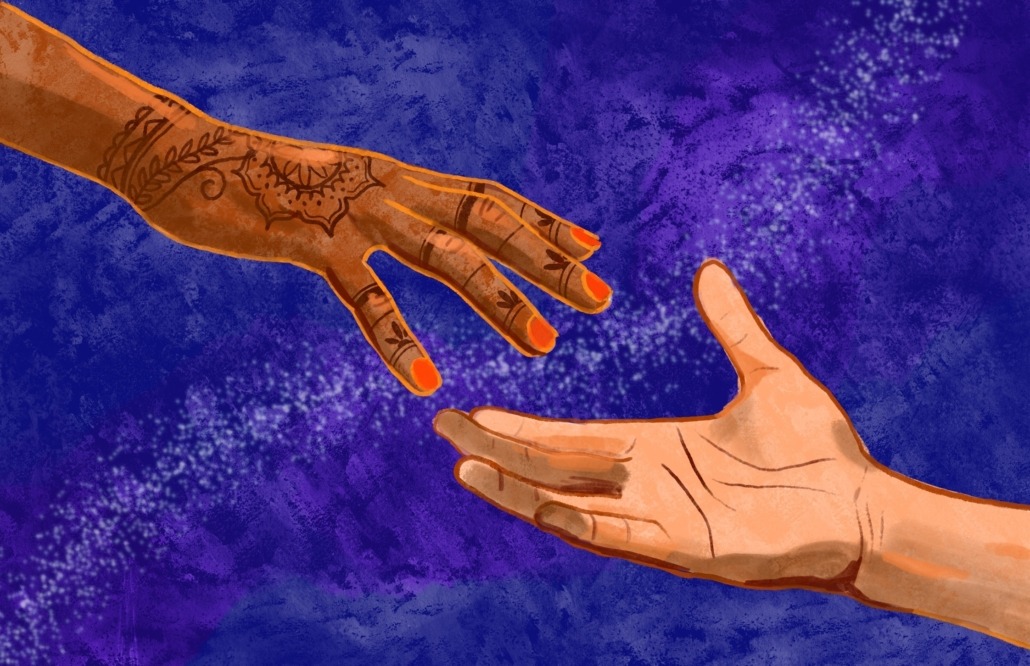

Optimism is becoming elusive as the world presents increasingly hopeless.
The other day, when I was in an Uber, the driver and I began chatting about our professions and respective worldviews. I told him about my work as a journalist. He spoke of his sociable past in the marketing industry.
When I told him I was kind of a misanthrope — with my persistent level of dislike towards others — he was surprised, and asked, “How can you hate people if you’re a journalist?”
To clarify, I don’t hate people per se. I couldn’t do my job if I did; there’s no true value or meaning in advocating for the human rights issues I address in my articles if I don’t care deeply about the people I advocate for. It is more that I resent what humanity has become. While I have realized that my animosity comes at a personal cost, I struggle to adapt given the brutality I have witnessed.
From genocides to the arbitrary detention of immigrants in the United States to crimes of aggression in the Middle East, over this past year alone, I have observed all kinds of cruelty from afar. With each devastating headline, I become more bitter, less trusting of others’ good intentions. It isn’t even the main perpetrators that have disappointed me the most; it’s the people who have rationalized and normalized this cruelty.
As I was doing research for an article I wrote at the beginning of the semester on the people killed by U.S. Immigration and Customs Enforcement, I spoke with a USC student.
When asked his stance on immigration officials killing citizens, he said it was justified because the victims were not American citizens. When told ICE had, in fact, killed American citizens, he argued it was a minor cost to pay for maintaining national security. I did not include the interview in the article; I was too saddened by the notion that anyone could be this apathetic towards others.
This cruelty is, unfortunately, not confined to one person, one realm or one nation; I have seen it everywhere.
I witnessed it back in my hometown of Istanbul, Turkey, when men in my friend’s dorm argued they would rather their son die than be gay. I observed this here at USC when I overheard students arguing that the canceled March California gubernatorial debate was justified in excluding people of color because it was not a diversity, equity and inclusion convention.
Seeing how many people either commit to or enable inhumane acts renders it increasingly easy to wonder whether cruelty is woven into human nature. The more I sat with that thought, the more it felt true. And as that belief took hold, my faith in humanity eroded — I began to see others less as potential allies and more as adversaries, bracing myself for their worst.
I read small slights as malice: a step too close in a line feels like an attempt to cut in front of me, a friend’s second “I’m busy” sounds like a lie meant to hide disinterest. So, I become hostile: I edge forward in line, throwing displeased looks behind, and I pull back from my friends. In truth, low expectations are a self-fulfilling prophecy; by treating people as if I expect the worst of them, I don’t give them the space to prove me wrong.
Is humanity so hopeless that even the smallest faith in it feels redundant? A video I saw last week has made me reconsider my stance.
In a social media post by the mother of a 9-year-old terminal cancer patient, she shares a drawing tutorial for “Oto,” her daughter’s original character, as her daughter’s “last wish.” The comments are filled with thousands of users presenting their own drawings of Oto, in solidarity.
It may seem small. After all, drawings cannot fight cancer. Yet, in a world where genuine connection and community feel increasingly rare, the union of thousands to comfort a grieving mother and her child is both remarkable and encouraging.
There are, perhaps, many more examples of human benevolence. The mere existence of these good deeds invalidates the notion that cruelty is all there is to humanity. This is not to suggest we should overlook the evil we do witness, for there is certainly bad in this world, as there is bad in each of us.
Whatever complex amalgamation our true nature may be, it cannot be faulted for the individual path we choose, for cruelty is not inevitable; it is enacted. Retaining hope in humanity, then, is about refusing to believe that, despite the headlines, we are irredeemably bad.
I have personally hurt people — those I disliked, those I loved and those I hadn’t even known of — countless times, both unintentionally and in rare cases, intentionally. The objective should be to preserve faith in the good, even as the bad is acknowledged, for we risk losing our humanity in our disappointment.