Patriarchy shouldn’t be at the head of the table
The expectation of women to serve the household silently creates structural oppression.
By ANAHITA SAXENA
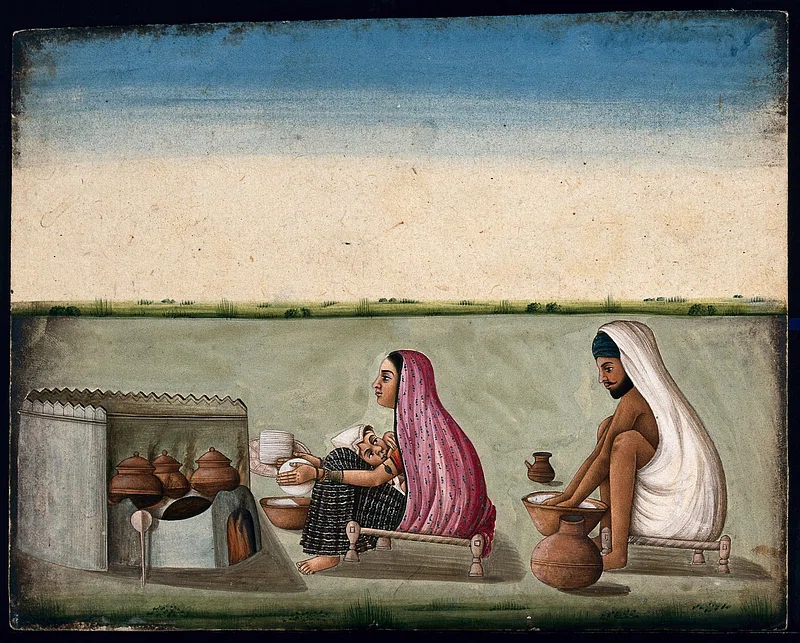

The expectation of women to serve the household silently creates structural oppression.
Household chores are often an act of silent labor: unseen, undervalued and underappreciated.
This labor disproportionately falls upon women. In fact, in the United States, women spend twice as many hours completing domestic — and, seemingly, overlooked — labor in comparison to their male partners. The Gender Equity Policy Institute’s “The Free-Time Gender Gap” study found that American women across every demographic have less leisure time than men.
This issue presents itself somewhere unexpected, at the dining table. Across the world, including America — there are two dinners. The first is when the men eat, and the women serve. The second is when the women eat. Indian author Devdutt Patnaik points to how the choice of carb in Indian households can dictate the freedom of women in their respective states.
In many Indian states, roti — a flatbread made of flour and water — is a daily staple, commonly eaten alongside meat, vegetables and lentils. Making roti is laborious. A meal’s quality can change with the freshness of the roti, so when the men and children sit at the table, it is almost imperative that they receive the fluffiest and warmest rotis with their meal.
Patnaik argues that in states where roti is eaten more commonly, women often remain separate from the dining table. As they eat alone, no one is there to compliment their cooking, ask them about their day or inquire about how they are doing. They remain voiceless, and their food seems faceless and unappreciated.
But in states where women eat rice, everyone can sit at the table together, for the rice stays warm and can be distributed in one go. Families sit together at the table, and the patriarchy dissipates.
While the meal itself does not oppress or liberate women, the structure of labor impacts the level of respect, confidence and freedom women are taught to have. In a study published by the Public Library of Science, it was found that there is a direct correlation between poor mental health and eating after everyone else.
Kerala and Mizoram, two states that primarily eat rice, lead the nation in female literacy. Puducherry and Tamil Nadu, states that also lead in rice consumption, had the lowest number of reported rape cases in the nation, according to India’s National Crime Records Bureau. Similarly, rice-eating states such as Chhattisgarh and Andhra rank near the top in female workforce participation, according to the Ministry of Labor and Employment of India.
When my nani — my maternal grandmother — was widowed, I remember how, at nine years old, my first thought was: How will she live without feeding, looking after and caring for my grandfather? By no means was he a tyrannical husband, and he always stayed at the table while she ate, but she felt so afraid to be alone without him to focus on.
Ten years passed, and I watched with pride through WhatsApp messages as my nani celebrated her 70th birthday several times with different groups of friends throughout the year, singlehandedly hosting parties and dressing tastefully and colorfully — despite the norm for Hindu women to only wear white once they’ve been widowed.
With the support of her children, but mostly on her own, she learned to reorient her life. To start weight-lifting, to swim in the ocean for the first time, to learn how to cook traditional Mexican, Turkish and Spanish dishes — among others. While my nani still lights up when she gets to cook for others, she dedicates — to some degree — every meal to herself.
Putting dinner on the table is sometimes a labor of love, and always a necessity. But when women are expected to serve without assistance or a seat at the table, they are silenced. Solving this issue does not require legislative change. It can start at the dinner table, where the labor is acknowledged and shared, and the food is eaten together.