Forget the calendar, start your next chapter when you feel like it
Motivation is fleeting; don’t let it go by waiting for the perfect moment to ignite it.
By KIYOMI MIURA
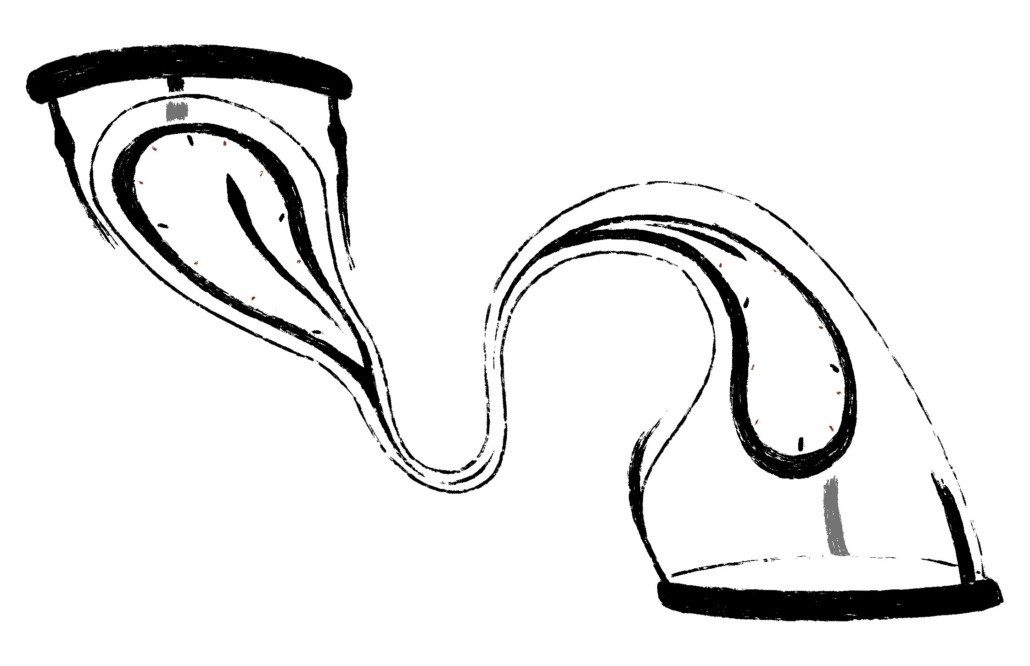

Motivation is fleeting; don’t let it go by waiting for the perfect moment to ignite it.
This past May brought another wave of melancholy goodbyes and exciting beginnings. Graduation ceremonies leave graduates reminiscing the era they’re leaving behind while current students are reminded of how soon they’ll be the ones walking the stage.
Time seems to slip by a little quicker and easier in moments like these — when so many people are collectively moving from one era to another, urging everyone to also take time to contemplate their next moves for the chapter that lay ahead.
The temporal landmarks we follow — the end of a semester, beginning of a new season, celebration of a midsummer holiday — excite us with epochs that seem to only come on days that are collectively anticipated.
But jumping on the bandwagon to follow these temporal landmarks only gets in our way.
Goals should be adopted and pursued in alignment with timelines that are personal to us. Whether it’s a tragic loss, a minor accomplishment or a major epiphany, who cares whether the event happened to fall on the first day of summer or on a random Wednesday in the middle of winter?
As college students, we’ve entered another summer era of our ever-changing lives and characters. And with this, we scrutinize the person we were yesterday, dissociating ourselves from a not-so-distant yet entirely different persona we hope to outgrow.
Even before the end of the semester, people begin to obsess over that “summer bod,” antsy to get into the gym as our summer deadline approaches. The pressure that comes with stripping down the layers to expose our bodies causes our motivation cycles to mirror those of a bear’s hibernation pattern. Except for us, nothing about the seasons necessitates change, other than our own internal deadlines.
It’s all about perception, and two people’s perceptions will never be identical. Yet on a larger scale, over the course of our lives, we all adhere to the same timeframes.
These habits are a product of an environment that necessitates the synchronization of our yearly patterns. According to a study published on temporal landmarks in Psychological Science, people are naturally more motivated to adopt a new goal at a temporal landmark than on an ordinary day.
While it feels natural and easy to align our goals with the passing seasons, allowing our lives to seamlessly flow from one era to another by mirroring Earth’s passage of time, this restricts our motivational patterns to a synthetic path curated by the masses. It’s disingenuous to the personal internal clocks we ought to discover. This is exactly why so many New Year’s resolutions die off slowly but surely by the third month.
No two people’s lives will operate on the same timeline, so why give in to the pressure of adopting the same deadlines for our own personal goals? Motivation is a lot easier to acquire when you realize that the relativity of time is something you can take advantage of, and that you have autonomy in deciding your own life’s schedule.
It went through multiple New Years of trying to start running consistently, only to be humbled by the challenge and slowly pile up excuses to get away with abandoning the resolution within weeks. It was easy to adopt the goal again the next year when the topic of resolutions came up, but as soon as the topic died down, so did the pressure.
It wasn’t until a random weekend that I couldn’t even recall that I started running and haven’t stopped since. There was no social pressure and no timely event to motivate me. I simply wanted it badly enough, and had no other reason to start than that.
By realizing the power we have to create our own timeframes and letting go of external sources of validation, we begin to discover the personal motivations that withstand regardless of the time at which we take action.
The pursuit of meaningful goals can often be overlooked when we outsource our motivation to external measurements of success — in hopes of reaching a result that leads somewhere beyond the activity itself, or, in this case, aiming to accomplish our goals by deadlines of collective timeframes.
The most significant results are often driven by an authentic internal motivation because inspiration is fleeting and entirely personal. Chase that inspiration as soon as you feel it, rather than forcing it when time urges you to.