Gentrification uproots communities, culture is how they survive
When you move to a new city, be a neighbor, not a transplant.
By EMMA IBRAHIM


When you move to a new city, be a neighbor, not a transplant.
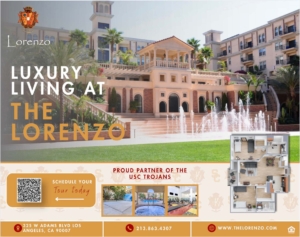
Gentrification is more than just a buzzword or a new Starbucks opening down the street. It’s when wealthy outsiders heavily invest in a neighborhood, with luxury condos, high-priced grocery stores and trendy coffee shops — but not for the sake of the people who live there.
In cities like New York, Washington, D.C., and Los Angeles, rising property values and “renovictions” — when landlords evict long-time residents to remodel apartments and relist at higher rents — are forcing locals out of their communities, erasing the history and character of a neighborhood to welcome in wealthier residents.
As L.A.’s housing crisis drives many residents out of their homes, the city is rapidly changing, and despite how integral Black Angelenos are to the city’s identity, its legacy as a vibrant center of Black culture struggles to survive.
If you take a walk through South Central today, you might be unaware that Central Avenue, an epicenter of jazz from the 1920s to mid-1950s, is colloquially known as the “Harlem of the West Coast,” or that it was once a hub of L.A.’s Black-owned businesses. You might not even know that South Central was home to members of the Black Panther Party, the Congress of Racial Equality and other activist groups.
Communities of color and working-class neighborhoods have long endured a cycle of disinvestment and neglect. Discriminatory housing practices in L.A., such as redlining in the early 1900s, confined many Black Angelenos to South Central, a neighborhood that was once 80% Black, according to United States Census Bureau data.
That began to change in the 1980s, when Black families who could afford to leave sold their homes for larger, cheaper ones in the Inland Empire, Palmdale and Lancaster, and immigrants from Mexico, El Salvador and Guatemala moved into the housing they left behind. Since 1970, South Central has become two-thirds Latine.
Disinvestment heightened at the turn of the century after the 1992 L.A. uprising. When the four Los Angeles Police Department officers charged with brutally beating Rodney King a year earlier were acquitted of the charges, outrage and protest ignited among Angelenos.
The culmination of police brutality, a steep unemployment rate and high rates of violent crime led to unrest — residents set fire to buildings, looted liquor and grocery stores, and destroyed retail shops and fast food restaurants. In the aftermath of the protests, insurance companies, banks and investors did not financially support South Central’s recovery, further inflaming systemic underinvestment.
A map of data compiled by the UCLA Urban Displacement Project tracing gentrification and displacement within neighborhoods in L.A. found that 10% of housing tracts in L.A. County were classified as “at risk of gentrification,” “early/ongoing gentrification” or “advanced gentrification.”
In Historic South Central, some tracts were labeled as experiencing “early/ongoing gentrification” or, along East Martin Luther King Boulevard, as experiencing “ongoing displacement.”
The facade of newcomers’ progress and development is nothing more than the displacement of locals who are forced to watch as the neighborhoods they grew up in transform before their eyes.
In 2003, the L.A. City Council voted to rename South Central to “South L.A.,” distancing it from the district’s violent reputation fueled by media sensationalism. But, to many locals, it will always be South Central — a badge of resilience, culture and identity.
Gentrification is a growing issue in many cities across the country. In D.C., the U Street corridor, once known as Black Broadway, is now one of the most gentrified areas in the city. Block parties in Harlem and Brooklyn increasingly receive 311 calls for noise complaints. Mom-and-pop stores are torn down and locals are pushed out to make room for new businesses and residents who don’t care to understand the preexisting culture.
Before USC Village opened in 2017, a Superior Grocers store and community theater served both students and South Central residents. Now, chain restaurants like CAVA and a Trader Joe’s stand in their place, and a gate that closes each night separates the University from the surrounding community.
Whether you move to a city for four years of college or for 10 years of work, you have a responsibility to weave yourself into the fabric of the neighborhood. Sit in parks, buy books from independent bookstores and eat from neighborhood staples rather than the chain restaurants vying to replace them. Instead of limiting yourself to visiting the trendy parts advertised online, learn the history of your new city and appreciate the culture that existed long before you arrived.