Defend critical thought in the age of censorship and surveillance
Los Angeles must protect libraries, books and the habits of critical thought.
By SOEFAE CHEN

Los Angeles must protect libraries, books and the habits of critical thought.
Science fiction author Ursula K. Le Guin once wrote that “a dangerous book will always be in danger from those it threatens with the demand that they question their assumptions.” That is the democratic value of reading. Its worth lies not in telling us what to believe but in forcing us to confront what we would rather dismiss.
Reading comprehension and critical thinking are therefore not merely academic skills; they are prerequisites for civic freedom. In an era of book bans, pressure on public education and libraries, and expanding surveillance, sustained reading must be treated as civic infrastructure — not as an optional childhood pastime.
A book ban is the restriction, removal or denial of access to a book in a school or library, often after an administrative or community challenge based on its content, turning one group’s discomfort into a limit on everyone.
During the 2024-2025 school year, PEN America recorded 6,870 book bans involving nearly 4,000 titles across 23 states and 87 public school districts. Of the banned titles in the 2023-2024 school year, 36% featured people or characters of color, while a quarter included LGBTQIA+ themes.
When schools remove books about race, queerness, adolescence or historical injustice, students receive a narrower education about the world and one another. Students from these frequently targeted communities learn that their lives are controversial, their histories dispensable and their questions disruptive rather than educational.
The danger Le Guin spoke about is ignorance and, more devastatingly, intellectual fragility. A generation taught to avoid difficult ideas may become less practiced at disagreement, less willing to examine evidence that challenges its beliefs and less capable of holding competing ideas in mind.
That is why “dangerous” books matter.
Fiction, especially, is often treated as an escape from public life. In reality, fiction can be a rehearsal for life. A novel places a reader inside another person’s language, emotion or moral confusion without demanding instant agreement. It trains readers to notice what a narrator leaves unsaid, what a character misunderstands and how point of view shapes apparent truth.
Those are civic skills.
The same critical thinking habits help citizens read a news story without accepting its first framing, evaluate a ballot measure without relying on a slogan and examine public policy without confusing promise with evidence.
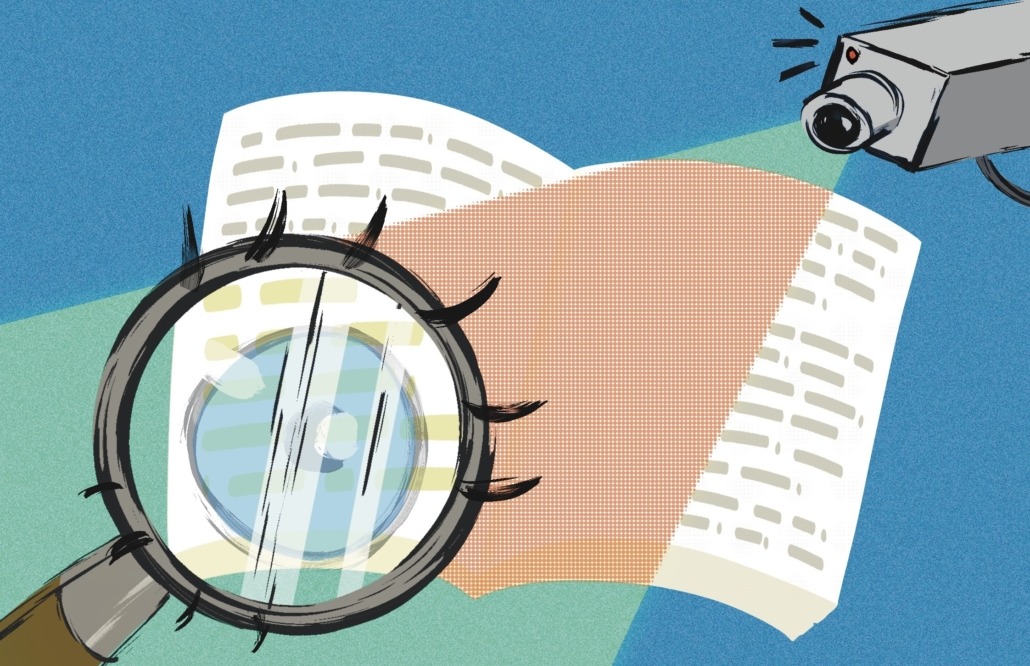
Los Angeles’s debate over Flock Safety’s automated license-plate-reader technology shows why those habits matter. In July, the Los Angeles Police Department suspended its use of Flock technology after officials cited unresolved concerns about data ownership, security and privacy. Councilmember Ysabel Jurado had earlier sought a halt on expansion while the city reviewed transparency and civil-liberties issues.
Public safety deserves serious attention, but so do the terms under which surveillance operates. A careful reader looks beyond the general promise of safety and asks: Who owns and accesses the data? How long is it retained? What happens to information collected about people never suspected of wrongdoing? Those questions require a willingness to slow down, examine evidence and resist easy questions.
Yet, these institutions that cultivate those skills are themselves under the gun.
The Trump administration proposed eliminating the Institute of Museum and Library Services, the federal agency that supports libraries and museums nationwide. Congress preserved IMLS funding for fiscal year 2026, but the administration’s fiscal-year 2027 proposal again sought to eliminate the agency.
Libraries are not expendable. They are among the few civic spaces where access to books, research assistance, programs and a place to learn is not dependent on a person’s income or partisan identity. They make knowledge public.
Los Angeles can do more to protect that access.
USC Viterbi faculty and librarian Cari Kaurloto developed “Information Literacy: Navigating Digital Misinformation,” a course designed to teach students to assess sources and understand how misinformation circulates.
Such work should extend beyond this campus. USC, the Los Angeles Public Library, independent schools and bookstores should build citywide reading initiatives with librarian-led discussion, author events and conversations about local public life.
The goal should not be to manufacture agreements. It should be to practice civic disagreement. Democracy does not survive because people follow what they are told to think. It survives because people have the tools to question what they are told. Reading is one of those tools.
Protect access to books. Fund librarians. Teach people how to evaluate what they read. And make room again for the slow, demanding and indispensable work of thinking.