VITAL SIGNS
What if your gym could take care of you, too?
A gym can offer something that just a workout can’t: the feeling of being noticed.

By SOEFAE CHEN
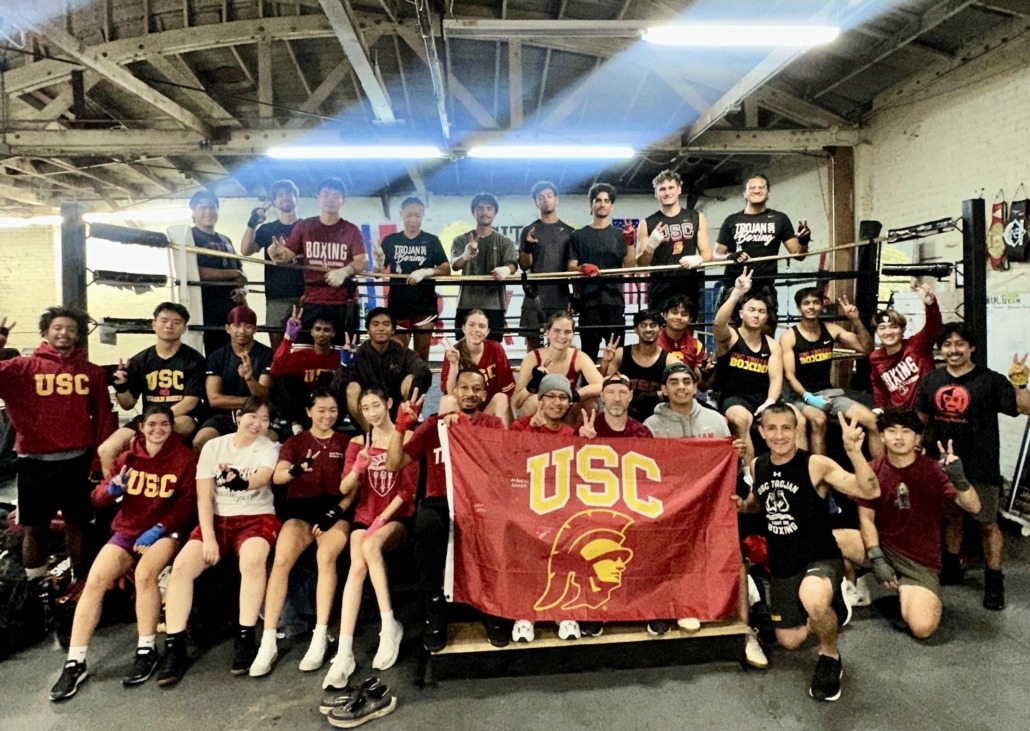

A gym can offer something that just a workout can’t: the feeling of being noticed.
After a few weeks away from my local gym, I bumped into its owner, Alex Brenes, at a boxing event. We chatted placidly, eyes on the fight in front of us, and then he asked why I hadn’t been around to train recently. In response to my silence — my inability to find the right explanation — he softened with, “Long story?” and a hug.
And that simple, open-ended question brought me to tears.
He pulled back in alarm and asked who had done this to me — rattling off half-joking threats to my perpetrator — and I laughed, because I did believe the love and care behind his words.
I had braced myself for the usual berating — reminders that I wasn’t showing up for what I’d committed to — and prepared to respond with excuses while not revealing anything substantial. Struggling out loud is hard, and when pain doesn’t show, empathy is rarely forthcoming. Instead, Brenes chose not to personally judge whether or not my justification was valid enough. He simply believed me.
We talk about gyms as a place of discipline: showing up, grinding, holding yourself accountable. Yet, what I encountered that afternoon was not what I had been expecting — it was recognition. Brenes had recognized the shape of my absence and offered care without demanding an explanation.
That kind of recognition, I’m starting to think, is something a gym can offer without ever advertising itself as a place of care.
In a 2025 study of 803 college students, physical exercise was significantly associated with lower rates of loneliness, partly through the increase of self-confidence in the students to handle difficult emotions and seek out other people. Yet, exercise alone cannot explain the valuable social architecture of a gym: A solo run can improve my mood; it cannot notice that I haven’t come back.
Being missed in a boxing ring feels different from skipping a solo run because a gym turns private discipline into a shared routine.
The front desk learns when you usually enter, and trainers can tell how well you’ve been fueling and resting your body. Unlike catching up with friends or coworkers, you’re not narrating your life to these people; over time, they learn parts of your life indirectly — through your habits as well as your absence.
And, unlike a classroom, where you are usually grouped by academic interest, a local gym mixes beginners, professionals and retirees together, simply because they share both a place for exercise and a routine. According to Teladoc Health, health experts note that intergenerational friendships can offer the space for mentorship, different perspectives and purpose; a gym never has to announce itself as a community in order to create those relationships.
Brenes, also known professionally as the Costa Rican Warrior, told me he spent 38 years boxing — from fighting in the streets as a kid in Costa Rica to joining the national Olympic team, winning accolades and pursuing a professional boxing career. Then, Brenes built City of Angels Boxing to be a new kind of gym.
When he arrived in Los Angeles, Brenes remembers many boxing gyms being closed circles: If you weren’t a professional fighter, you weren’t getting in. So, he opened the doors to everyone — “real boxing for everybody,” he calls it.
“I don’t come to work,” Brenes said. “I come to hang out with a bunch of people that like what I like.”
He has more than 350 members and doesn’t pretend to know them all, but he said, “When I see them hitting the bag, I know what they need to work at.”
Brenes doesn’t need your entire story to notice that something has shifted; he can read it in the way you train — or don’t train.
A university as large as USC makes anonymity easy, but anonymity is also lonely. A local gym can be a small antidote, can be a place where someone learns your name, remembers your goals and notices your routine, asking questions when you stop showing up.
I’m not suggesting that the gym should replace those closest to us. I’m suggesting that ordinary recognition matters — especially before anyone knows the full story, when you haven’t yet found the right words to share.
That afternoon, when Brenes asked me, “Long story?,” I couldn’t tell him one. But he didn’t need me to, because in a gym, our actions are our shared language and our routines often demonstrate what we have yet to verbalize.
I found belonging at City of Angels Boxing, and it feels good to be seen. This semester, let yourself be known somewhere. Learn the names of those around you, show up often enough that your presence becomes part of someone else’s routine and stay long enough that they will notice when you’re gone.
Soefae Chen is a junior writing about health and fitness culture in her column, “Vital Signs,” which runs every other Friday.