LOVE, ACTUALLY
‘Lost Weekend’ illustrates hope after grief
Phoebe Bridgers’ latest album demonstrates lyrical growth and maturity that encourages listeners themselves to grow.

By SOPHIA KANG
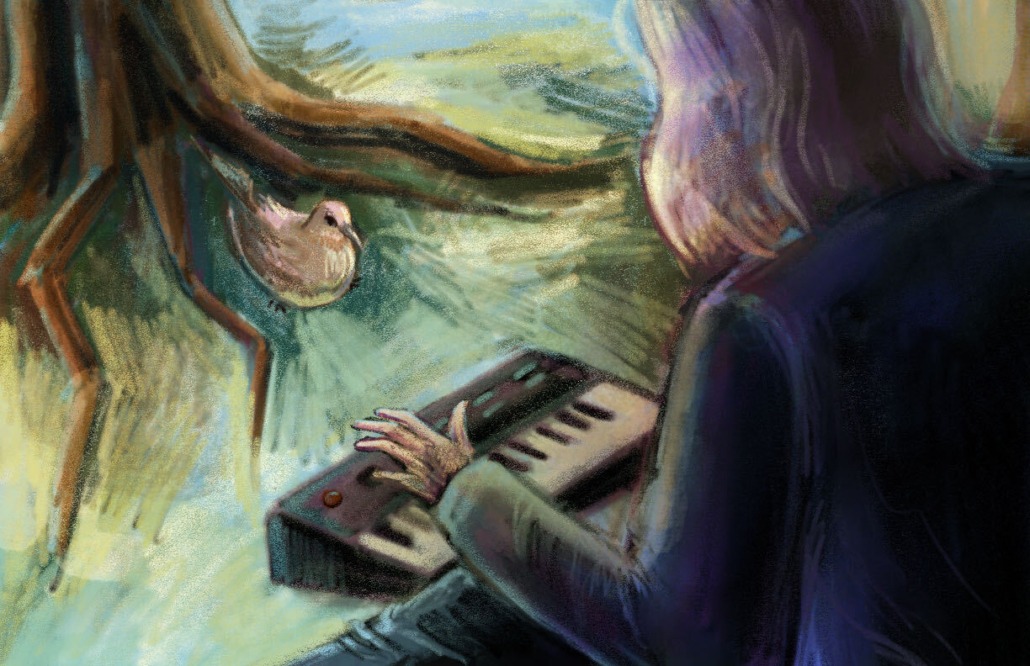

Phoebe Bridgers’ latest album demonstrates lyrical growth and maturity that encourages listeners themselves to grow.
On Aug. 11, I went to the Phoebe Bridgers “Lost Weekend” planetarium experience at the Orange Coast College Planetarium. It felt like a sign from some higher entity when, a few days prior, someone I knew had been selling her tickets. I jumped on the chance like a mouse who had just been teased with a piece of cheese — hook, line and sinker.
Beyond fiending for traces of new music from Bridgers since I was 15, “Lost Weekend” couldn’t have come at a better time: As mentioned in the previous issue of my column, I was having the most evil summer ever. So, could a beautifully devastating album really make it worse?
Bridgers, famously, makes sad music; she’s my go-to when I need a good cry, and even when I don’t, I still find myself bawling. So after a hiatus, news about her father’s passing and a breakup after reportedly being engaged to actor Paul Mescal, I wish I was exaggerating when I say I was terrified to hear the album. But as my friend and I held hands, craning our necks to see the laser show above us, I was unprepared for her portrayal of grief and heartbreak — it was loving, accepting and mature.
When I first listened to the album, one of the songs that really stuck out to me was “The Governor’s Waltz.” The lyrics describe a relationship in which the narrator’s outward happiness is really a facade to please their partner. Toward the end of the song, she alludes to her former lover finding someone else and taking “my place in my bed on that stage.” But what could have been a dig at the new woman, instead, became something cathartic.
Bridgers seemingly addresses the new woman directly, ending the song with the lyric, “Being myself wasn’t easy / Do it for me.” When I first heard the line, it felt so grown up. Letting go of bitterness and the heartaches of the past is something I’ve never really been good at, but I could feel the closure it offered for both the song and for Bridgers.
“Bobby” was the next song that made me feel as if something about Bridgers had changed and grown in the six years since her last album. Ignoring the absurd fact that the song was about comedian and actor Bo Burnham — one of many; be warned — listening to Bridgers’ excitement over being in love made me excited in turn as she sang, “Bobby /, Tthis could be the end of wanting.”
For a moment, the version of me from high school, who had experienced the full distress of feeling like “a dog with a bird at your door” as detailed in her 2020 “Moon Song,” actually felt like an adult. I had a returned lust for life and a slightly more open heart for love, ugly or not. If it could get better for an artist with possibly the saddest music of all time, maybe things would look up for me too.
The most significant musical moment, however, came to me while listening to “Never Going Back!” In the song, Bridgers repeats over and over again, “Never going back again / The way it used to be is not the way that it is.” The line was reminiscent of one of her earliest songs, “Waiting Room,” where she seems to be reassuring herself that she “know[s] it’s for the better.” But this time, Bridgers sang the line with more energy, and there seemed to be joy in the idea of moving forward.
Grief, regardless of whether it’s the result of a life-changing issue or a small inconvenience, is overwhelming. No matter how old we are when we experience it, it always feels like an eternal ghost, set to haunt us forever. But one day, we wake up and realize that we’re not 15 or 20, or even 50 anymore; life moves on, whether or not we’re ready for it. But through the cracks of heartache, love seeps through and floods us, until we’re overwhelmed by something better.
When the album ended, the planetarium lights abruptly turned on, and my friend and I looked at each other, tears dripping down our faces. Even though I had just been sobbing for almost an hour straight, I laughed, because the grief I had felt was shared, and it was temporary.
As people come into my life and leave it, as I grow older in age but still feel chronically 15 and scared, I know that I’m “never going back again / The way it used to be is not the way that it is.” And as I think back to the album now, I think that maybe I’m okay with that.
Sophia Kang is a junior writing about love in media in her column, “Love, Actually.” She is also an Arts and Entertainment editor at the Daily Trojan.