Call it sports trading, it’s still a bet
As football season kicks off, the industry is betting big on the young, broke and hopeful.
By HANNA DIOP
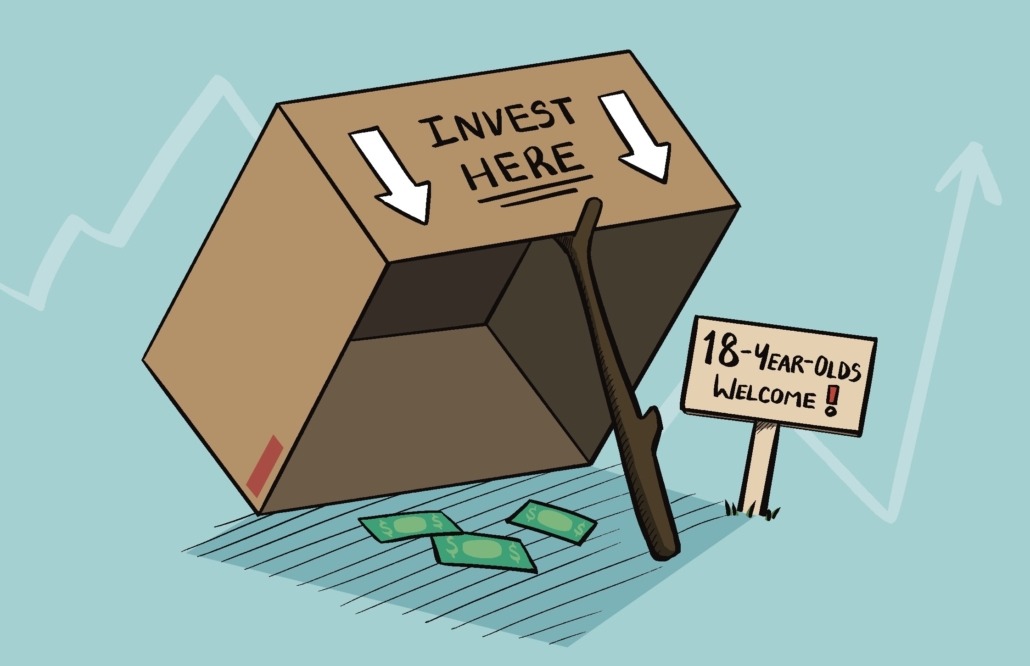

As football season kicks off, the industry is betting big on the young, broke and hopeful.
Whether you’re cheering on the Trojans or keeping tabs on your fantasy league, football has our attention each fall. Chances are, you’ve also seen the sportsbook promotions. Place a bet on whether your team wins, and the app will tell you you’re not gambling; you’re trading. In reality, partakers are participating in what’s called a prediction market.
Think of it as a public poll powered by real money: Users buy and sell contracts tied to a future event’s outcome, such as an election or game. The price of that contract shifts as more people weigh in, so what you’re watching isn’t just a prediction — it’s a live view of what people believe.
Unlike traditional financial markets, prediction markets ask for little more than simple verification and a few dollars, democratizing a kind of participation that used to be gated off for the wealthy. Proponents see a future where these platforms replace polling, inform corporate strategy and even guide public policy: a faster, more honest gauge of what people actually believe in real time.
That’s how they’re pitched, at least. On the ground, at the University of Miami, it looked a bit different when a fraternity member knew Jeff Bezos — his frat brother’s stepdad — wasn’t going to the Super Bowl. Word spread, and within days, the winners of the bet received returns surpassing 30%.
A college is not a random place for this to happen; it’s exactly where these companies want to be. Prediction markets skew heavily male — 71%, according to analytics firm Morning Consult — and young men are signing up fast. A March poll from the American Institute for Boys and Men showed 26% of men ages 18 to 24 report using a betting or prediction market platform in the past six months, compared to 14% of the general public.
The industry knows this, and its advertising proves it. TikTok ads for Kalshi and Polymarket don’t talk about risk. They talk about paying rent or making easy money; that’s not the language of a trading platform, it’s the language of a slot machine. These platforms aren’t aimed at seasoned investors but at college students: financially stretched, working toward a degree that’s supposed to be their path to security and an easy audience for the promise of a shortcut.
The industry insists prediction markets aren’t casinos, and legally, that distinction carries real weight.
Not being a casino means not being taxed like one. DraftKings pays North Carolina an 18% tax on its gross wagering revenue, while Kalshi, running functionally the same, pays only the state’s flat 2.25% corporate income tax. In states with no corporate income tax, like Nevada or Texas, prediction markets pay nothing at all.
Not being a casino also means prediction markets aren’t required to carry the standard safeguards for users showing signs of addiction. And regulation is no guarantee those protections actually get implemented: A New York Times investigation in September found that DraftKings, a company required to follow these standards, built an artificial intelligence model to identify customers likeliest to keep losing money after a promotion, then targeted those exact users with more bonuses.
When one of its own data scientists built a separate model to flag gamblers heading toward crisis, the project was canceled. If a regulated sportsbook won’t use the technology to protect people, there’s little reason to expect an unregulated prediction market to bother at all.
“Financialize everything,” Kalshi CEO Tarek Mansour said at a Future of Global Markets Conference. “Create a tradable asset out of any difference of opinion.”
Out loud, it sounds less like a business plan and more like a cause for warning. Analysts at Bernstein project prediction markets could reach $10 trillion in annual trading volume by 2035, up from $410 billion in 2026.
But growth projections aren’t proof of value; they’re proof of momentum, and right now, that momentum is failing to account for the effects on the people using these platforms. Potential is being sold at a moment when young Americans are already financially unsteady: locked out of homeownership, unsure what a degree is even worth in the age of AI, watching every institution that was supposed to offer stability wobble at once.
Facing all of that, prediction markets offer something that sounds like agency: Put your knowledge to work, get ahead and make the uncertainty pay you back. But that promise assumes an even playing field that simply doesn’t exist. Platforms like these don’t reward insight; they reward whoever already has information nobody else does. Ask a fraternity brother in Miami.
Football season will end, but prediction markets won’t stop trying to reel in their next user. If we don’t reckon with what these platforms actually are before they’re everywhere, we may not get the chance to once they are.