
Hoverboards banned from University-owned housing
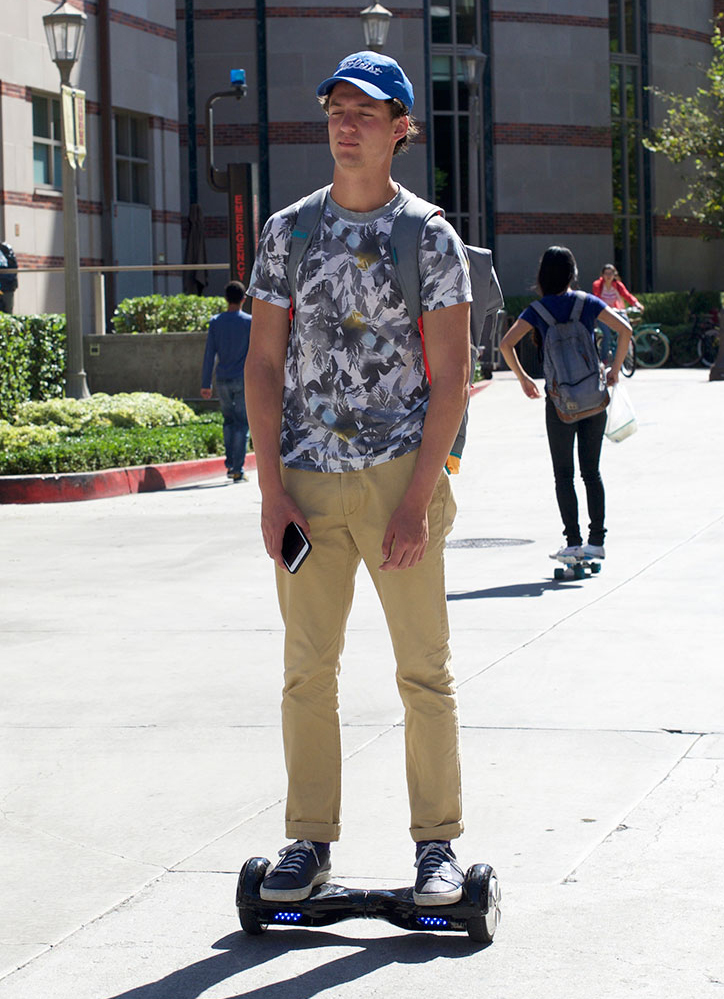
Self-balancing scooters, commonly known as hoverboards, are now banned from on-campus residence halls and university-owned housing, according to an email to students sent by Vice President for Student Affairs Ainsley Carry Thursday evening.
“Due to the recent fire concerns surrounding hoverboards … the University has decided to prohibit their use and possession in University owned residence halls, apartments and houses,” Carry said in the email.
There have been several documented incidents of the lithium-ion batteries inside hoverboards exploding, in some cases leading to extensive property damage. Just last month, the U.S. Consumer Product Safety Commission sent a letter to manufacturers and distributors of hoverboards in which they said, “Consumers risk serious injury or death if their self-balancing scooters ignite and burn.” According to the letter, between Dec. 1, 2015 and Feb. 17, 2016, the CPSC received 52 reports of scooter fires resulting in $2 million of property damage.
The decision to ban the scooters at USC was made in consultation with USC Student Affairs, Housing, Environmental Health and Safety, Fire Safety, Department of Public Safety and Risk Management, according to the email. Carry said in the email that this ban was made in order to protect students and prevent property damage.
“There will be no penalty [for possessing a hoverboard],” Carry said in an interview with the Daily Trojan. “Think of it this way: in our residence halls, we don’t allow candles. They’re a fire hazard; if you light it, you can burn the building down. Similarly, we won’t allow hoverboards in the residence halls.”
To enforce the ban, Residential Assistants will be making sure that residents are not using hoverboards in the dorms, according to Carry. But Carry also said that RAs will work with students to either get rid of their hoverboards or store them safely.
“The RAs will work with the students to either ship the hoverboards back home or store them elsewhere,” Carry said.
John Landi, a senior studying communication and business, agreed with the ban.
“It’s acceptable to ride [a hoverboard] on campus, but when you have them in the residence halls, it’s very unnecessary,” Landi said. “I don’t see why they’re even in residence halls in the first place. They have a tendency to explode and catch fire.”
Carry reiterated that — despite still allowing use of hoverboards on campus — the ban is a student safety issue.
“What’s the trade off? We’re trying to prevent a residence hall of 600 students from burning down,” Carry said.