
Letter to the Editor: A community in critical condition
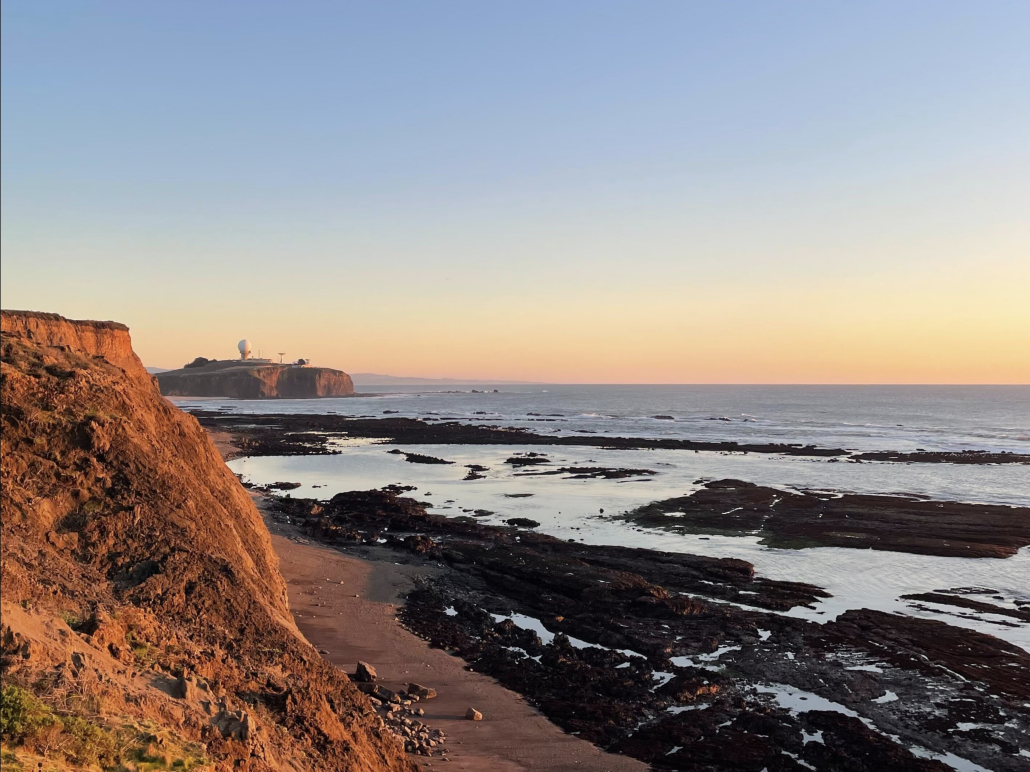

I wake up early to drive into town before the tourist traffic hits. It’s fall break, and I’m home for the 50th Annual Art & Pumpkin Festival that hasn’t happened since the coronavirus pandemic began. I’m driving past the Jetty, past the sign made by friends for a life lost too soon a few years back. I’m rolling the windows down to breathe in the salty air one last time before I go back to Los Angeles for school. I’m turning into the parking lot where I had my first date with an old friend back when we were in middle school. I’m walking in the middle of the closed down intersection right before Main Street begins — eyes up, hands bundled in pockets against the cold, familiar faces smiling and laughing everywhere my eyes lead me.
I walk past booth after booth to find a friend from home, who I hadn’t seen since the summer, selling handmade jewelry to patrons of the festival. I’ve worn the half moon necklace she gave me every day since I got it.
I run into the parents of friends, old classmates, kids I used to babysit, teachers, coaches; all of the people in this community who raised me to be the person I am today.
As I drive home before departing for L.A., I sit in silence. I’m scanning the rolling green farms and fog-covered hills, memorizing the way the sun pokes through the trees before the right turn into my neighborhood. I’m smiling to myself because of how grateful I am to be from where I’m from, but tears are streaming down my face because I have to say goodbye.
I’m from a town that no one has heard of. A place you’ve only been to if you’ve driven through it on your way to San Francisco, a place you’ve only seen if you keep up with big wave surfing or agriculture in the form of pumpkins.
People who know me know that my town is a piece of my identity. I lived in the same house for my entire life. I went to public school no more than seven miles from my childhood bedroom. I took my first steps there, learned my first words there and I am the way that I am because of my town.
I drove the same stretch of Highway 1 every day during the pandemic to drive myself away from the anxieties I felt when the world was falling apart. I went to the same grocery store in hopes of running into anyone who could give me hope — my old math teacher, my older brother’s Little League teammate, who happened to also be at his wedding last year, friends who I haven’t seen since I left for college.
This community is unmatched in everything that the word “community” stands for.
And now, this community is on the front page of news outlets like CNN, The New York Times and BBC. And it’s not because the record for the largest pumpkin ever grown was broken.
It’s because hearts are broken.
On Jan. 23, days after the Monterey Park shooting took 11 lives less than 15 miles away from USC, a mass shooting killed seven innocent people in my hometown, Half Moon Bay.
This town has been ravaged by the pandemic, by storms that started sinkholes and shredded coastal cliffs, by a lacking tourism and agriculture-based economy that can’t properly fund schools — and now by gun violence.
You never think it could happen to you, and then in a span of three days it happens in the two most important places you’ve lived.
When I was a senior in high school, my best friend and I were tasked with writing a graduation speech as co-student body presidents. We wrote our first draft and our teacher handed it back to us.
“Go further,” he said.
The reason that our speech had every person in the audience in tears was not because we were graduating, not because I admitted to my entire graduating class that I went to therapy, not because all the people we loved were in the same place. It was because of how much we love our town and because no matter how badly we all wanted to get out, we still couldn’t bear to leave.
This town raised me just like it raised every single person who has the privilege of saying they’re from Half Moon Bay. And when something that raised you is in danger, nothing feels the way that it should.
I never thought that gun violence would happen to the place I have to point out on a map for most people I introduce myself to.
I never thought I would send out calls and texts to assure myself that everyone I knew was alive.
I never thought that the lockdown drills we practiced in school would ever be more than just drills.
My perfect little town is broken. I feel helpless and hopeless in the face of people with more power and deeper pockets who are making decisions that make people die.
This is why gun violence has to end. This is why gun control in the United States should be non-negotiable.
The U.S. holds about 5% of the world’s total population, yet that 5% owns 46% of the world’s civilian-owned guns, according to the Small Arms Survey based in Switzerland. The U.S. also has the highest homicide-by-firearm rate in the world’s most-developed nations. Of the eight U.S. states with the most strict gun restrictions, six of those states are at the bottom of the firearm mortality rate scale. These relationships speak for themselves – places with stricter laws on guns have less mass shootings.
The U.S. will never completely abolish guns – only a small percentage of countries have succeeded in that – however, there is an opportunity to make real change with increased gun control laws.
More people are dying every day, in every state, in every small town.
You can’t imagine that it’s you until it is you.