Alums explore immigration and grief in ‘Soup’ short film
The project blends Chinese mythology with the immigrant experience.
By FELIX HWANGBO
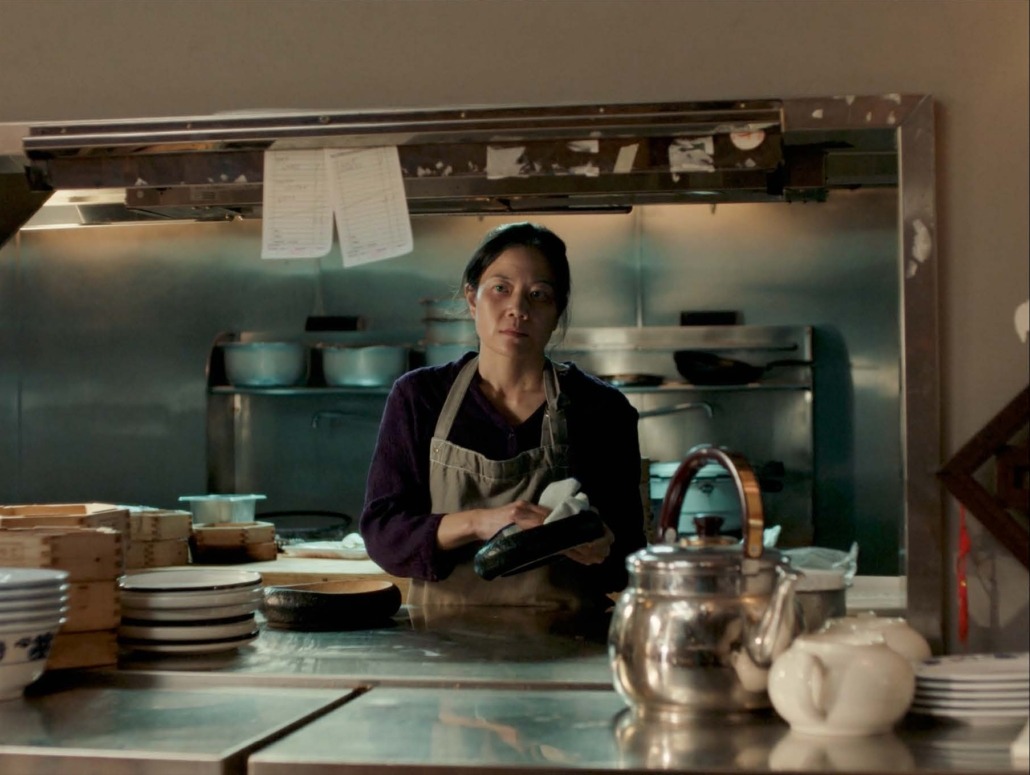

The project blends Chinese mythology with the immigrant experience.
Drink the soup and start a new life? Or stay in the current reality, no matter how painful it seems? The short film “Soup” confronts this choice through a story of grief, memory and community.
The film follows Chun Xi, a Chinese immigrant woman who struggles to keep her fading family restaurant alive, upholding its legacy alone. When Meng Po — the ancient goddess who serves soup to the dead to erase their memories — visits her one night and offers her a bowl, she must decide whether to forget her past or continue carrying its weight.
Created through the USC Stark Producing Program, this short film focused on the story of immigrant lives in the United States, according to the film’s director, Nathania Djuhar, who completed a master’s degree in the program at the School of Cinematic Arts in Spring 2026.
“Me and Jenny [Kim] aren’t from America, and a lot of our team are also immigrants, so it’s a really nice way to kind of tell an immigrant story by immigrants by making soup,” Djuhar said.
While the story centers around the character of Chun Xi, the film doesn’t solely focus on the Asian immigrant experience but also the Latine experience with the character of Chun Xi’s apprentice, Emilio.
Kim, a producer on the film who was also a part of the Stark Program with Djuhar, explained that including Emilio’s character was a choice not only for diversity but also to portray the Los Angeles community accurately.
“We did want to very specifically tell an L.A.-based story and represent the different immigrant populations and stories that might be found in L.A. specifically,” Kim said. “These kinds of combinations could also happen anywhere else in America as well. In a sense, it is also a very inherently American story: the immigrant story.”
Kim has worked in various sectors of the film industry but says that her experience with Soup was unique.
“It’s very much a ground-up type of effort where students and alums are just trying to get this story told, come together and … put in their time and so much of themselves into this story, out of the love of it,” Kim said. ”We’re not making this for the clout or the success or really the money at all.”
The team’s love for the production process was tested constantly. The weather, for example, was not in the production team’s favor.
“It rained for 10 days straight of our pre-production of building the restaurant, which was very difficult,” Kay said. “It eventually started leaking on the set. And so we had to put buckets out and constantly be changing rags and trying to keep things away from the cameras and the footage.”
Nevertheless, another of the film’s producers, Harrison Kay, a recent graduate from the USC Stark program, said finding a filming location was a “culturally immersive journey.”
“Being from Boston, [I] hadn’t spent so much time out in the San Gabriel Valley or places like that, so it was really cool,” Kay said. “Sometimes the people would not speak any English at all, and I would literally be kind of working to try to explain what we’re hoping to accomplish. … Any time that they would give me, I was just very grateful that they would even consider it.”
A pivotal moment in the film is a scene in which Chun Xi encounters the goddess Meng Po in her restaurant and is teleported into Meng Po’s world, executed with strong lighting and fog to create a mythical feel. Djuhar said she wanted the Chinese underworld to be distinctly separate from the restaurant space.
“Working with lighting to see like, ‘OK, how do we contrast the actual restaurant as best as we can?’” she said. “We decided to just make everything feel really light red and darker, add a lot of like more mythical-looking elements behind it.”
The production team also credits USC’s Department of East Asian Languages and Culture for the success of the Meng Po sequence.
“[Djuhar] was able to connect with a professor at the USC East Asian Languages program, and she connected us to this Chinese opera troupe,” Kim said. “This lady had four, three full rooms of boxes and boxes and boxes of ancient Chinese clothing that they would wear during their opera shows, and they offered to lend us one free of charge, which is incredible.”
When asked what they hoped audiences would take away from “Soup,” the trio had different yet consistent messages. For Djuhar, it was to be fearless in the face of change and regardless of age.
For Kay, the film illustrated the power of community support that leads to unity.
“I would hope it kind of helped people embrace and stay curious about their neighbors, because the more you kind of put up walls and assumptions, that’s only gonna lead to the restaurant closing altogether,” Kay said.
For Kim, however, it was about hope, even in the direst of situations.
“The light at the end of the tunnel always exists, and so even at the darkest moments of your life, whether it’s your loss or grief or anything going on, you have people around you who can help and who care,” Kim said. “I want to make sure that people have hope, and hopefully, watching this, they will feel that.”