VITAL SIGNS
Peptides reveal the price of working smarter, not harder
Don’t become an experiment; it’s time to take the “rat” part of being a gym rat less seriously.

By SOEFAE CHEN
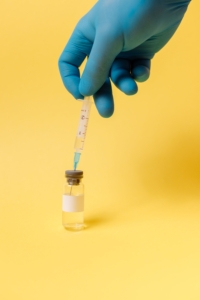

Don’t become an experiment; it’s time to take the “rat” part of being a gym rat less seriously.
I was mindlessly scrolling through some online bodybuilding discourse when I noticed a comment that said, “buy p3ptid3s online.” I clicked its external link, expecting a sketchy domain or a list of anonymous Snapchat-dealer usernames. Instead, I landed on a bright, shiny, well-built website full of “Research Peptides” for sale.
Bodybuilding has always been an exercise in pushing the human body beyond its ordinary limits. Steroids intensified that pursuit decades ago, permanently redefining the standards and possibilities of competitive bodybuilding. Today, enhancement culture has spread beyond competitive bodybuilders, amplified by male self-improvement communities and movements like “looksmaxxing,” birthing a new vernacular: optimize, stack, upgrade, biohack.
We live in an environment that constantly compresses the distance between wanting something and being shown how to get it. In an era of 30-second workout clips, 15-second transformation videos, and before-and-after photos that exclude the years of boring routine and discipline in between, it should not surprise us that our expectations for our bodies have started to follow the same rhythm.
Yet, we must remember that human limitations are not always problems to be solved or inefficiencies to be upgraded.
There is nothing wrong with wanting to improve ourselves, but what happens when improvement becomes synonymous with optimization? What happens when every limitation starts looking like an inefficiency, and every inefficiency looks like something we can buy our way out of?
Within a world of self-optimization, peptides are the newest product of this mindset.
Peptides are short chains of amino acids — smaller than proteins — that perform a wide range of bodily functions depending on their sequence. Many peptide-based drugs are established medicines — insulin and GLP-1 drugs like Ozempic — while many others that are circulating through bodybuilding and wellness communities are experimental and unapproved for human use.
Within bodybuilding, peptides are marketed in three main groups: growth-hormone secretagogues to increase muscle growth; tissue-repair peptides like BPC-157 to accelerate the recovery of tendons, ligaments and muscle; and lipolytic peptides to increase fat metabolism. Stacks — peptide combinations taken as pairs or groups — have often never been tested in humans.
The appeal is straightforward: build muscle faster while getting leaner, allegedly carrying fewer side effects than steroids or other injectable hormones.
In other words: work smarter, not harder.
However, the science is not moving as quickly as the market. These peptide mechanisms may be understood in laboratory rodents or within specific medical conditions, but much of the enthusiasm surrounding bodybuilding peptides extends beyond the available evidence of peptides’ effects on humans, particularly long-term safety data. BPC-157, for instance, rests on just three pilot studies totaling 30 participants, of quality dubious enough to ignore.
This gap between research and practice matters, because the language surrounding these products can make experimentation sound like optimization: A “research peptide” sounds scientific; a detailed dosing protocol sounds medical; a professional website looks pharmaceutical.
The “research use only” label is a regulatory loophole, which lets vendors sell injectable compounds as if they were lab supplies, even when the surrounding marketing — dosing guidelines, “peptide calculators” and bacteriostatic water sold alongside the vials — clarifies that they are meant for human injection.
The result is a strange inversion in which the consumer can feel informed simply because the product is surrounded by scientific vocabulary.
The Food and Drug Administration has warned that some peptide sellers label products “research use only” while simultaneously marketing them for human use. It has also warned that unapproved — meaning unregulated — drugs can contain incorrect amounts of active ingredients or be contaminated with entirely different ingredients than advertised.
Research conducted by the Performance Medicine Institute on 6,441 peptide samples across 203 companies found that over 40% failed basic purity and dose standards, and 15% of those tested for bacterial contamination showed measurable endotoxins, which can cause fever, chills or septic shock.
The price of optimization is therefore not merely financial. We can take risks with money because money comes and goes. A market can crash and a fortune can be rebuilt, but the body is not a financial portfolio — you cannot diversify away from an unexpected drug interaction or an unknown long-term consequence.
Our bodies are a miracle in the most literal sense: No one is guaranteed a healthy one. Roughly 330 billion of our cells renew each day — about 4 million every second — replacing themselves uncomplainingly while we go about our lives.
It’s striking how deeply our bodies love us and how little we love our bodies back.
That constant work makes the human body seem almost ordinary, yet it is anything but. Your heart beats without asking you to remember, your immune system identifies threats you will never see and your tissues relentlessly self-repair with whatever nutrients you absent-mindedly slobbered down at lunch. Respecting something this loyal by refusing to treat yourself as a lab rat is the least we can do in return.
Soefae Chen is a junior writing about health and fitness culture in her column, “Vital Signs,” which runs every other Friday.