USC names David Madigan as next provost
The move comes four months after Provost Andrew Guzman said he was stepping down.
By ANYA MOTWANI
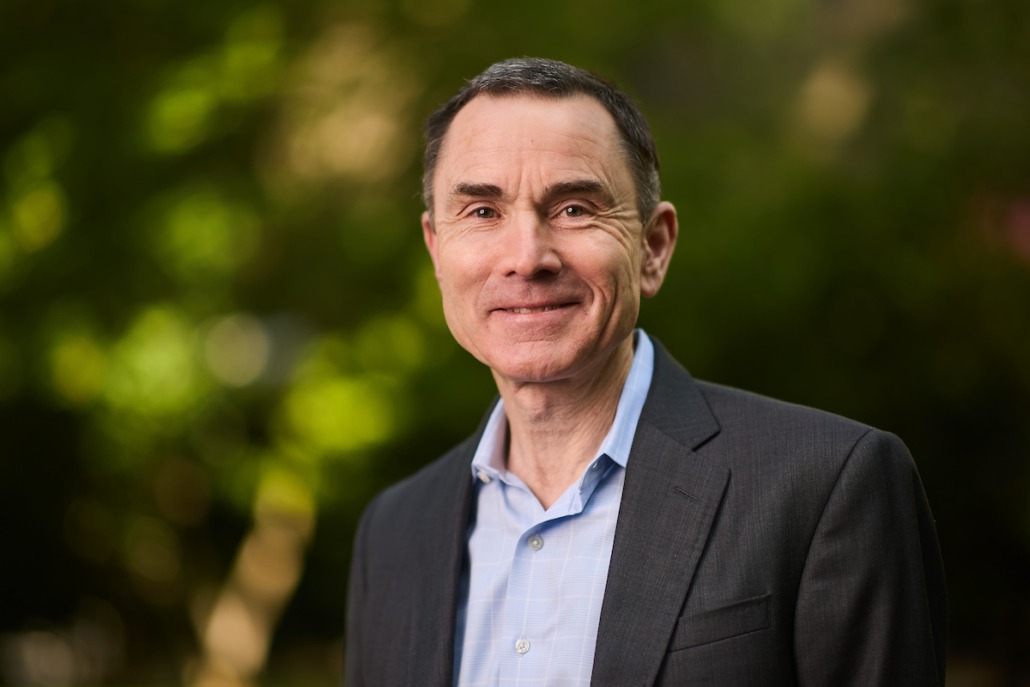

The move comes four months after Provost Andrew Guzman said he was stepping down.
David Madigan, former provost and senior vice president for academic affairs at Northeastern University, will be USC’s next provost and executive vice president for academic affairs, the University announced Wednesday morning. Madigan will officially step into his new role Oct. 13.
The search came as Provost Andrew Guzman, appointed in 2023, announced in May that he would be stepping down. Guzman will remain in the position until Madigan takes over in October, but he won’t be going far, returning to the faculty at the Gould School of Law. USC’s Provost Search Committee unanimously recommended Madigan’s appointment, according to a University press release.
Madigan will also serve as a professor of data sciences and operations at Marshall School of Business, with joint appointments in the Department of Population and Public Health Sciences at Keck School of Medicine as well as the Department of Mathematics in Dornsife College of Letters, Arts and Sciences.
“I’m very excited. I believe deeply in the power of the great research universities and their central importance in the American success story,” Madigan said in an exclusive interview with the Daily Trojan and Annenberg Media. “We’ve, to some extent, lost our way. … I’m excited to hopefully help restore the position of these great institutions, which are quite incredible.”
Madigan worked in a similar position at Northeastern for five years, during which he oversaw 10 schools and colleges, worked on research expansion and helped recruit more than 350 faculty members.
USC will be the fifth major university where Madigan has served, including faculty and administrative positions at the University of Washington, Rutgers University, Columbia University and Northeastern.
“We’re not Procter & Gamble or Microsoft; we’re not a for-profit corporation; we’re mission-driven. … When I look out every year at convocation, at this sea of young faces, I think, ‘Oh my God, we better not screw this up.’ What we do here really matters,” Madigan said. “If there’s a spirit of not withholding information and knowledge, and instead [we conduct] our business … as transparent and authentic as possible, to me [that] is the right tone at a great research university.”
Open communication has become a hot topic on campus, from administration ambiguity about layoffs and restructuring to the University recently changing Progressive Degree Program requirements without notice.
President Beong-Soo Kim said “some communications could have been done better” regarding the change in PDP eligibility that required students to be enrolled in at least 12 units a semester toward their undergraduate degree to be considered an undergraduate student. The change was notable because it affects students’ access to certain financial aid.
In an exclusive interview with the Daily Trojan, Kim said he read the article “not knowing about those changes” and that Guzman had been asked to look into them.
“At any major university, it is critically important that the president, the provost and the deans are on the same page and rowing in the same direction,” Madigan said. “My approach to this role is very much one of openness and collaboration totally with President Kim … but also with the senior leadership in general, both academic and nonacademic. There has to be a high degree of trust and transparency.”
Part of that effort is ensuring a smooth handoff between him and Guzman, though Madigan said he has not met him yet.
“I have a lot to learn, and I’m very much hoping that [Guzman] will be available for at least some period of time while we make a transition,” Madigan said.
Following the censoring of Asna Tabassum’s valedictorian speech in 2024 and the Los Angeles Police Department arresting 93 students at pro-Palestinian demonstrations that same year, academic and speech freedom has been a major point of discussion.
“To deliver on our missions, it is critical that we have freedom of ideas, freedom of communication, that people can freely express ideas that can be offensive or certainly provocative,” Madigan said. “[The] First Amendment doesn’t apply in private universities, but it should apply, and it does apply in principle. It should apply to everything we do.”
As one of the first members of his family to attend college, Madigan stressed the importance of uplifting first-generation students and ensuring those who are less prepared to enter university life are supported to take advantage of every opportunity at USC.
Building relationships with faculty is key for Madigan, including working closely with the executive committee of USC’s Academic Senate. While he does not know enough regarding the intricacies of unionization efforts by non-tenure track faculty, Madigan said, he hopes the issue is resolved quickly.
Now an almost two-year-long effort, United Faculty-UAW, the union that would represent the faculty block, is at a standstill with the University. After 70% voted in favor of organizing in an election that closed June 1, the University filed a review of the election with the National Labor Relations Board the next day.
“I’ve worked very closely with faculty governance bodies of one sort or another,” Madigan said. “At the end of the day, it comes down to the relationships; the personal relationships between people like the provost and the [academic] senate chair [are] hugely important to the success of the institution. You don’t build that without face time. I’m looking forward to it.”
Ultimately, Madigan looks to address the challenges higher education has faced at institutions. He pointed to an unwillingness to change how such schools operate, but said those at USC are guided by asking how the University can be better, how it can organize itself to have more impact and deliver better policy for students.
“What I hope is that, [by] working very closely with President Kim and with leadership and faculty and staff and so on, … we can restore the faith of the American people in higher education by being a shining example,” Madigan said. “We’ve things to fix. We’ve things we absolutely need to improve, and I think we will.”