
GOP debate focuses on insults, not policy
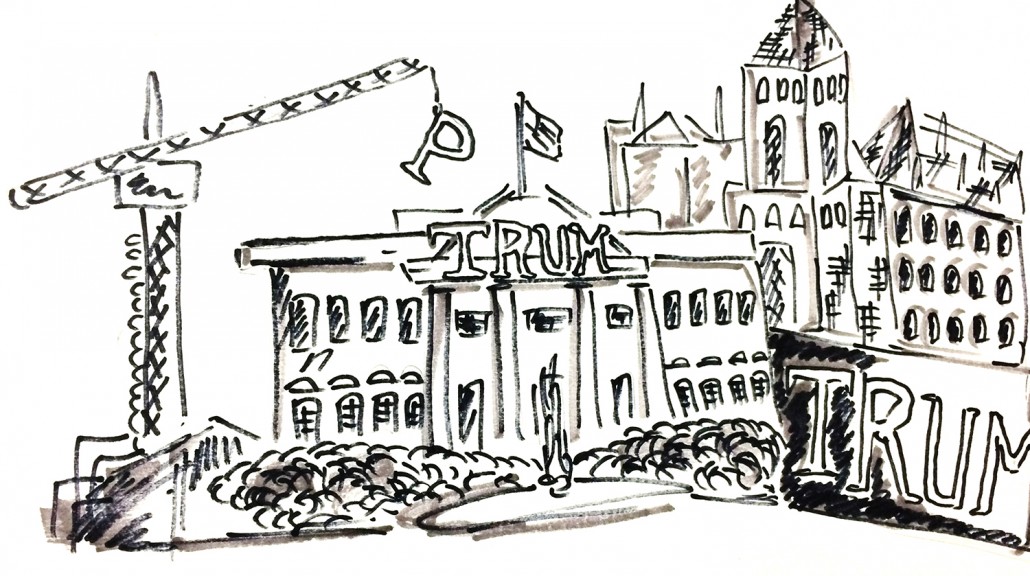
As predicted, the second Republican National Debate for the 2016 presidency was ultimately a clash of personalities between 11 divisive dispositions rather than a battle of ideologies and policy positions.
The general ambiance of the race, which currently consists of 15 widely recognized Republican candidates, was overwhelmingly summarized by candidate Carly Fiorina’s early assertion: “I think Mr. Trump is a wonderful entertainer.”
The Republican race has been dominated by the (in)famous business mogul Donald Trump’s lead. After the 2012 election, the Republican National Committee seemed slated to support a candidate who could cross the partisan line drawn by over a decade of stringent division. Perhaps a candidate with millennial experience and understanding of the modern conflict between dreams and the failing economy. Flash forward from the 2012 presidential election, and the Republican party is stuck with a reality TV star.
The first 20 minutes of the debate was not impacted with talks of governmental control over the internet through later generations of the Patriot Act, imploding student debt or the impending explosion of the Social Security bubble. Instead, the debate consisted of personal threats.
Acknowledging Trump’s previous insults, in which he questioned Carly Fiorina’s abilities, exclaiming, “look at that face,” Fiorina responded: “I think that women all over this country heard very clearly what Mr. Trump said.” Her cool, calm response to the front runner’s sexist insult exemplified a winning combination of Republican grace and liberal feminism, but it still could not curb the overwhelming power of “The Donald.”
Ultimately, this debate was nothing more than an act of entertainment. CNN’s approach to the second debate, riding on the enthusiastic wave of first debate on Fox News, was to take random campaign statements from the contenders and ask for other candidates responses to their contemporaries.
Clocking in at almost three hours and impacted with personalities vying to be as loud and demanding as Donald Trump’s, the second debate came across as a weak and substance-poor version of the first.
Ben Carson, who has catapulted to second place, superseding previously second and third place candidates Jeb Bush and Scott Walker, maintained a calm, inoffensive demeanor, exactly what could be expected of a man who would make an exemplary surgeon general and a completely unqualified commander-in-chief. Carson had some nice sound bytes, some of which will be lauded as points of American exceptionalism, and others which will be condemned by liberals as privileged and idealistic. Regardless, the words heard by the American public were the tabloid-esque insults pointed to and from Donald Trump.
Laced with mudslinging toward Trump, last night’s GOP debate consisted of character assassinations and non-sequiturs. Despite being hosted in the Ronald Reagan Presidential Library, few debaters maintained the dignity and respect of the site’s namesake. Although all the candidates tried to invoke his legacy (his name was mentioned 20 times Wednesday night), they refused to acknowledge that Reagan would have failed as president if he did not maintain his vision for his future instead of dwelling on the errors of the past, as well as focusing on issues that enraged liberal voters as well as conservative ones.
In the aftermath of the 2012 election, centrists and moderate liberals seemed receptive to republican and libertarian notions of smaller government, more room for individual autonomy, business opportunities and a decrease in police militants. In 2015, that has been replaced by fever for defunding Planned Parenthood — an organization which only uses federal funds to finance non-abortive services — and building a wall to keep out illegal immigrants.
Contemporary young people who believe in the market economy and American sovereignty wanted a substantive and comprehensive debate to map out a curious and variable future. And considering that Republicans already are underrepresented among millennials, further debates should greater appeal to this demographic.
“People at home want to know how we’re going to fix this place,” said Ohio Gov. John Kasich. Yes, everyone wants to know. Young Americans wants to know which GOP candidate will provide a solution to the higher education crisis in this country, which GOP candidate will acknowledge climate change and police brutality as threats to American sovereignty as strong as those of the Social Security bubble and Chinese ownership of American debt and which candidate on that stage will finally see that this is a nation made not of liberals and conservatives but of all Americans who wish to achieve the American Dream. Unfortunately, this debate did not reveal much of importance, but the tabloids will have more than their fair share of headlines.