
Tobacco ban in Westminster would do more harm than good
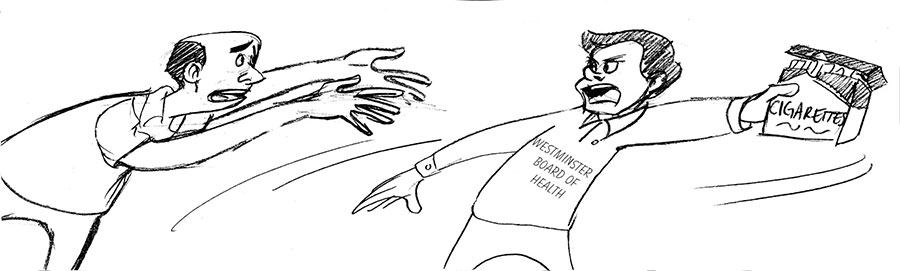
Calls for limiting tobacco sales have been commonplace in recent news, but a small town in central Massachusetts might take the national tobacco conversation to a whole new level. The 7,700-person town of Westminster could become the first town in the nation to implement a ban on all tobacco product sales within municipality and town limits.
Deena Baum | Daily Trojan
Though the proposal to implement a total ban on the city’s tobacco sales is designed with the aim of improving health in the town, its enactment will only hurt local business and drive tobacco consumers to neighboring suppliers.
Under the proposal, made public Monday by the Westminster Board of Health, the draft regulations of the tobacco ban would ultimately prohibit the sale of any product containing tobacco or nicotine, including cigarettes, chewing tobacco and nicotine-laced electronic cigarettes. The plan has unsurprisingly garnered significant criticism from local business owners who argue that such a law would ultimately send their customers to nearby communities and threaten to drive their stores out of business. Several Westminster business owners have begun circulating petitions against the proposal. Store owner Brian Vincent’s has already accrued several hundred signatures.
The primary arguments in favor of the city-wide tobacco ban emphasize the importance of promoting healthy lifestyles, especially for the town’s young population. Though the goal is laudable on its face, it fails to acknowledge the fact that banning tobacco outright will not miraculously cure nicotine users of their dependency, nor effectively discourage buyers from purchasing products.
The fact of the matter is, in addition to a legal age limit prohibiting the selling of tobacco to minors, there are already state regulations in place which prohibit smoking in public areas — including the workplace, restaurants and bars. Some communities have even implemented smoking bans in public parks. Such laws, which restrict youth access to tobacco products and put an emphasis on public health and safety, are exactly what are needed to ensure that Westminster’s health concerns are met.
This proposal to ban the town’s tobacco sales, however, does not.
Though the ban would ultimately guarantee that Westminster’s citizens wouldn’t be able to purchase tobacco within its town lines, by no means does it stop customers from taking their business elsewhere. Banning tobacco outright doesn’t address the fundamental issue that nicotine dependency is more complicated than access to tobacco products. Tobacco is an inelastic commodity — consumers’ buying habits are not affected by price fluctuations. Thus, if it’s unavailable for purchase in Westminster, nicotine-addicted consumers will go beyond the small town’s limits and into neighboring communities. For some of Westminster’s small businesses, tobacco revenues total up to more than 5 percent of their sales — and that doesn’t even include the revenues made from the additional purchases tobacco-buyers make at these stores. Such a proposal won’t rid individuals of their dependency on the addictive drug, but rather only guarantees that Westminster’s small businesses lose out as their local customers are driven to neighboring competitors.
There are plenty of ways to ensure public health and promote healthier lifestyles for all of Westminster’s citizens, but an outright ban on tobacco will only cause more harm than good. Though Westminster’s Board of Health is concerned with the health of the townspeople, it needs to heed the concerns of business owners.
Yasmeen Serhan is a junior majoring in international relations. She is also the special projects editor of the Daily Trojan. “Point/Counterpoint” runs Tuesdays.