It’s on USC to stand up for South Central before the Olympics
The negligence toward locals during past Games offers a cautionary tale ahead of 2028.
By SAWYER SUGARMAN

The negligence toward locals during past Games offers a cautionary tale ahead of 2028.
In 2017, USC finished construction of USC Village, a project that set the University back over $700 million. The hefty price tag checks out, considering the facility boasts 36 storefronts, eight residential buildings, a gym and a state-of-the-art dining hall. Just outside of this gated commercial haven, however, USC’s excess comes to a halt.
The University Park neighborhood has a poverty rate of 39.7% — almost triple that of the Los Angeles citywide average and nearly four times the national figure. South Central’s reputation for crime and relative economic hardship has been the subject of years’ worth of discourse about the University’s relationship with its surrounding residents.
The disparity between the two has earned USC the critical epithet “University of South Central,” an intended jab at the socioeconomic chasm between the school and its neighborhood. But, in preparation for the 2028 Summer Olympic Games, we should reevaluate the reductive way we understand and talk about our neighborhood.
As the Games rapidly approach, it’s tempting to wonder what the event will mean not just for the University, but for the area it inhabits. As is typical of Olympic host cities, activists are anticipating accelerated gentrification. During the ceremony, L.A. will be the international beacon of sports and culture, which will welcome unprecedented economic opportunity but also pose the risk of pricing out long-time Angelenos from their own communities.
Despite being over two years away, Angelenos already have qualms about the event’s rollout. In April, the city released exclusive pre-sales for residents who lived in certain zip codes, an initiative meant to ensure the best opportunity for locals to attend the Games. When the tickets became available, though, buyers were saddened to find a scarce supply and unreasonable price points, even though the city had advertised cheaper options.
This early fumble on the city’s part represents broader concern about nearby residents being cast aside as L.A. embraces the influx of international revenue, even though city officials are ostensibly working to uplift their historically disempowered residents.
Karen Bass’s “Games for All” vision outlines L.A.’s plan to bolster infrastructure while mitigating displacement and elevating local businesses, but this misstep makes me wonder whether the city will follow through on its resolution to uplift L.A., especially the routinely neglected communities closest to the ceremony.
Before the 2024 Olympic ceremony in Paris, activist coalitions reported a nearly 40% increase in encampment evictions. Dissenters argued that this marked a clear effort by the French government to sterilize its image in preparation for the international stage by carelessly disrupting unhoused citizens.
These harsh removals aren’t exclusive to unhoused people, though. During the 2016 Olympic Games in Rio de Janeiro, over 75,000 residents were pushed out of their homes to make space for Olympic facilities and events. It is imperative that USC, in tandem with the local government, ensures that South Central residents are protected from this type of callous removal.
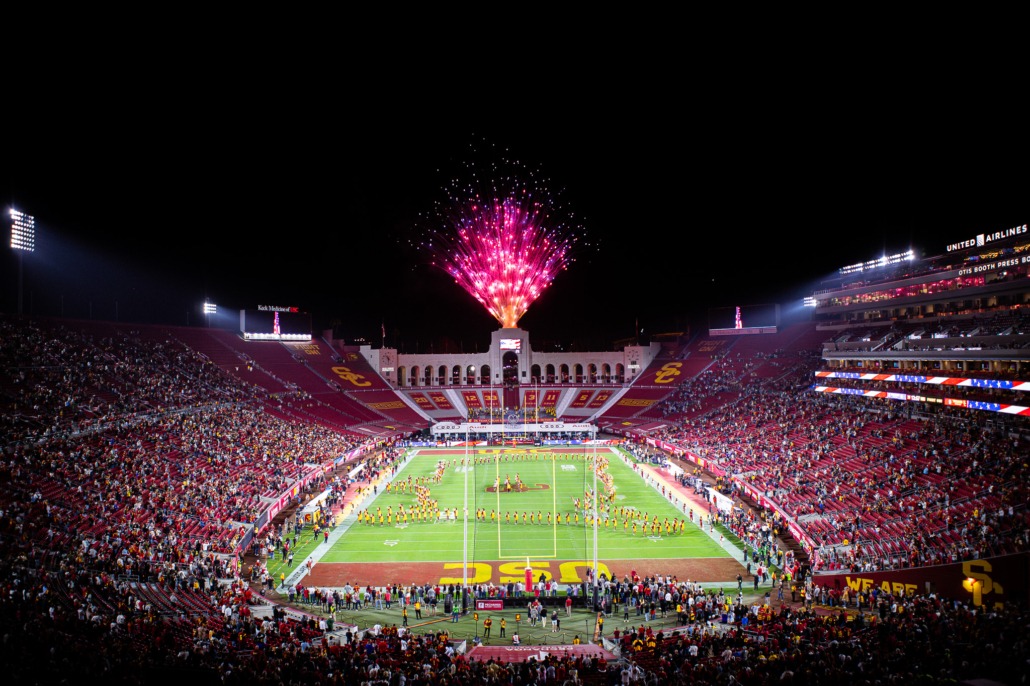
USC’s involvement is already making strides in a positive direction. The University’s venues — namely, USC Village, Galen Center and, obviously, L.A. Memorial Coliseum — allow the Games to proceed without building new infrastructure, which has historically been criticized as a waste of resources and a gentrification catalyst.
During my second week at USC, I urgently needed a new suit for a fraternity event. In a panic, I scrambled to find an outlet close by. By complete happenstance, I ended up at L.A. Suit Outlet in the Fashion District, where I was fitted for a suit on the spot, one that I still wear to this day. The service and personable care I received were unparalleled by anything a major menswear destination could offer me.
Similarly, a pillar of the USC Greek experience is walking home from the row and grabbing a taco at one of the several stands on the far side of the USC Village crosswalk, or Spudnuts donuts on the trek back to New North Residential College. More than once this summer, I found myself fantasizing about my reunion with these staple spots.
Anecdotally, students and non-student residents seem to have an estranged relationship with one another in South Central. Instances like this, though, serve as a reminder that our community is a cornerstone of our University’s identity — one worth fighting for as the Olympics threaten its stability.
As students and residents of the city, it’s our prerogative to set the tone for the way our school and city administrators look out for our neighbors. It’s disheartening to me when I hear my fellow Trojans talk about our peers in South Central like outsiders in a community they pioneered.
I urge USC students to hold reverence for the people they share a city with by supporting local vendors, treating our fellow Angelenos with respect and standing alongside them as they advocate for their merited role in the Games.